


Feb. 1 to Feb. 7
Walis Tadaw watched the 55-year-old Tianchi Wiring Maintenance Station (天池保線所) burn down on a cold winter night in 1986. He was resting outside with a group of fellow Seediq Aborigines after a hard day’s work replacing utility poles when they heard a loud explosion. Smoke billowed out of the kitchen window, and soon the entire building was ablaze.
“There was barely any water up there in the winter. We snatched buckets and tried to put out the fire with what we could retrieve, but there wasn’t much that we could do,” Walis says in the book Traversing the East-West Power Line (古道電塔紀行) by Lin Hsin-yi (林欣誼) and Chen Hsin-yi (陳歆怡). “We slept outside that night, and it was pretty warm [due to the fire].”
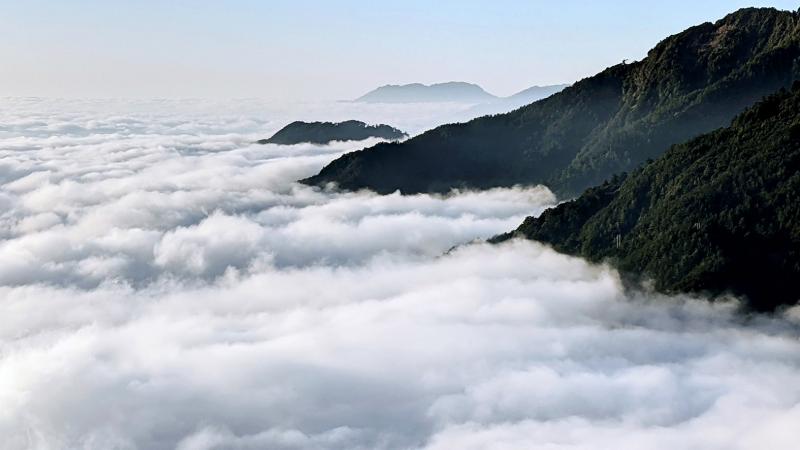
Photo: Han Cheung, Taipei Times
One of the crewmembers had apparently needed something from the building and lit up a bundle of candles for lighting, leading to the accident. This was the second time a Seediq had burned down the structure. The first time was when long-oppressed rebels from the Aboriginal community torched the original in 1930, when the Seediq rose up against the Japanese during the Wushe Incident (霧社事件).
Located at 2,860m above sea level in the middle of today’s Nenggao Cross-Ridge Historic Trail (能高越嶺古道) running east-west across the Central Mountain Range, the site has witnessed over 100 years of history since the Japanese first built the Nenggao Police Station in 1918 for security, postal and maintenance purposes. Today it houses the Tianchi Lodge (天池山莊), named after a nearby pond, where hikers spend the night before heading to the nearby peaks and beyond.
BLOODY HISTORY
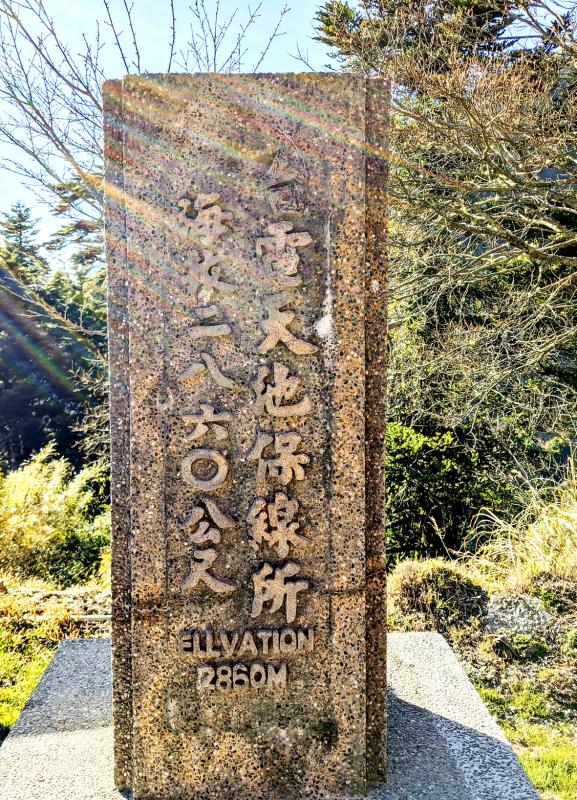
Photo: Han Cheung, Taipei Times
The early history of the Nenggao trail was soaked in blood as the Japanese, after they took over Taiwan in 1895, tried for years to suppress the Aborigines.
The first Japanese to attempt to cross these mountains was captain Yasuichiro Fukahori, who in January 1897 led a 14-man expedition from Puli (埔里), hoping to reach Hualien by early February. Unable to find porters and guides, they were stranded in an Aboriginal village for about two weeks before half-forcing, half-enticing the locals to help them.
They finally set out on Feb. 6, but they only made it as far as Tianchi. It’s unclear what exactly happened, but the entire party was most likely wiped out by their unwilling guides, whom they allegedly mistreated. The government named a 3,311m high peak, which can be seen and accessed from the trail, in Fukahori’s honor. Today it still bears his name, but with the Mandarin pronunciation Shenku (深堀). This incident is said to have influenced the Japanese decision to use aggressive force to suppress the “northern savages” of the Atayal, Seediq and Truku during the 1910s.
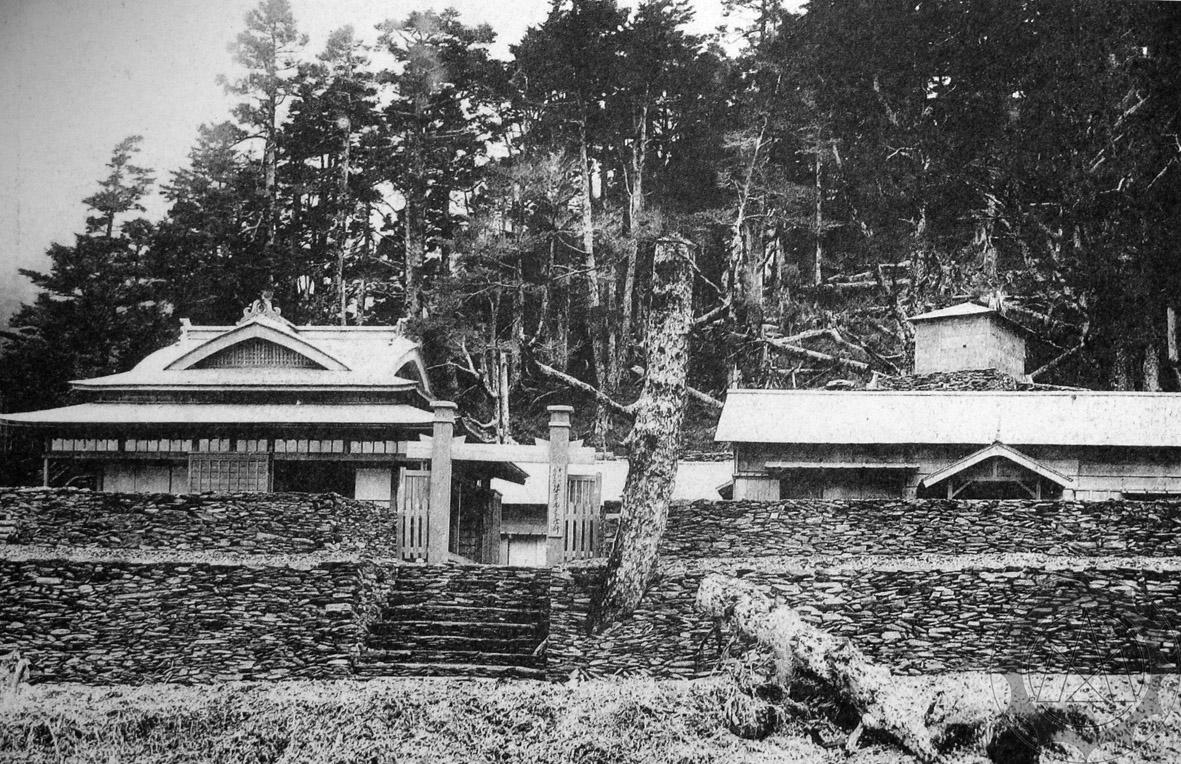
Photo courtesy of Forestry Bureau
During the Truku War of 1914, one Japanese brigade set out from Wushe, occupied the area near Tianchi and Qilai South Peak (奇萊南峰) and crossed the Central Mountain Range to attack the Aborigines to the east.
In 1917, with the resistance shattered, the Japanese began constructing the Nenggao trail simultaneously from the eastern and western ends to better control the area. Completed in 1918, the 81km route hosted 16 policing posts and could be traversed in four days. The Nenggao Police Station was built near Tianchi as a luxurious hinoki cypress banquet hall and public bath that could hold more than 100 visitors.
The road greatly boosted postal services between the east and west coasts. Prior to this, mail was delivered the long way by boat. Postal workers set off at 3am from each end, spent the night at one of the stations along the way and met up near Tianchi to exchange mail.
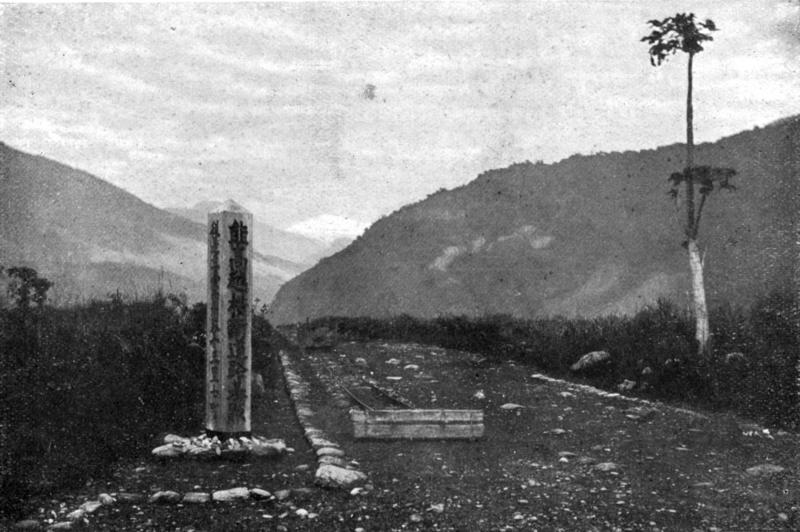
Photo courtesy of Academia Sinica
During a rerouting project in 1925, the government planned to abandon the Nenggao Police Station and move the route 100m lower, but hikers vigorously objected as they didn’t want to lose the majestic lodge with its splendid cloud sea views.
To the Seediq, however, these posts embodied Japanese occupation and oppression, and were among the first targets to be destroyed when they revolted in 1930. The subsequently rebuilt Nenggao Police Station paled in scale and grandeur to its predecessor.
RECREATIONAL ROUTE
Tourism to the Nenggao trail grew with the completion of the Hualien-Taitung railway in 1926. That July, a group of students and teachers from Taihoku First High School (today’s Jianguo Senior High School, 建國中學) in Taipei spent six days traveling from Ershuei Station (二水) in Changhua County to today’s Gancheng Station (干城) in Hualien, leaving a detailed log of their trip.
The trail was included in the Tsugitaka-Taroko National Park, which was established in 1937. The government touted the cross-island route in a 1942 railway travel brochure with a three-day recommended itinerary.
The Japanese had planned to widen the Nenggao trail into a road for cars, but abandoned the plan due to World War II. The Chinese Nationalist Party (KMT) considered it when planning the Central Cross-Island Highway, but deemed it too prone to landslides.
In the 1970s, the journey became a rite of passage for many university students. Historic trail expert Hsu Ju-lin (徐如林), who co-authored the book Nenggao National Trail: A Trip Across Time (能高越嶺古道:穿越時空之旅) with her late husband Yang Nan-chun (楊南郡), first traversed the route in 1973. The permit process was arduous. They first had to have a military instructor approve their conduct and academic performance, then ask the school to submit an application to the Taiwan Garrison Command. Because mountain maps were classified information under martial law, they had to sign a non-disclosure agreement with the military before setting off.
The path became the site of Taiwan Power Co’s (Taipower, 台電) east-west transmission line, which was finished in 1953. Hsu writes that the trail was popular because it was well-maintained as a Taipower utility road, and hikers could stay in the many maintenance stations along the way. However, she laments that Taipower construction in the late 1970s ruined the eastern half of the trail, shortening the total walkable portion to today’s 27km.
After the Tianchi station burned down, the site stood empty for years except for a crude metal shack built by Walis Tadaw and his crewmates. It wasn’t until 1993 that the Forestry Bureau constructed the first Tianchi Lodge to accommodate the hikers that began flocking to the area. The current version was erected in 2011.
A popular trip today is to walk the western portion of the trail, stay a night at the lodge and summit Qilai South Peak and Nanhua Mountain (南華山) before heading back the same way.
Taiwan in Time, a column about Taiwan’s history that is published every Sunday, spotlights important or interesting events around the nation that either have anniversaries this week or are tied to current events.

Last week the government announced that by year’s end Taiwan will have the highest density of anti-ship missiles in the world. Its inventory could exceed 1,400, or enough for the opening two hours of an invasion from the People’s Republic of China (PRC). Snark aside, it sounds impressive. But an important piece is missing. Lost in all the “dialogues” and “debates” and “discussions” whose sole purpose is simply to dawdle and delay is what the Chinese Nationalist Party (KMT) alternative special defense budget proposal means for the defense of Taiwan. It is a betrayal of both Taiwan and the US. IT’S
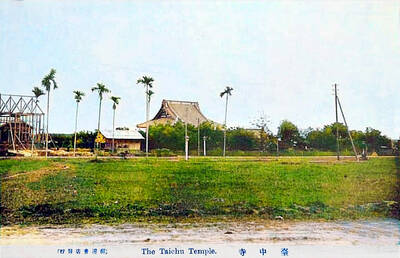
March 16 to March 22 Hidden for decades behind junk-filled metal shacks, trees and overgrowth, a small domed structure bearing a Buddhist swastika resurfaced last June in a Taichung alley. It was soon identified as a remnant of the 122-year-old Gokokuzan Taichuu-ji (Taichung Temple, 護國山台中寺), which was thought to have been demolished in the 1980s. In addition, a stone stele dedicated to monk Hoshu Ono, who served as abbot from 1914 to 1930, was discovered in the detritus. The temple was established in 1903 as the local center for the Soto school

Paul Thomas Anderson’s “One Battle After Another” was crowned best picture at the 98th Academy Awards, handing Hollywood’s top honor to a comic, multi-generational American saga of political resistance. The ceremony Sunday, which also saw Michael B. Jordan win best actor and “Sinners” cinematographer Autumn Durald Arkapaw make Oscar history as the first female director of photography to win the award, was a long-in-coming coronation for Anderson, a San Fernando Valley native who made his first short at age 18 and has been one of America’s most lionized filmmakers for decades. Before Sunday, Anderson had never won an Oscar. But “One Battle

In Kaohsiung’s Indigenous People’s Park (原住民主題公園), the dance group Push Hands is training. All its members are from Taiwan’s indigenous community, but their vibe is closer to that of a modern, urban hip-hop posse. MIXING CULTURES “The name Push Hands comes from the idea of pushing away tradition to expand our culture,” says Ljakuon (洪濬嚴), the 44-year-old founder and main teacher of the dance group. This is what makes Push Hands unique: while retaining their Aboriginal roots, and even reconnecting with them, they are adamant about doing something modern. Ljakuon started the group 20 years ago, initially with the sole intention of doing hip-hop dancing.


 RSS
RSS