


I could taste the finish line of the grueling 13-hour trek when my knee gave out. Despite a bruised side, several gashes from slipping on wet rocks and soreness all over, I was still in high spirits when I signed my name on the form at the trailhead, proving that I had conquered the 3,092m Beidawu Mountain (北大武山) in a single-day ascent.
But destruction by Typhoon Morakot had made the trailhead inaccessible to vehicles, and we faced another 2.8km descent down about 400m to the car park. Perhaps I shouldn’t have rested so long at the trailhead — I felt rather stiff when I got back up. The dull pain in my right knee getting stronger, but that’s happened before. What’s another 2.8km on a nice trail after trudging through 18km of rough terrain?
One kilometer left. Sharp pain shoots up my knee and intensifies with every step. The remaining trip is mostly downhill over large rocks, which makes things worse. Our trusty guide Mark Roche comes to check on me, and I’m determined to make it. Grabbing on to whatever I can. Luckily most of this path has ropes and plenty of trees, I hobble my way to the van just before nightfall.
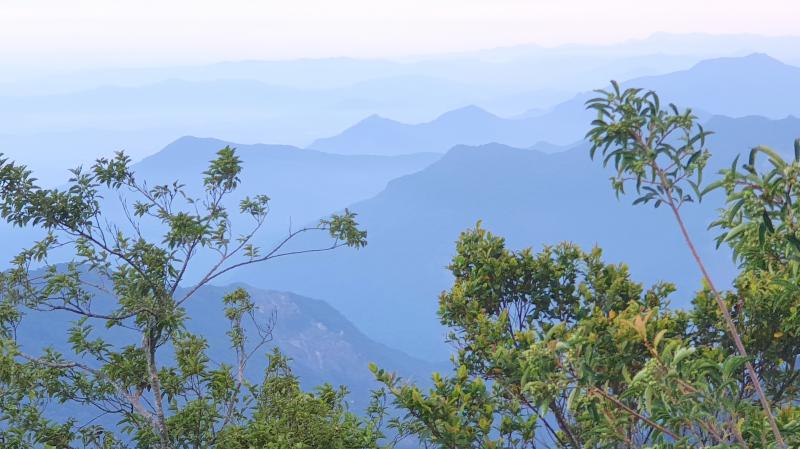
Photo: Han Cheung, Taipei TImes
Most people do this trek up about 1,900m in altitude over two or even three days, stopping to rest at the Kuaigu (檜谷) lodge and campground, strategically located near the 4km marker of the 9km trail to the peak. A typical itinerary would be reaching the lodge the first day, scaling the peak and returning to the lodge the second day. Some stay another night before heading down to the car park.
Lesson learned: Don’t underestimate the rest of Taiwan’s 200-odd peaks of over 3,000m just because you’ve conquered Jade Mountain, the highest of them all at 3,952m.
“Jade Mountain is hiking, Beidawu is technical hiking,” Roche says. Plus I did Jade over two days instead of just one.
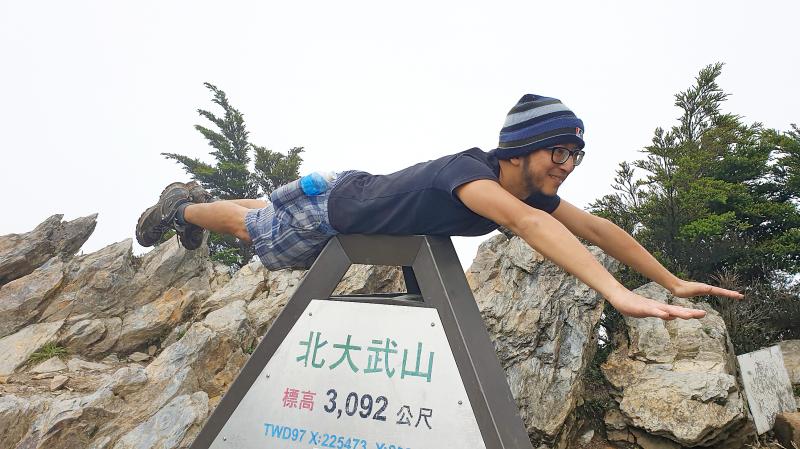
Photo courtesy of Andy Crosthwaite
ON SACRED LAND
Our hardy group of six meets on Saturday afternoon in downtown Kaohsiung. The southernmost peak of over 3,000m in Taiwan, Beidawu is one of the easiest to access as we reach the trailhead in about two hours by van. Besides me, the crew is made of Fliipino, British and American expats who have all been in Taiwan for over a decade. They’re affable fellows around my age or older with calming presences, and even on a shorter trek like this, the quality of the company is crucial.
Officially, Beidawu is listed at number 92 on the nation’s famed baiyue (百岳), or 100 peaks over 3,000 meters, and is a member of the exclusive “five mountains” (五岳) that are said to be most representative of Taiwan’s peaks. They are both ranked A, or easiest, by official sources, but according to local Web site Hikingbook, which ranks the 100 peaks on a 0 to 8 scale, Beidawu falls at Level 2, which indicates rougher trails that include grappling, steeper climbs and more dramatic rises and falls. Level 1 Jade Mountain, by contrast, is mostly a steady climb upward.
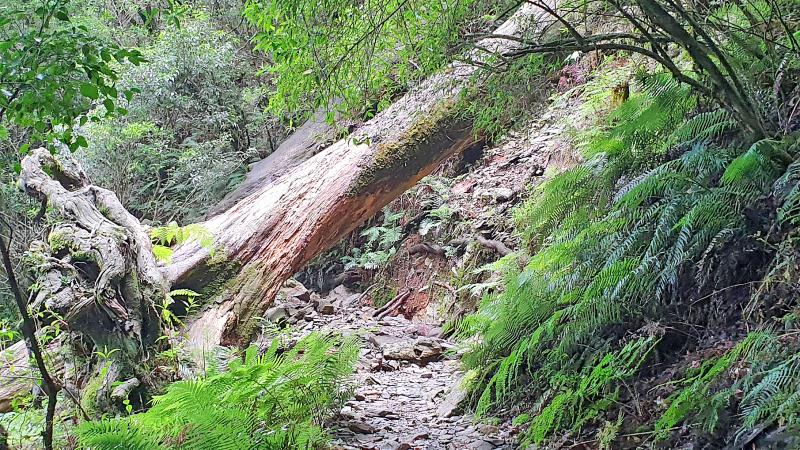
Photo: Han Cheung, Taipei TImes
Beidawu is considered sacred to the Paiwan and Rukai Aborigines, who respectively call it Kavalungan and Tagarawsu, and it’s where the spirits of their ancestors reside. Most of the Paiwan people’s creation myths involve the mountain, and they still face the peak when conducting rituals. It’s said that the Japanese colonizers tried to build a Shinto shrine on the summit, but repeated lightning strikes forced them to move it to its current location on the “false” summit about 45 minute-walk away.
Every year (except for this year due to COVID-19), Paiwan youth make the trek as a modern “coming-of-age” ceremony, but they do it over three days and two nights — it seems like the one-day ascent is for experienced hikers or, in my case, people who overestimate themselves. Hey, I did make it though!
The first night, we camp at the trailhead and bed down early, waking up at 3am to eat breakfast and commence the trek. Cut-off time to the summit is 11am, and Roche warns us several times about the “false summit” at 3,000m where the Japanese shrine sits.
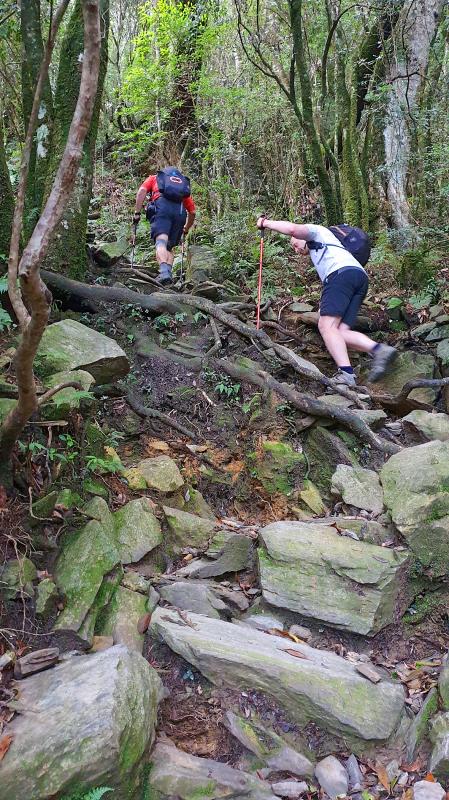
Photo: Han Cheung, Taipei TImes
“You’ll be forgiven for believing this is the top, but it isn’t. The actual summit is another 45 minute hike down the valley and up again. If you get to the false summit and feel whacked, don’t continue,” he notes.
The benefit of camping at the entrance to the trail instead of the lodge is that we didn’t have to deal with the noise of other people coming and going constantly. The campgrounds and lodge can hold up to 102 people, each with their own schedules and varying etiquette, which was a major issue getting any shut-eye when climbing Jade Mountain.
How Morakot ravaged the area is apparent while trekking to the original trailhead where the forestry bureau checkpoint is located — a sign reading “second parking lot” points to a field of overgrown vegetation. There are extraordinarily clean toilets and running water at the checkpoint, and we leave our heavy bags here before we jokingly sign our life away on the form for single-day climbers. Thus begins the roughly 1,550m ascent.
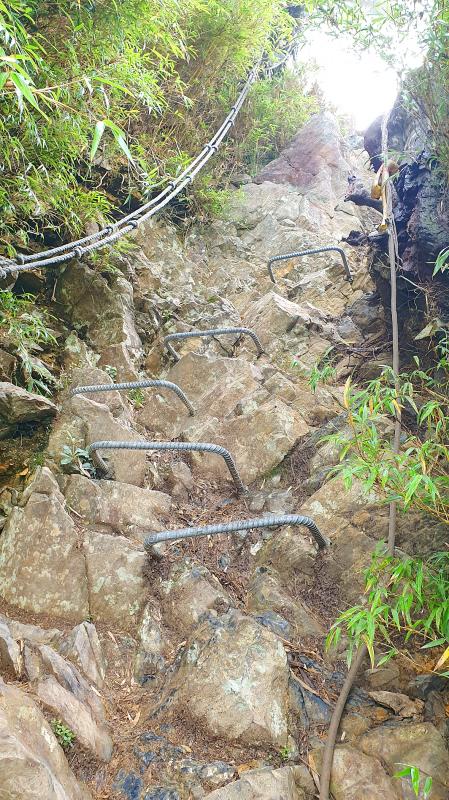
Photo: Han Cheung, Taipei TImes
UNFORGIVING TRAIL
The trail is rather rough as we climb over boulders, duck underneath fallen tree trunks and trudge up steep hills of gnarled roots and stone. It was drizzling the previous day so the path was muddy and slippery, and there wasn’t much of a view.
The first 4km to Kuaigu lodge is manageable, and we could see the bright lights of Kaohsiung’s urban agglomeration in the distance. “This isn’t as bad as Jade Mountain,” I almost say, but experience has taught me to hold my tongue. I’m glad I did.
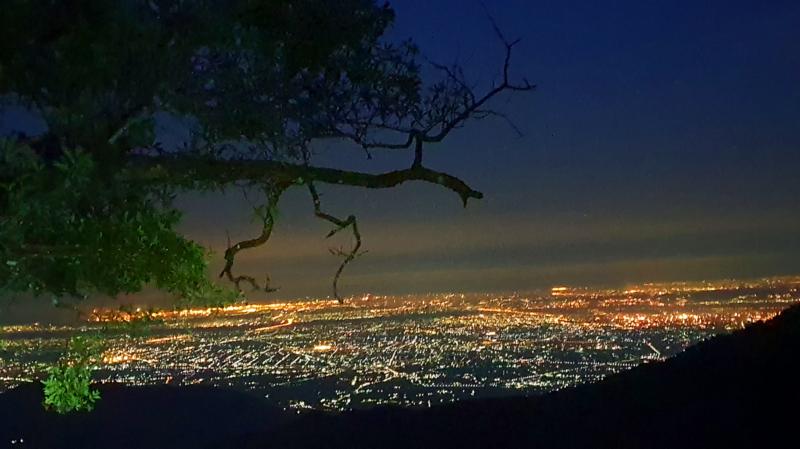
Photo: Han Cheung, Taipei TImes
Due to later-day inclement weather, the best views of the trip came early at the lookout point at about 3.8km up the trail. It was clear enough that we could make out the skyline of Kaohsiung and the offshore island of Siaoliouciou (小琉球). After pausing for a snack and photos, we mosey on. It’s about 2,150m here, meaning that there’s almost another 1,000m to cover. The “trail” — if you could call it a trail anymore, gets increasingly difficult from here as you’ll be grappling, scaling and pulling yourself up various obstacles, with only the occasional flat stretch for respite.
We pass a magnificent cluster of giant cypress trees, the largest about 1,000 years old. The rest of the ascent is a bit of a blur as I just focus on making it to the top. While there was not much view due to fog and cloud, the greenery and quietude were still much enjoyable.
We are supposed to meet at the false summit for lunch, but I spot my hiking mates hanging out at a ruined memorial to Aboriginal soldiers conscripted by the Japanese during World War II, which was occupied by a group of university hiking club students making instant noodles.
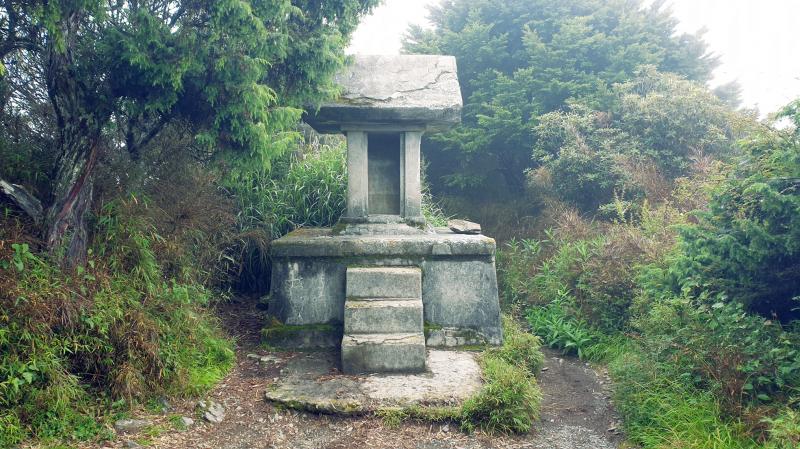
Photo: Han Cheung, Taipei TImes
We finish our meal before someone realizes that this is not the shrine — that’s actually just around the corner, where we find Roche sitting there with a “my group members cannot read” expression on his face (yes, there were signs in English). One of our group members contemplates stopping here, but we eventually decide to tackle the last bit. After a few dramatic ups and downs, we make it to the triangle point that marks the summit. Don’t sit on the stone marker, that brings bad luck — but you can plank, do a handstand or make whatever pose you want on the triangle.
Halfway back to the false summit, we run into the last member of our group still trying to make it up. It is already close to the cut off time, and Roche regrettably tells him that there’s no time for him to reach the top if we are to make it down by nightfall. Plus, thunderstorms were expected in the next few hours.
The descent is actually the hardest part — no wonder some people opt to stay at Kuaigu for another night. Pain starts to build up in my knee, and with each step I feel the bruise in my side sustained when I slipped earlier and fell into a large protruding branch.
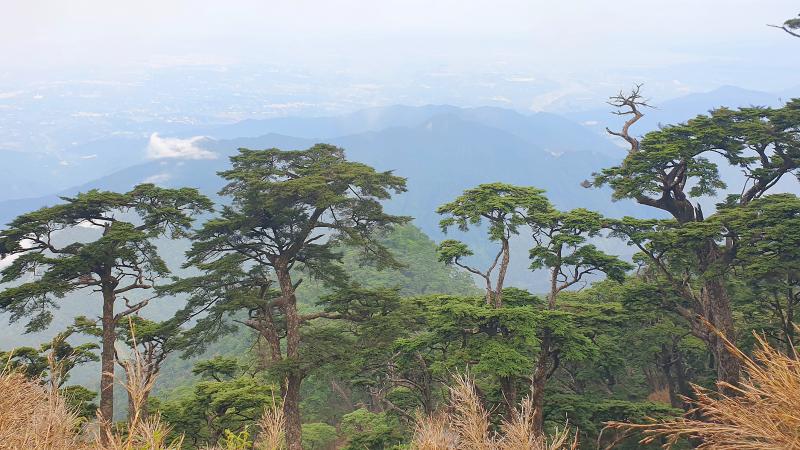
Photo: Han Cheung, Taipei TImes
As mentioned earlier, I barely make it in the end. I consider myself quite a fit person, but I will need more training than my usual routine to make this trek in one day again. It was well worth the pain, but I’ll probably only stick to the multiple-day itineraries for these kinds of behemoths for now.
For complete information on the trail, visit
recreation.forest.gov.tw (English, Chinese, Japanese Korean)
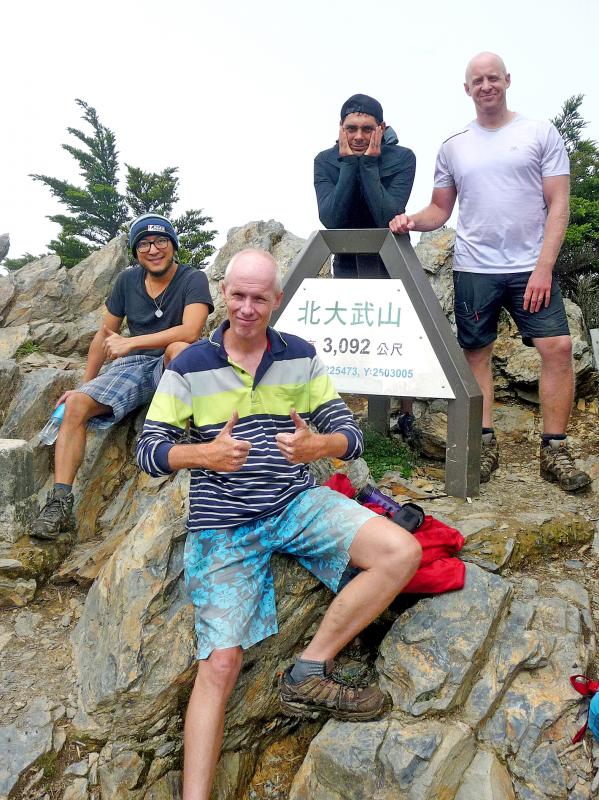
Photo courtesy of Steven Crook
Blue Skies Adventures organizes trips up Beidawu Mountain: www.blueskiesadventures.com.tw
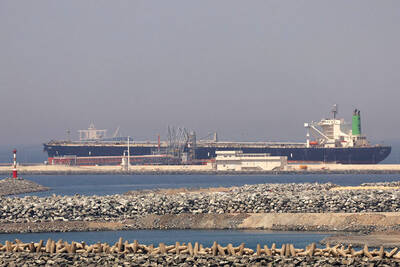
The breakwater stretches out to sea from the sprawling Kaohsiung port in southern Taiwan. Normally, it’s crowded with massive tankers ferrying liquefied natural gas from Qatar to be stored in the bulbous white tanks that dot the shoreline. These are not normal times, though, and not a single shipment from Qatar has docked at the Yongan terminal since early March after the Strait of Hormuz was shuttered. The suspension has provided a realistic preview of a potential Chinese blockade, a move that would throttle an economy anchored by the world’s most advanced and power-hungry semiconductor industry. It is a stark reminder of
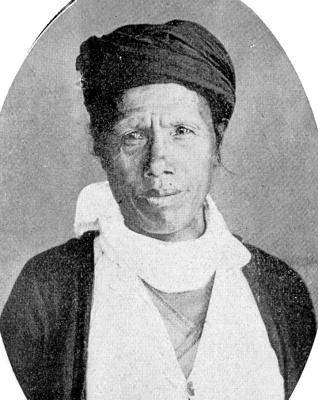
May 11 to May 17 Traversing the southern slopes of the Yushan Range in 1931, Japanese naturalist Tadao Kano knew he was approaching the last swath of Taiwan still beyond colonial control. The “vast, unknown territory,” protected by the “fierce” Bunun headman Dahu Ali, was “filled with an utterly endless jungle that choked the mountains and valleys,” Kano wrote. He noted how the group had “refused to submit to the measures of our authorities and entrenched themselves deep in these mountains … living a free existence spent chasing deer in the morning and seeking serow in the evening,” even describing them as
The last couple of weeks spectators in Taiwan and abroad have been treated to a remarkable display of infighting in the Chinese Nationalist Party (KMT) over the supplementary defense budget. The party has split into two camps, one supporting an NT$800 billion special defense budget and one supporting an NT$380 billion budget with additional funding contingent on receiving letters of acceptance (LOA) from the US. Recent media reports have said that the Taiwan People’s Party (TPP) is leaning toward the latter position. President William Lai (賴清德) has proposed NT$1.25 trillion for purchases of US arms and for development of domestic weapons

As a different column was being written, the big news dropped that Chinese Nationalist Party (KMT) caucus whip Fu Kun-chi (傅?萁) announced that negotiations within his caucus, with legislative speaker Han Kuo-yu (韓國瑜) of the KMT, party Chair Cheng Li-wun (鄭麗文), Taichung Mayor Lu Shiow-yen (盧秀燕) and Taiwan People’s Party (TPP) Chair Huang Kuo-chang (黃國昌) had produced a compromise special military budget proposal. On Thursday morning, prior to meeting with Cheng over a lunch of beef noodles, Lu reiterated her support for a budget of NT$800 or NT$900 billion — but refused to comment after the meeting. Right after Fu’s


 RSS
RSS