


Auxiliano Zapata may be a Warao chief but after fleeing chaotic Venezuela for neighboring Brazil his people are a lost tribe, wondering if they will ever settle in their beloved Orinoco river delta again.
The Warao, who number around 20,000 and usually alternate between towns and traditional rural areas in Venezuela’s northern Orinoco River region, were among the first to flee to Brazil from the economic near-collapse and political unrest under hard-leftist President Nicolas Maduro.
“There was no medicine, no food, no transport, nothing. Everything became too expensive. To get here I had to sell everything. I had a television, a cellphone, a fridge,” said Zapata, 43, at the Pintolandia refugee camp in Boa Vista, the capital of Brazil’s frontier state of Roraima.
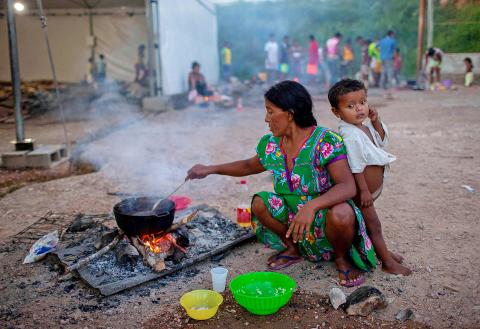
Photo: AFP
The tribal chief, sheltering at Pintolandia with some 600 other Waraos, came across the border five months ago with his wife and 12-year-old son.
Bit by bit the emergency sanctuary, run by the local government, NGOs and Brazil’s military with help from the UN refugee agency, has taken on a more permanent look.
White gravel has been spread over the ground and a volleyball court — almost always in use — set up. A new shelter capable of housing a hundred more sleeping hammocks is under construction.
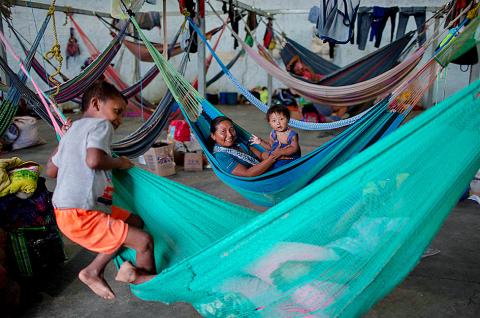
Photo: AFP
While he doesn’t have any work yet, Zapata at least knows his family can get food, feel safe and have access to a school. Such basics have been stripped from society in Venezuela, sending growing waves of migrants and refugees into neighboring countries.
“I would return to Venezuela but I have to wait. I went back three weeks ago to see my father, who is looking after our house, and there is nothing there,” Zapata said. “I won’t tell you more because it makes me sad.”
ALWAYS ON THE MOVE
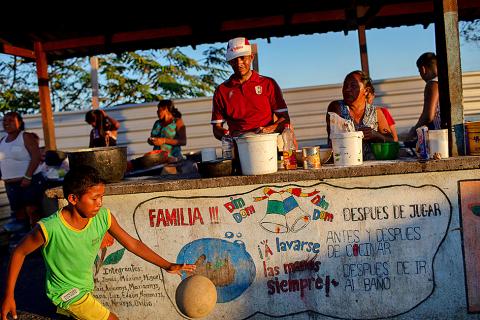
Photo: AFP
He says he feels pain for other tribal members who have not managed to get away, especially those suffering from tuberculosis or HIV, which are common among the Warao. Public health has been especially hard hit by Venezuela’s disintegration, with hospitals lacking almost everything.
The majority of Warao here are familiar with being on the move. They typically follow the tourist seasons, selling their artisanal wares, said anthropologist Emerson Rodrigues, who works at Pintolandia.
In Brazil there are many Warao in the Amazon region cities of Manos and Belem, as well as in Roraima state. They are scattered but secure.
“Here it’s a safe zone where they can stay and build some kind of future,” Rodrigues said.
Help is given to the Warao to go out and sell their handmade goods, to find work and to organize the communal kitchen and other basics of camp life.
No one knows how long they’ll be there. “They aren’t thinking about going back right now,” Rodrigues said. “They come and work, put some money together, then go back to bring money and food, but not to go back and stay — not till there’s a better outlook.”
LONGING FOR WATER
At the Janokoida shelter in Pacaraima, about 200km from Boa Vista, Warao children gather outside at dusk. Reggaeton plays on a small loudspeaker and volleyball and football games get underway as adults cook chicken and tortillas on open fires.
Camp administrators at first offered the refugees prepared meals but the indigenous people prefer going out into the countryside to collect firewood and prepare their own food, said Socorro Lopes dos Santos, who has been coordinating the Janokoida shelter for six months.
Just as at Pintolandia, the common refrain at the shelter, which houses 426 people, is a longing for the distant river and opportunities to hunt and fish that are integral to the tribe’s culture.
“Recently, we did a group activity where we asked them to paint something. Every one of the drawings depicted water,” dos Santos said.
“It’s a community that needs to find its way, and we are trying to help them to take new paths, whether in Brazil or returning to their country of origin,” dos Santos said.
Zapata thinks he may end up as far away as the Brazilian Amazon city of Manaus, several hundred miles to the south, but he still hopes to return to Venezuela one day. “God wants us to get our country back,” he said.
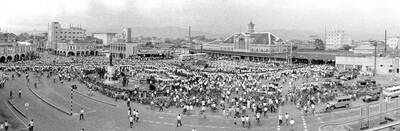
May 11 to May 18 The original Taichung Railway Station was long thought to have been completely razed. Opening on May 15, 1905, the one-story wooden structure soon outgrew its purpose and was replaced in 1917 by a grandiose, Western-style station. During construction on the third-generation station in 2017, workers discovered the service pit for the original station’s locomotive depot. A year later, a small wooden building on site was determined by historians to be the first stationmaster’s office, built around 1908. With these findings, the Taichung Railway Station Cultural Park now boasts that it has
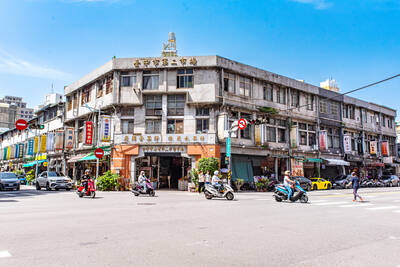
Wooden houses wedged between concrete, crumbling brick facades with roofs gaping to the sky, and tiled art deco buildings down narrow alleyways: Taichung Central District’s (中區) aging architecture reveals both the allure and reality of the old downtown. From Indigenous settlement to capital under Qing Dynasty rule through to Japanese colonization, Taichung’s Central District holds a long and layered history. The bygone beauty of its streets once earned it the nickname “Little Kyoto.” Since the late eighties, however, the shifting of economic and government centers westward signaled a gradual decline in the area’s evolving fortunes. With the regeneration of the once

The latest Formosa poll released at the end of last month shows confidence in President William Lai (賴清德) plunged 8.1 percent, while satisfaction with the Lai administration fared worse with a drop of 8.5 percent. Those lacking confidence in Lai jumped by 6 percent and dissatisfaction in his administration spiked up 6.7 percent. Confidence in Lai is still strong at 48.6 percent, compared to 43 percent lacking confidence — but this is his worst result overall since he took office. For the first time, dissatisfaction with his administration surpassed satisfaction, 47.3 to 47.1 percent. Though statistically a tie, for most

In February of this year the Taipei Times reported on the visit of Lienchiang County Commissioner Wang Chung-ming (王忠銘) of the Chinese Nationalist Party (KMT) and a delegation to a lantern festival in Fuzhou’s Mawei District in Fujian Province. “Today, Mawei and Matsu jointly marked the lantern festival,” Wang was quoted as saying, adding that both sides “being of one people,” is a cause for joy. Wang was passing around a common claim of officials of the People’s Republic of China (PRC) and the PRC’s allies and supporters in Taiwan — KMT and the Taiwan People’s Party — and elsewhere: Taiwan and


 RSS
RSS