


No, it’s not Mexican Independence Day, as some event promoters may claim. In Mexico, Cinco de Mayo is simply a commemoration of the Battle of Puebla, and isn’t really celebrated anywhere else in the country except for, well, Puebla. But thanks to the Americans, who mark the occasion as their favorite excuse to down tequila and margaritas (and celebrate Mexican culture), Cinco de Mayo celebrations are held all around the world — including Taipei.
Almost all Mexican restaurants in town will be hosting events and specials this weekend, and Maji Square will be throwing a party tonight that will feature DJ Marcus Aurelius and Mariachi singer-guitarist Juan Basilio Pina. The fiesta moves to Triangle after 10pm, with DJ Cross Cutz, Marcus (again) and Lachino. Mexican food will be available at Crafted Beer & Co, and Triangle will be serving a round of tequila shots every hour.
■ 8pm tonight to 4am tomorrow, Maji Square and Triangle, Taipei Flora Expo Park (台北花博公園), 1, Yumen Street, Taipei City (台北市玉門街1號)
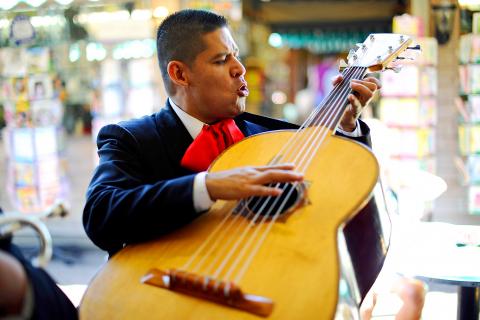
Photo: Kevork Djansezian, AFP
■ Admission is free. For more details, visit www.facebook.com/events /648899208653624
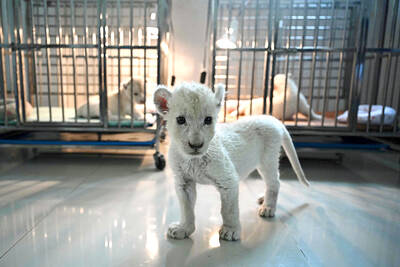
Behind a car repair business on a nondescript Thai street are the cherished pets of a rising TikTok animal influencer: two lions and a 200-kilogram lion-tiger hybrid called “Big George.” Lion ownership is legal in Thailand, and Tharnuwarht Plengkemratch is an enthusiastic advocate, posting updates on his feline companions to nearly three million followers. “They’re playful and affectionate, just like dogs or cats,” he said from inside their cage complex at his home in the northern city of Chiang Mai. Thailand’s captive lion population has exploded in recent years, with nearly 500 registered in zoos, breeding farms, petting cafes and homes. Experts warn the

The unexpected collapse of the recall campaigns is being viewed through many lenses, most of them skewed and self-absorbed. The international media unsurprisingly focuses on what they perceive as the message that Taiwanese voters were sending in the failure of the mass recall, especially to China, the US and to friendly Western nations. This made some sense prior to early last month. One of the main arguments used by recall campaigners for recalling Chinese Nationalist Party (KMT) lawmakers was that they were too pro-China, and by extension not to be trusted with defending the nation. Also by extension, that argument could be
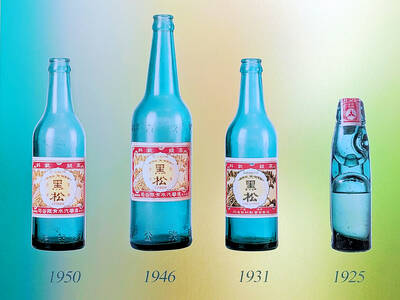
Aug. 4 to Aug. 10 When Coca-Cola finally pushed its way into Taiwan’s market in 1968, it allegedly vowed to wipe out its major domestic rival Hey Song within five years. But Hey Song, which began as a manual operation in a family cow shed in 1925, had proven its resilience, surviving numerous setbacks — including the loss of autonomy and nearly all its assets due to the Japanese colonial government’s wartime economic policy. By the 1960s, Hey Song had risen to the top of Taiwan’s beverage industry. This success was driven not only by president Chang Wen-chi’s
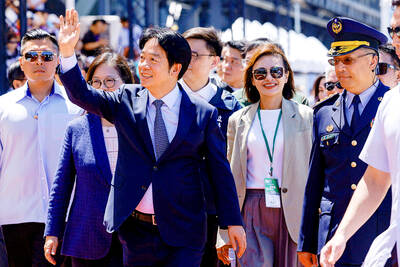
Last week, on the heels of the recall election that turned out so badly for Taiwan, came the news that US President Donald Trump had blocked the transit of President William Lai (賴清德) through the US on his way to Latin America. A few days later the international media reported that in June a scheduled visit by Minister of National Defense Wellington Koo (顧立雄) for high level meetings was canceled by the US after China’s President Xi Jinping (習近平) asked Trump to curb US engagement with Taiwan during a June phone call. The cancellation of Lai’s transit was a gaudy


 RSS
RSS