


Listening to Sangpuy Katatepan Mavaliyw sing can be a transcendent experience. Whether it’s at the intimate Witch House (女巫店) or a corner of the Eslite Music Store (誠品音樂館), his forceful, penetrating voice has the ability to teleport audiences from urban settings to a place where Aborigines believe the wind is their friend, and can be summoned by whistling. When the musician talks, he frequently uses natural metaphors like insects, rivers and trees to get his point across.
It is no wonder, then, that Sangpuy is often introduced as a young man with an old soul, a description the 35-year-old Pinuyumayan musician takes great pride in.
“I love hanging out with tribal elders, singing ancient tunes with them and listening to the tales they tell that happened over a century ago,” Sangpuy said.

Photo courtesy of Sangpuy
He added: “Music is an ability given to me by our ancestors. I am here to share it with others.”
Born and raised in the Pinuyumayan community of Katatipul in Taitung, Sangpuy has always been drawn to the company of his elders. A moment of enlightenment came early in life when, as a junior high school student, he found a cassette tape of his grandfather’s singing and was immediately captivated. He started to learn the Pinuyumayan language and ancient tribal songs from village elders and became one of the few young members in Katatipul, or Jhihben (知本) as it is known in Chinese, who could communicate using the tribal tongue.
MEETING HOUSE
As a teen, Sangpuy joined Palakuwan, a youth meeting house that is unique to the Pinuyumayan tribe. Banned by the Japanese during the colonial era and later under the martial law imposed by the Chinese Nationalist Party (KMT), Palakuwan was restored in Katatipul about 20 years ago by villagers who, after participating in an Aboriginal performance staged at the National Theater (國家戲劇院), decided to revive the Pinuyumayan culture.
Functioning as the political, military, administrative and educational center, Palakuwan is where young Pinuyumayan men acquire skills and survival knowledge, study history and learn about rituals, traditional stories and morality before they are recognized as adults, Sangpuy explains.
“It is utterly important to know your history, culture and traditions because everything you do today is linked to the past,” he said.
Sangpuy’s experiences with the youth association turned out to become a significant part of his life. Not only did the Pinuyumayan musician receive comprehensive training in the minutiae of Palakuwan, but he was appointed leader — twice. It’s a position that requires complete dedication to the tribe.
“We are a matriarchal society. Women own land, houses, crops and livestock, whereas a man only has his knife and the clothes he wears. We belong to the tribe; our work is to serve the whole village,” he said.
Though Sangpuy’s responsibility to his people kept him in Katatipul until he was 27, over the years his music has taken him to more than 30 countries as far away as Uzbekistan and Mexico.
MUSICAL JOURNEY
The journey began in 1999 when the 21-year-old Sangpuy made his first visit to Taipei to perform in a fundraising event for victims of the Sept. 21 earthquake that year, which devastated many of the country’s aboriginal villages. After the show, composer and producer Chen Chu-hui (陳主惠) invited him to join Feijuyuenbao Synectics (飛魚雲豹), an activist music group formed by artists including Chen, Atayal musician and activist Inka Mbing and Paiwan vocalist Ngner-Ngner.
In the immediate aftermath of the disaster, Sangpuy and other members of the Feijuyuenbao Synectics made treks on foot or by bike to bring food and aid to mountain hamlets cut off from the outside world. Viewing music as a medium for preserving and promoting Aboriginal culture, they held performances in Aboriginal communities, collected traditional songs and took part in music festivals and events on different countries.
One of the most memorable experiences, Sangpuy recalled, took place at Riddu Riddu, an annual Sami music festival held in Olmmaivaggi, Norway, that was established by a group of Sami as a means of raising awareness of their culture and that of other indigenous peoples.
“It is a small, remote town,” Sangpuy said of the place where the festival was located.
“We were there in July, in eternal daytime,” he said. “A group of tribal herders from Siberia attended. They set out on the trip along with thousands of reindeers. They arrived one and half months later, with the men’s beards growing long and thick.”
Under the arctic Sun, Sangpuy wrote a song called Dalan, or Path in the Pinuyumayan language. For him, the work he has done with the Feijuyuenbao Synectics has been inspiring both musically and in terms of raising Aboriginal awareness.
“When we performed abroad, the response to our music was so overwhelmingly positive that it has given me the strength to continue my path of traditional tribal music,” he said. “I have been singing the music passed down from our ancestors. And I create new songs as a way to respond and express my gratitude to them.”
ANCIENT TUNES
For his self-titled debut album, released in November of last year, Sangpuy collected 14 works, half of which are ancient tunes and half that are new compositions, to reflect on life, earth and the relationship with ancient spirits and human beings. One song that the musician holds close to his heart is the Pai’lai’law, or Heroic Poem, an ancient chant Pinuyumayan elders sing with young hunters during the Great Hunting Festival in December. The voice of the elder in the song belongs to Sangpuy’s late mentor Tien Ching-liu (田清流) and was originally recorded in 2002 at the village.
To make the record, Sangpuy went back to the same spot in the mountain where he and Tien chanted a decade ago and sang to the deceased ancestors.
“It was a summery night in August with insects chirping far and near. It was exactly the same as 10 years ago,” he said. “There were just two of us, traveling through time and singing to one another.”
Sangpuy also makes traditional musical instruments, including the nose flute and the mouth harp, by hand. He said the nose flute is one of the most representative instruments used by Taiwan’s indigenous people, and the sound it produces is unique to the country. For this reason, he wrote a tune called Mother featuring the flute made of arrow bamboo as a tribute to Mother Earth and all mothers in the world.
Somewhat surprisingly, the finely crafted album, wasn’t produced by a record company, but was a collaboration among friends, supporters and a small studio which contains only three staff members, including Sangpuy. Refusing to join a label or enter music competitions for fame and money, the musician said what is important is the process, the course of things and all the people he meets along the way.
“We bring the ancestors’ music to the cities. They are not just songs, but a powerful force especially to the Aborigines who have left their villages,” he said.
ABORIGINAL RIGHTS
Sangpuy said that in Katatipul, 20 years after the tribe’s cultural revitalization began, the younger generation has become more interested and involved in tribal traditions and affairs. Many have taken an active role in recent Aboriginal protests against land seizures and flawed development plans such as the proposed transfer of the public cemetery in Katatipul.
According to the former youth leader, Palakuwan has also played a vital part in the Aboriginal land rights movement in recent years.
“Village elders teach us that we should be like bees, tough and united, not scattered like flies after feeding on rotten meat,” Sangpuy said.
“We are a nation. When we feel threatened, we use our own way to protect our people. The young men always stand on the frontline. We never back down as long as we have the support from our elders.”
Back in Taipei, celebrated choreographer Bulareyaung Pagarlava, who hails from the Paiwan village of Jialan (嘉蘭) in Taitung, has only known Sangpuy and his music for a few months, yet has already become an enthusiastic fan. The choreographer said he was deeply moved when first hearing the Song of the Wind because every Aborigine remembers that when they were little, their grandmothers would always say the wind would come if they whistle during the hot summer days.
“His music is our nostalgia,” Bulareyaung said. “I left my tribe when I was 15, not knowing anything about Paiwan culture and history. Now I am 40. I want to go home, and I thank Sangpuy’s music for giving me the strength to do just that.”

Ajay Verma, a consultant gastroenterologist at Kettering general hospital in Northamptonshire, says our gut is a “complex machine.” “It is constantly providing us with the nutrition we need, initially to grow and develop, and then for us to survive, thrive and repair from injury and illness.” How can we keep it functioning well? Put simply: “Make sure what you put into it is balanced, and that you clear out its waste products adequately,” Verma says. “In a general gastroenterology clinic, the most common conditions we see are irritable bowel syndrome (IBS), gastroesophageal reflux disease, inflammatory bowel disease and constipation,” says Nisha
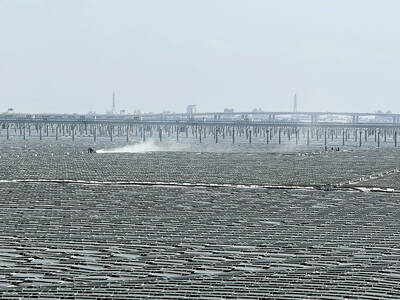
The arithmetic is straightforward and uncomfortable. By the end of 2025, Taiwan had committed itself to a 50-30-20 electricity mix — half natural gas, 30 per cent coal, 20 per cent renewables. The Ministry of Economic Affairs’s (MOEA) own monthly energy reports tell a different story. Natural gas reached 47.8 per cent of generation last year. Coal stood at 35.4 per cent, comfortably above its target ceiling. Renewables came in at 13.1 per cent, well short of the 20 per cent Taipei had pledged a decade earlier. Installed renewable capacity reached roughly half of the 12 gigawatts (GW) the government

Last week US President Donald Trump was asked by a reporter whether he would speak on the phone to the President of Taiwan. “l’ll speak to him. I speak to everybody. We have that situation very well in hand,” Trump said. This marked the second time in a couple of weeks he had said he would talk to the President of Taiwan. In 2016 he famously took a call from then-president Tsai Ing-wen (蔡英文), when he was president-elect. Despite warnings that the apocalypse was nigh because of a phone call, the world quickly forgot about the conversation between two democratically-elected presidents.
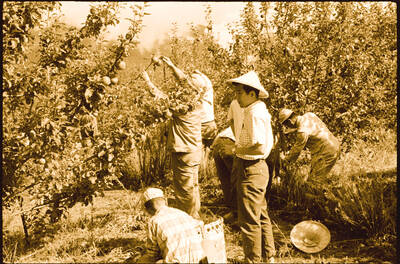
May 25 to May 31 Few believed that apples could be cultivated on a commercial scale in Taiwan’s high mountains. When horticulturalist Cheng Chao-hsiung (程兆熊) first proposed the idea in 1955, both American and Taiwanese colleagues dismissed it as implausible, arguing that temperate fruit could not be reliably grown on a subtropical island, especially on rugged terrain. However, it was this terrain in the Central Mountain Range where many Chinese Civil War veterans were resettled in the late 1950s. With limited job prospects and no family in Taiwan, they were placed on cooperative farms aimed toward self-sufficiency. Some say the conditions


 RSS
RSS