


Hsiao Hung-jen (蕭閎仁)
Hsiao Hung-jen’s Vol. Three (蕭閎仁‧第三張創作專輯)
Sony Music
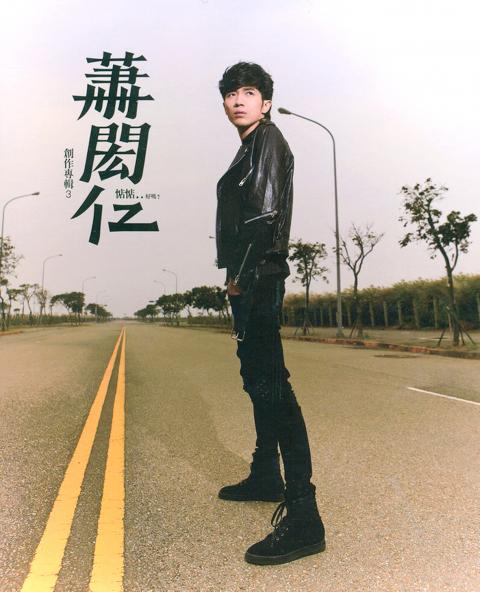
Hsiao Hung-jen’s Vol. Three (蕭閎仁‧第三張創作專輯) is Mando-pop singer/songwriter Hsiao’s third album in as many years. The hugely talented but underexposed singer pushed the Mando-pop envelope in 2008 with the single Can’t Stand Looking Any Longer (看袂落去), in which he adroitly blended English, Mandarin and Hoklo. In this third outing, the 26-year-old continues to deliver an innovative R ’n’ B sound while switching among the three languages within the same songs.
Hsiao became an instant child star when he received five consecutive victories on the now-defunct talent show Five Lights Awards (五燈獎) in 1997.
Hsiao, who co-wrote the 10 tracks on the album, displays an impeccable sense for melodic drive. While some of his songs feature quirky titles such as Wasabi Coke (芥末可樂) and Erase Me (抹煞我), they are in fact meaty ballads propelled by irresistible music.

The album’s only miscalculation is its lead single Silent ...OK? (惦惦好嗎), a light-hearted romper about the frays and follies of romantic relationships. Hsiao’s irreverence turns sour when he tells his girlfriend to “shut up” in two languages.
Elsewhere, Hsiao flaunts his versatility by tackling different musical styles: Shutter Island (隔離島) is a lilting rock anthem, while Detective Galileo (神探伽利略) is a jazzy gem inspired by big band music.
He even turns his image as a waifish man-boy into a manifesto with the track I’m a Slim Guy (我是一個瘦瘦的男生), in which his soulful improvisation glides over a contagious chorus.
Hsiao may not have picture-perfect heartthrob looks, but his innovative singing will undoubtedly receive kudos from anyone who appreciates Taiwan’s home-spun R ’n’ B. (by Andrew C.C. Huang)
Freya Lim (林凡)
Holding Back the Tears (眼淚流回去)
Rock Records
Freya Lim (林凡) put her name on the map with an entrancing cover of Mando-pop icon Sandy Lam’s (林憶蓮) classic The Night is Too Dark (夜太黑) in 2000. She then vanished from the radar until Lin Yu-chun (林育群) resuscitated her hit One Person’s Life (一個人生活) late last year.
Although Lim is somewhat lacking in persona as a star, she more than makes up for it with an abundance of emotionally layered ballads on Holding Back the Tears (眼淚流回去), her first Chinese-language album in nine years. Although Lim suffers from sounding a bit too much like Lam, there is no denying that she boasts a bell-like voice that is at once warming and emotionally engaging.
Lim succeeds in establishing herself as a “romantically therapeutic diva” (療愛歌姬), outdoing the latest album by reigning “therapeutic diva” Fish Leong (梁靜茹).
The opening track, Wounded (重傷), is an atmospheric ballad about the wish to stand up after a romantic injury, and features a Chopin-like piano intro before gliding into Lim’s sultry crooning. Say What You Will, the English version of the same song, is also included on the album.
Hong Kong master lyricist Lin Xi (林夕) (pop diva Faye Wong’s (王菲) long-term collaborator) helps out with his trenchant Scared (這樣愛你好可怕), a pop gem that mingles romantic desire with psychoanalysis. “I am fake, I am shameful, I am jealous, of your happiness. I too think I am horrific,” Lim sings with rueful conviction.
The most emblematic song is the title track, Holding Back the Tears. The name leads one to expect a tear-jerking ballad, but it is an invigorating electronica track. Lim juxtaposes her emotionally compelling vocals with the pulsating synth beats to good effect.
With the title track proclaiming “love ends here, hold the tears back,” Lim’s latest outing will serve well as a soundtrack for anyone recovering from heartbreak.(by Andrew C.C. Huang)
Stefanie Sun (孫燕姿)
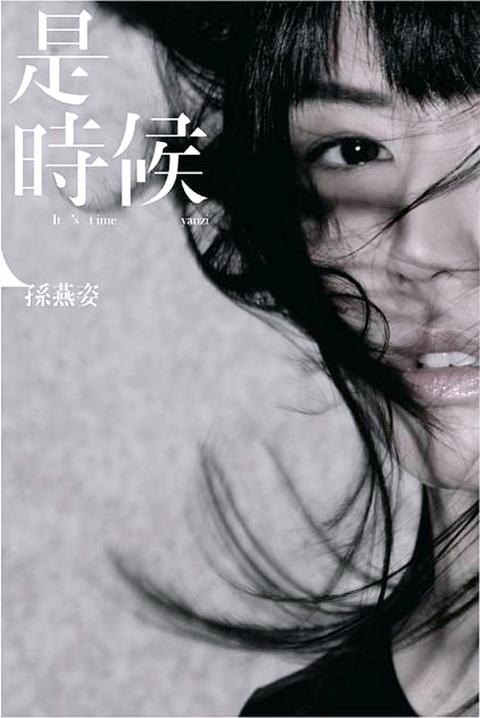
It’s Time (是時候)
Wonderful Music
Stefanie Sun (孫燕姿), who took a four-year hiatus from her illustrious career after being shaken up by a run-in with gangsters while filming a music video in Egypt, makes a much anticipated comeback with a difficult task — a concept album about time.
Several tracks from the album It’s Time (是時候) witness Sun grappling with existential crisis. In Thief of Time (時光小偷), she contemplates the passing of time, while in Tomorrow’s Memory (明天的記憶) she deliberates on how today’s persistence can lead to pleasant memories tomorrow. The title track, It’s Time, describes a decision to set her lover free in order to give him happiness.
The lead single Telling the World the Words From My Heart (世說心語) is a new age-inspired song about spiritual liberation. “I want to laugh, I want to love, I want to run, I want to hug,” Sun croons with her trademark idiosyncratic phrasing. She also recites part of a poem by Indian writer Sarojini Naidu.
While the album leans toward philosophical contemplation, it does offer a few tracks about romantic yearning. The second single, When the Wintry Night Gets Warm (當冬夜漸暖), is a ballad that advocates “one sparkling moment” over “a hundred affairs.” Another standout is Kingdom of the Idiots (愚人的國度), which describes the blinding nature of being in love.
Sun ventures into rock with Empty Words (空口言), about an unfulfilled romantic promise, and sinks her teeth into edgy emotion with Almost Crazy (快瘋了).
With its atmospheric, slow tracks that lack strong melodic hooks, It’s Time comes across as a moody lounge album. None of the tracks approaches the catchiness of Sun’s early classics such as Encounter (遇見). However, the highly distinguished vocals elevate the material, rendering this potentially opaque concept album accessible.
All Japan Goith and Skaraoke
Pride of Asia (亞洲的驕傲)
Taiwan Colors Music
It’s no longer just a subtropical climate and an island culture that connect Okinawa and Taiwan. Now we have ska.
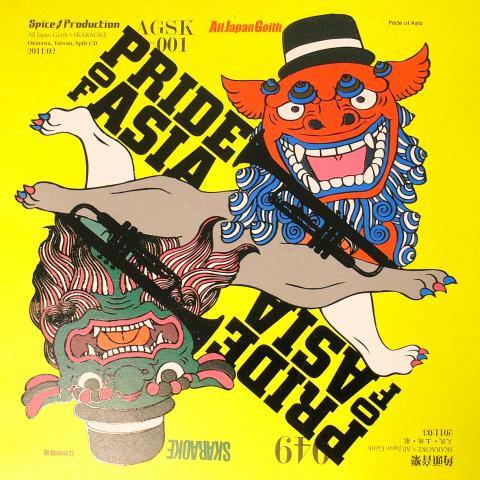
Pride of Asia (亞洲的驕傲), a team effort by All Japan Goith of Okinawa and Taiwan’s own Skaraoke (司卡拉OK), is a fail-safe party disc and a respectable tribute to a genre with roots in Caribbean music.
The bands take turns presenting their own material and work together on songs such as The Specials’ Little Bitch, a fun, frenetic rendition that opens the album.
Ska Train to Okinawa conjures up a nice Okinawan-Taiwanese stew. The song begins with a skanking 12-bar blues that gets spicier when All Japan Goith throws in riffs from the sanshin (三線), a banjo-like instrument used in Okinawa as well as Taiwan and China. The band also breaks into some peppy Okinawan folk melodies, which Skaraoke bandleader and trombonist Thomas Hu (胡世漢) answers by singing the Taiwanese Aboriginal chant Ho Hai Yan (吼海洋) throughout the choruses. It’s a big, beautiful mess.
As for their collaboration, Hu’s lyric in Ska Train sums it up nicely: “This is a song about unity/An island style big family/Forget that foreign policy/Just remember to say please.”
While Skaraoke shows a Latin jazz influence on Cha Cha For You, All Japan Goith is a little more boisterous with its stronger punk and rock influences. Club Utopia, sung in Japanese, brings the Mighty Mighty Bosstones to mind — that is, imagining that the Bosstones were into J-pop.
One of Skaraoke’s better tracks, Run Formosa, blends a rousing vocal chorus, a funky Caribbean lilt and a hint of Taiwanese pride in the simple but well-crafted lyrics. All Japan Goith ends the album with Just Sayin’, which sounds like it belongs on a soundtrack to a 1970s Japanese samurai TV drama.
If you’re looking for some fresh party music, or if ska just makes you smile, this disc awaits. (by David Chen)

Taiwan’s English education system is being pulled apart by three opposing forces. Bilingual Nation 2030 pulls students toward English and global communication. Artificial Intelligence (AI) readiness pulls them toward digital judgment, verification and AI-mediated work. But Taiwan’s old exam culture pulls them back toward memorization, grammar drills, timed reading and correct answers. If the education system keeps using old exams to define success, it risks producing graduates who are neither genuinely bilingual nor genuinely AI-ready, but trained for tasks machines can already perform. The first force is Bilingual Nation 2030. Launched in 2018, the policy aimed to “help Taiwan’s workforce connect

It seems every few days one bumps into one of those “real man” comments in which Taiwan is urged to “face reality” or similar, and “make a deal,” with the speaker implying that soon it will be too late. “Deal” advocates always present themselves as having a superior grip on reality, and the manly ability to make the “hard choice.” Their testosterone-laden language often echoes that of Taiwan sellout advocates. Note that such commentary always specifies a process (“make a deal, work with, make progress”), never the end state of what occupation by a violent authoritarian colonialist state will entail. In
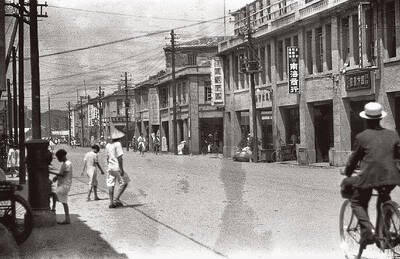
June 1 to June 7 "If all Taiwanese were as afraid of dying as you, then what would happen?” Physician Shih Chiang-nan (施江南) reportedly said this to his wife Chen Chiao-tung (陳焦桐) after she urged him to stop intervening on behalf of Taiwanese soldiers stranded overseas after serving in the Japanese Army during World War II. Shih had clashed with high-ranking officials over the issue, engaged in several heated arguments with Taiwan governor-general Chen Yi (陳儀) and allegedly shouted at general Ko Yuan-fen (柯遠芬), chief of staff of the Taiwan Garrison Command, over

“Taiwan’s Opposition Leader Comes to US With a Message Straight Out of Beijing” read a May 31 headline in the Wall Street Journal. Top US administration officials and members of Congress almost certainly read the WSJ, and if there was a bullet point takeaway that people in Washington should absorb ahead of Chinese Nationalist Party (KMT) Chair Cheng Li-wun’s (鄭麗文) arrival in DC on June 9, that headline is it. The last few columns have discussed this very topic, and the timing is not coincidental. While those top officials likely do not read the Taipei Times, judging by the number


 RSS
RSS