


Burned Cheese (焦起司) near Shida night market has several identities. Its ground floor is a cozy cafe with wooden furniture, an antique gramophone and free Wi-Fi — except for dinnertime, when guests with books and laptops are booted out (unless they order a meal). At night its basement bar (BC Bar) takes center stage, with gaudy decor (including a chandelier enclosed in an acrylic table) that is a complete turnaround from upstairs. The restaurant’s English name sounds odd, but its Chinese moniker connotes luscious melted cheese.
Unfortunately Burned Cheese’s menu, like its decor, is all over the place, ranging from pasta dishes to barbecue ribs to a particularly awful sandwich. The latter was the restaurant’s goose liver pate and orange segment sandwich, the most exciting option among a list of ordinary-sounding submarines. For NT$140, I expected the portion to be small, but I wasn’t prepared to get four triangles of plain white bread topped with single slices of orange plunked on top. The bread was held together by a very, very thin smear of pate — so thin, in fact, that the flavor was lost underneath the bread (too soft) and fruit (too dry and pithy). My appetizer, baked crabmeat and cheese in mushroom (NT$120) was also unsatisfactory. I could barely taste any shellfish and the accompanying sauce, made of a sugary substance flavored with a hint of balsamic vinegar, was extremely sweet and a poor match for the mushroom and cheese.
The food on a second visit was better, but still not great. We started with baked escargot and cheese in potato (NT$160). The potato slices were mealy and the snails were lost under layers and layers of cheese.
For our main course, I stuck to pasta, the restaurant’s signature, and ordered the country-style farfalle with pesto sauce (NT$200). The butterfly pasta was too soft, the pesto sauce bland and, in addition to diced pepper and broccoli, the dish was also topped with baby corn and enokitake mushrooms. The latter was an incongruous touch, but added some welcome texture and flavor. My companion had the roasted pork spare rib with barbecue sauce (NT$390). The ribs had some deliciously tender meat; the sauce, however, was unusually sweet and had little tang.
We had the restaurant’s signature cheesecake (NT$80), which was topped with a shell of hard caramel-like creme brulee and probably the best part of our meal.
Despite its lackluster menu, Burned Cheese seems to be doing well. Both floors were filled on a Sunday evening and many diners were sipping cocktails (which range in price from NT$180 to NT$400) or glasses of wine (NT$160 per glass or NT$800 to NT$1,200 per bottle) from a short wine list. The service is friendly and quick. On both my visits, the appetizers arrived in the middle of the meal. On my second visit, there was a 15-minute lag between our main dishes, but at least dessert arrived promptly.



Taiwan’s English education system is being pulled apart by three opposing forces. Bilingual Nation 2030 pulls students toward English and global communication. Artificial Intelligence (AI) readiness pulls them toward digital judgment, verification and AI-mediated work. But Taiwan’s old exam culture pulls them back toward memorization, grammar drills, timed reading and correct answers. If the education system keeps using old exams to define success, it risks producing graduates who are neither genuinely bilingual nor genuinely AI-ready, but trained for tasks machines can already perform. The first force is Bilingual Nation 2030. Launched in 2018, the policy aimed to “help Taiwan’s workforce connect
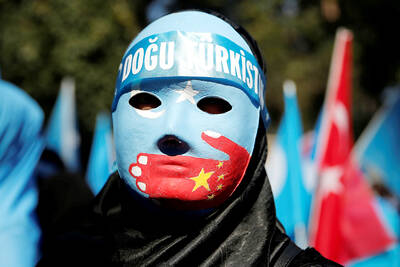
It seems every few days one bumps into one of those “real man” comments in which Taiwan is urged to “face reality” or similar, and “make a deal,” with the speaker implying that soon it will be too late. “Deal” advocates always present themselves as having a superior grip on reality, and the manly ability to make the “hard choice.” Their testosterone-laden language often echoes that of Taiwan sellout advocates. Note that such commentary always specifies a process (“make a deal, work with, make progress”), never the end state of what occupation by a violent authoritarian colonialist state will entail. In
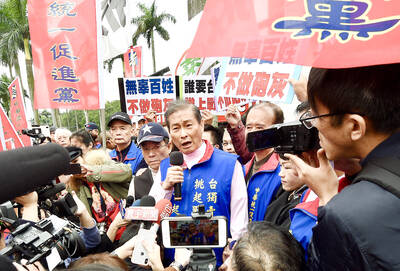
There are shadowy cabals plotting to sell out Taiwan to be annexed by China, by invasion if necessary. Fortunately, they are buffoons. In 2019, former Bamboo Union gangster and founder of the China Unification Promotion Party (CUPP), Chang An-le (張安樂, colorfully known as “White Wolf”), led a protest at the Legislative Yuan against comments made by then-premier Su Tseng-chang (蘇貞昌) that in the event of an attack by China, he would never surrender, but would protect the nation by fighting to the end, even if he only had a broom. Chang had party members bring a wooden casket that they
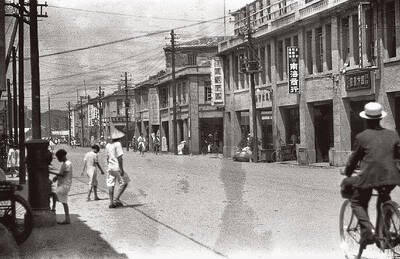
June 1 to June 7 "If all Taiwanese were as afraid of dying as you, then what would happen?” Physician Shih Chiang-nan (施江南) reportedly said this to his wife Chen Chiao-tung (陳焦桐) after she urged him to stop intervening on behalf of Taiwanese soldiers stranded overseas after serving in the Japanese Army during World War II. Shih had clashed with high-ranking officials over the issue, engaged in several heated arguments with Taiwan governor-general Chen Yi (陳儀) and allegedly shouted at general Ko Yuan-fen (柯遠芬), chief of staff of the Taiwan Garrison Command, over


 RSS
RSS