


Two very different shows opened the 11th Taipei Arts Festival (第十 一屆台北藝術節). Greenray Theater’s Neckties and High-Heeled Shoes — A Musical (領帶與高跟鞋) played to an enthusiastic crowd at the Zhongshan Hall (台北市中山堂) on Friday, and despite the relative simplicity of its setting — musical accompaniment was provided by a single piano — the show took off with great energy and an easy confidence.
In the first third of Neckties, this 15-year-old production about office politics and romantic rivalry, which compares well with many of the technically more sophisticated musicals that have followed in its footsteps, seemed to have aged gracefully.
Performances by Luo Bei-an (羅北安), the show’s creator and director, and Lee Ming-ze (李明澤), as a cynical time-serving office worker and the office janitor, respectively, had comic verve, even if the jokes were well-worn.
Many of the office types are still easily recognizable, which is a rather melancholy reflection on Taiwan’s office culture — though much has changed, much remains the same.
There might have been sufficient life in this musical to carry it beyond its two-hour performance time if Luo had not directly explicated the musical’s serious themes: the destructiveness of the rat race and the pressures that women face in Taiwanese society.
Hackneyed philosophizing took over from the more than adequate light comedy of the opening sequences, and ended with an interminable dream sequence about daring to dream your dreams, which is different from actually getting out there and chasing your dream. The section expressed a degree of fatalism that emerged as a remarkable contrast to the more assertive emotions of Western musicals.
As a return to the roots from which the glittering spectacle of the Taiwanese musical emerged, Neckties was undoubtedly interesting, but it fails to find a transcendent musical expression of its serious themes — one thinks of Climb Every Mountain, which keeps even a musical as kitschy as The Sound of Music alive and kicking.
In an interview with the Taipei Times during rehearsals for Neckties, Luo had lamented the lack of mainstream stage performances that also carry a serious message. Many shows are either comic froth, or inaccessible experimental theater. As an effort to fill this gap Neckties was commendable, but it remains very much a product of its time and place.
On Saturday at the Metropolitan Hall, K.Lear, an interesting interpretation of Shakespeare’s King Lear by Marie Montegani, saw silence speak louder than words in a production that made extensive use of sign language. King Lear is a play that has much to say about the difficulties of getting across what one means and being misunderstood.
The hearing impairment of two of the main cast members drove home the themes that this production explores. Sign language contributes to the production actively, rather than being merely an aid to the hard of hearing, making the point, loud and clear, that disability, and our efforts to overcome it, can open new worlds to our understanding.
It was nevertheless unusual to have some of the most powerful of Shakespeare’s passages acted in silence. Lear’s “Howl, howl, ...” speech over the body of Cordelia was signed, with no other sound, to devastating effect, imparting new power to the familiar words.
Unfortunately, the silence also highlighted the audience’s restlessness, especially toward the end of the 135-minute performance. The lack of an intermission proved a strain for some, but gave the play, which also dispensed with the usual divisions between scenes and acts, an attractive fluidity.
With actors communicating in French and sign language, prodigious strain was put on audience members who understood neither as they tried to keep up with the rush of subtitles on either side of the stage, while watching the complex action.

Following the shock complete failure of all the recall votes against Chinese Nationalist Party (KMT) lawmakers on July 26, pan-blue supporters and the Chinese Communist Party (CCP) were giddy with victory. A notable exception was KMT Chairman Eric Chu (朱立倫), who knew better. At a press conference on July 29, he bowed deeply in gratitude to the voters and said the recalls were “not about which party won or lost, but were a great victory for the Taiwanese voters.” The entire recall process was a disaster for both the KMT and the Democratic Progressive Party (DPP). The only bright spot for
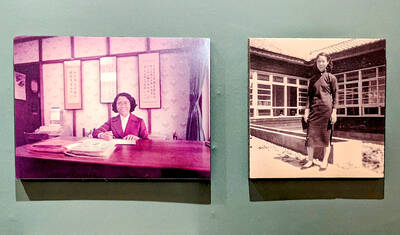
Aug. 11 to Aug. 17 Those who never heard of architect Hsiu Tse-lan (修澤蘭) must have seen her work — on the reverse of the NT$100 bill is the Yangmingshan Zhongshan Hall (陽明山中山樓). Then-president Chiang Kai-shek (蔣介石) reportedly hand-picked her for the job and gave her just 13 months to complete it in time for the centennial of Republic of China founder Sun Yat-sen’s birth on Nov. 12, 1966. Another landmark project is Garden City (花園新城) in New Taipei City’s Sindian District (新店) — Taiwan’s first mountainside planned community, which Hsiu initiated in 1968. She was involved in every stage, from selecting

As last month dawned, the Democratic Progressive Party (DPP) was in a good position. The recall campaigns had strong momentum, polling showed many Chinese Nationalist Party (KMT) lawmakers at risk of recall and even the KMT was bracing for losing seats while facing a tsunami of voter fraud investigations. Polling pointed to some of the recalls being a lock for victory. Though in most districts the majority was against recalling their lawmaker, among voters “definitely” planning to vote, there were double-digit margins in favor of recall in at least five districts, with three districts near or above 20 percent in
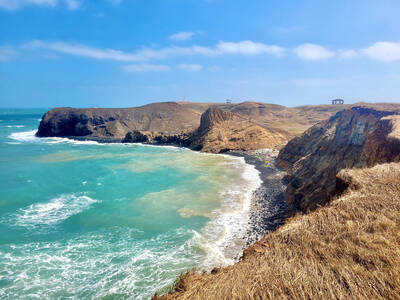
The great number of islands that make up the Penghu archipelago make it a fascinating place to come back and explore again and again. On your next trip to Penghu, why not get off the beaten path and explore a lesser-traveled outlying island? Jibei Island (吉貝嶼) in Baisha Township (白沙鄉) is a popular destination for its long white sand beach and water activities. However, three other permanently inhabited islands in the township put a unique spin on the traditional Penghu charm, making them great destinations for the curious tourist: Yuanbeiyu (員貝嶼), Niaoyu (鳥嶼) and Dacangyu (大倉嶼). YUANBEIYU Citou Wharf (岐頭碼頭) connects the mainland


 RSS
RSS