


The stereotypical Asian female figure is petite, and a decade ago clothing stores in Taiwan almost uniformly catered to a very limited size range, says Amy Tu (杜慧芳), founder of 5XL, a line of plus-size clothing stores.
“The plus-size clothing back then wasn’t very nice or professional looking. Women sometimes had to resort to wearing maternity clothes or men’s shirts. Otherwise they had to shop when they were abroad,” says Tu. A clothing designer, Tu opened 5XL in part because she was frustrated that she could not find stylish clothes that flattered her own voluptuous figure.
Women who wear plus sizes now have a greater variety of clothing to select from — and some of it is quite stylish. MiniMe, which recently opened in Taipei’s East District across from Breeze Center (微風廣場), sells well-tailored suits, dresses and formal wear made from luxurious fabrics. Many plus-size clothing stores embrace the philosophy that all sizes are beautiful. Instead of hiding figures behind oversized tunics and baggy pants, styles now lean toward curve-flaunting silhouettes that take their cue from the latest runway fashions.
“It used to be difficult to be fashionable if you wore a plus-size and there was a very limited selection of styles to chose from. In the US, plus-size clothing designers keep an eye on trends and that is the spirit that we try to bring to our clothes,” says Vickie Chang (張偉琪), miniMe’s marketing director.
miniMe
MiniMe’s racks are hung with clothing made from a wide array of fabrics: white-dotted Swiss, shimmery brocades, plush velvets, warm tweeds and soft jersey knits. The textures and weaves are shown off in tailored shift dresses, suit jackets, blouses and skirts.
The store, which opened last year, was founded by Merryson Corporation (美立信實業股份有限公司), a maker of luxury bedding for export to department stores in the US and Europe under different designer names. When Merryson launched its own brand, it decided to differentiate itself in a crowded retail marketplace by creating a line of plus-size women’s clothing with a focus on office wear and formal dresses in US sizes 10 to 20.
“We thought we could make our clothing unique by making it more fashion-conscious,” says Chang. “Our clients are stylish women who want to downplay the parts of their body they don’t like while at the same time highlighting their figures.”
Many designs show off the waistline: A-line shifts are shaped with darts and even casual jersey tunics meant to be layered over leggings curve in gently over the torso.
The brand was named miniMe to move away from the custom of putting the words “plus size” (大尺碼) and “super plus size” (超大尺碼) in store names and signs. MiniMe’s slogan is “love yourself” and it adheres to the philosophy that its customers do not define themselves — or their sense of style — by their clothing size.
“Our unofficial rule is that we don’t use words like ‘plus size’ or ‘big’ around the office,” says Chang.
Dresses and pants in the store start at NT$2,000 and coats and formal wear at NT$4,000. Recently available styles included a blouse made of white-dotted Swiss fabric (NT$2,980), a black-and-white polka dot print dress with a fashionable self-tie collar (NT$4,280) and capri leggings (NT$480). The store can customize designs and do in-store alterations.
MiniMe recently launched a branch in Taichung and plans to expand to southern Taiwan and open boutiques in department stores.
Address: 36 Fuxing S Rd, Taipei City (台北市復興南路一段36號); 7-1 Jingjheng Rd, Taichung City (台中市精誠路7-1號)
Hours: Noon to 10pm
Telephone: (02) 8772-6918 (Taipei); (04) 2327-2938 (Taichung)
On the Net: tw.myblog.yahoo.com/minime-blog;
www.minime.com.tw
5XL
Amy Tu founded 5XL in 1999 to address her own style dilemma: not being able to find fashionable, affordable clothing in her size.
A clothing designer with 20 years of experience, Tu christened her new store 5XL because five is an auspicious number in Chinese numerology and to represent the wide range of sizes carried by the chain. 5XL now has 14 stores selling clothing in US sizes 14 to 24, with some designs also available in size 26.
5XL’s silhouettes are simple, relying on small dressmaking flourishes, like pleating or embroidery, for ornamentation. Tu uses her patternmaking experience to flatter curvy figures when designing clothing.
“We use darts and pleats for shaping, which is the most important part of plus-size design. People think, for example, that plus-size women should wear flared pants, but they can end up making your legs look thicker than they are if they are not carefully tailored,” says Tu. “Right now there is also a fashion for baggy, empire waist tops, but we still focus on ways of making those styles flattering.”
The company’s bestsellers include its line of jeans, which start at NT$600, and office wear and party dresses, which range in price from about NT$1,000 to NT$2,200. Styles currently available in 5XL stores include a button-down top with a bustier-shaped lace applique that highlights the waist and bustline (NT$1,900) and a tweed dress shaped with pin tucks (NT$2,500). 5XL also sells shoes by Sandy Ho, a chain that specializes in larger-size women’s footwear. Merchandise available in 5XL’s Shilin (士林) store included brown boots with brass buttons for NT$3,280 and Mary Jane pumps for NT$2,200.
5XL’s main Taipei locations are in Shilin and Gongguan.
ADDRESS: 545, Zhongshan N Rd Sec 5, Taipei City (台北市中山北路五段545號) (Shilin); 222, Roosevelt Rd Sec 3, Taipei City (台北市羅斯福路三段222號) (Gongguan). For additional locations, call (0800) 555-365
HOURS:Noon to 9:30pm
TELEPHONE: (02) 2880-1988 (Shilin); (02) 2368-8693 (Gongguan)

Yesterday, the Democratic Progressive Party (DPP) nominated legislator Puma Shen (沈伯洋) as their Taipei mayoral candidate, the Chinese Nationalist Party (KMT) put their stamp of approval on Wei Ping-cheng (魏平政) as their candidate for Changhua County commissioner and former legislator Tsai Pi-ru (蔡壁如) of the Taiwan People’s Party (TPP) has begun the process to also run in Changhua, though she has not yet been formally nominated. All three news items are bizarre. The DPP has struggled with settling on a Taipei nominee. The only candidate who declared interest was Enoch Wu (吳怡農), but the party seemed determined to nominate anyone
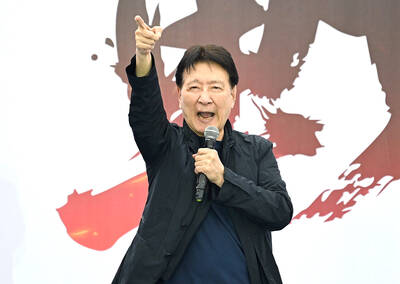
In a sudden move last week, opposition lawmakers of the Chinese Nationalist Party (KMT) and Taiwan People’s Party (TPP) passed a NT$780 billion special defense budget as a preemptive measure to stop either Chinese leader Xi Jinping (習近平) or US President Donald Trump from blocking US arms sales to Taiwan at their summit in Beijing, said KMT heavyweight Jaw Shaw-kong (趙少康), speaking to the Taipei Foreign Correspondents Club on Wednesday night in Taipei. The 76-year-old Jaw, a political talk show host who ran as the KMT’s vice presidential candidate in 2024, says that he personally brokered the deal to resolve
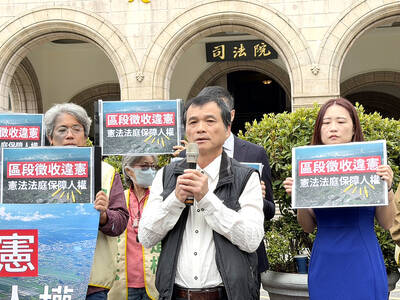
What government project has expropriated the most land in Taiwan? According to local media reports, it is the Taoyuan Aerotropolis, eating 2,500 hectares of land in its first phase, with more to come. Forty thousand people are expected to be displaced by the project. Naturally that enormous land grab is generating powerful pushback. Last week Chen Chien-ho (陳健和), a local resident of Jhuwei Borough (竹圍) in Taoyuan City’s Dayuan District (大園) filed a petition for constitutional review of the project after losing his case at the Taipei Administrative Court. The Administrative Court found in favor of nine other local landowners, but
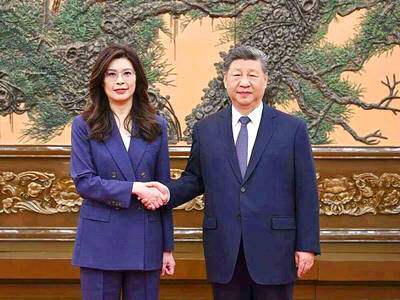
The Chinese Nationalist Party (KMT), alongside their smaller allies the Taiwan People’s Party (TPP), are often accused of acting on behalf of the Chinese Communist Party (CCP). Some go so far as to call them “traitors.” It is not hard to see why. They regularly pass legislation to stymie the normal functioning of the ruling Democratic Progressive Party’s (DPP) administration, and they have yet to pass this year’s annual budget. They slashed key elements of the government’s proposed NT$1.25 trillion (US$40 billion) special military budget, and in the smaller NT$780 billion package they did pass, it is riddled with provisions that


 RSS
RSS