


Ethan Ruan (阮經天) rules the roost of raunchy gossip for the third week in a row. The model/actor has clearly emerged from having his dirty laundry aired in public with his career in better shape than ever.
After reports that he had, for some months, two-timed girlfriend Tiffany Hsu (許瑋甯) with the mysterious “Joanna,” whose claim to fame, as she revealed in Next magazine, was being Ruan’s partner in rambunctious sex sessions, the man-about-town is reportedly trying to put his house in order. That’s according to Next at least, which reports Ruan and Hsu were spotted heading to the British Trade and Cultural Office in downtown Taipei to apply for UK visas so they could escape the media glare and rebuild their relationship.
Ruan’s highly publicized fling with “Joanna” certainly hasn’t dented his pulling power, and on Wednesday he reportedly fulfilled a promise to shoot a nude beach-side scene for To Love You Is My Destiny (命中注定我愛你), which recently scored more than 10 points on the Neilson ratings. Producers of the program had earlier joked that if the show’s popularity went above 10, an episode in which Ruan goes skinny-dipping would be shot.

PHOTO: TAIPEI TIMES
The plan ran into a snag, so to speak, as Ruan had recently got his “little bird” caught in his flies.
The prospect of having salt water and sand wash over those tender parts, Next reports, almost put the kibosh on the project.
Girlfriend Hsu, Next reports, put aside her hurt feelings regarding Ruan’s infidelity and nursed her beau back to health.
A report in Yahoo’s NOWnews Web site suggested all this was largely hooey and that the positive coverage of Ruan making nice with Hsu in this week’s edition was no more than an effort by the magazine to make nice with Ruan after last week’s coverage.
What seems fairly certain is that “Joanna” is now out of the picture. As for Ruan’s nude episode, China Times says he made good on the promise and, at an undisclosed location by the sea, shot a scene of To Love You Is My Destiny in the buff. Chen Yu-shan (陳玉珊), director of SetTV (三立戲劇), which broadcasts the soap, was quoted as saying: “We guarantee that he was completely naked, but [in the shot] we left a beautiful place for fantasy (留一點點美麗的遐想空間).”
Ruan must be laughing all the way to the bank as, according to Apple Daily, his endorsement fees have quadrupled, from around NT$20,000 before the revelations broke, to around NT$80,000.
Pop Stop is thankful that the local media’s focus is on the romantic rather than sexual proclivities of that other — and much older — man-about-town, Terry Gou (郭台銘), head of Hon Hai Precision Industry Co (鴻海精密). The seemingly never-ending saga of who would end up as the second Mrs Gou, involving a cast of celebrities that includes Carina Lau (劉嘉玲), Rosamund Kwan (關之琳), and supermodel Lin Chi-ling (林志玲), has reached a denouement. It looks as if Taiwan’s senior Casanova has settled for dancer Delia Tseng (曾馨瑩). The nuptials are expected to take place on July 26, and the two lovebirds are currently in the Czech Republic, where they will have their wedding photos taken. Apple speculates that the background to these photos is likely to be the 100-hectare castle estate that Gou bought for his first wife, now deceased, which is located conveniently close to Hon Hai’s European headquarters. The idea does seem a little macabre. Pop Stop also wonders why Delia’s nickname is Doggy (狗狗). But let’s keep that thought in a “beautiful place for fantasy.”

Yesterday, the Democratic Progressive Party (DPP) nominated legislator Puma Shen (沈伯洋) as their Taipei mayoral candidate, the Chinese Nationalist Party (KMT) put their stamp of approval on Wei Ping-cheng (魏平政) as their candidate for Changhua County commissioner and former legislator Tsai Pi-ru (蔡壁如) of the Taiwan People’s Party (TPP) has begun the process to also run in Changhua, though she has not yet been formally nominated. All three news items are bizarre. The DPP has struggled with settling on a Taipei nominee. The only candidate who declared interest was Enoch Wu (吳怡農), but the party seemed determined to nominate anyone
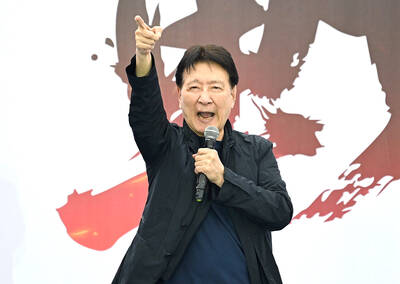
In a sudden move last week, opposition lawmakers of the Chinese Nationalist Party (KMT) and Taiwan People’s Party (TPP) passed a NT$780 billion special defense budget as a preemptive measure to stop either Chinese leader Xi Jinping (習近平) or US President Donald Trump from blocking US arms sales to Taiwan at their summit in Beijing, said KMT heavyweight Jaw Shaw-kong (趙少康), speaking to the Taipei Foreign Correspondents Club on Wednesday night in Taipei. The 76-year-old Jaw, a political talk show host who ran as the KMT’s vice presidential candidate in 2024, says that he personally brokered the deal to resolve
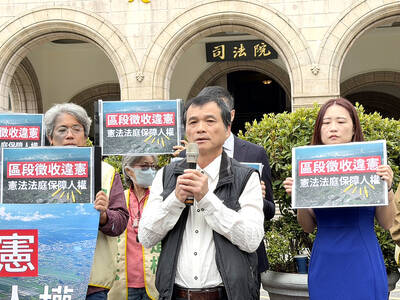
What government project has expropriated the most land in Taiwan? According to local media reports, it is the Taoyuan Aerotropolis, eating 2,500 hectares of land in its first phase, with more to come. Forty thousand people are expected to be displaced by the project. Naturally that enormous land grab is generating powerful pushback. Last week Chen Chien-ho (陳健和), a local resident of Jhuwei Borough (竹圍) in Taoyuan City’s Dayuan District (大園) filed a petition for constitutional review of the project after losing his case at the Taipei Administrative Court. The Administrative Court found in favor of nine other local landowners, but
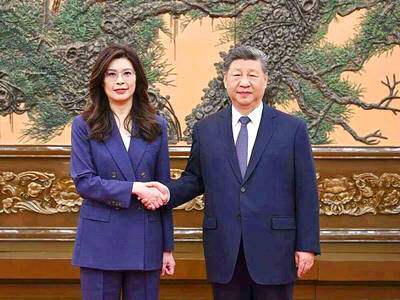
The Chinese Nationalist Party (KMT), alongside their smaller allies the Taiwan People’s Party (TPP), are often accused of acting on behalf of the Chinese Communist Party (CCP). Some go so far as to call them “traitors.” It is not hard to see why. They regularly pass legislation to stymie the normal functioning of the ruling Democratic Progressive Party’s (DPP) administration, and they have yet to pass this year’s annual budget. They slashed key elements of the government’s proposed NT$1.25 trillion (US$40 billion) special military budget, and in the smaller NT$780 billion package they did pass, it is riddled with provisions that


 RSS
RSS