


Nearing its fifth year in business, Saints and Sinners has become something of an institution, which is no surprise. Far from being a run-of-the-mill pub with grub, the place could better be
described as a restaurant that happens to have a full bar and a party going on most nights of the week.
Of course, Saints and Sinners felt a bit like an institution the day it opened its doors, a fact that can be attributed to the experience its owners garnered from their other establishments: Malibu West and My Place in Taipei's Combat Zone, My Other Place on Fuxing North Road and the original Malibu. But Saints and Sinners offers an even larger menu than its sister
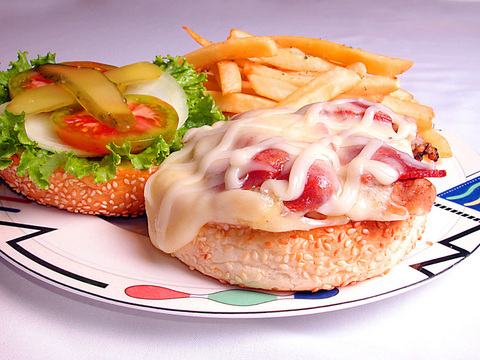
PHOTO COURTESY OF SAINTS AND SINNERS
establishments, focuses on both Western and "oriental"
specialties, and manages to do both of them well.
The "oriental" section starts out the menu and ostensibly gets its title from the fact that it's more than just Chinese dishes that are listed under it. The cilantro you see listed with the stir-fried beef can also be found in a range of Thai dishes that dot the page. In fact, when it first opened, Saints and Sinners was a more straightforward Chinese-Thai establishment. Nowadays, though, it's as much the Western fare that brings people in -- and keeps them coming back. The benchmark of a Western menu is its burger, and here Saints and Sinners more than satisfies. Foregoing the measly strip of bacon you might find on a cheeseburger elsewhere, the saints in the kitchen have instead added a slice of ham to the equation. The result is a sinfully succulent burger.
Saints and Sinners also performs what could be considered a community service as the first -- or last -- stop in Taipei's liveliest bar-hopping circuit. Punters can fill up on one of the mains from the menu while taking advantage of some of the better happy hour prices in town, then start their romp down Anhe Road to Carnegies, Taipei Sports Bar, Organo or a dozen other watering holes. Coming the other way, late-nighters will be happy to find Saints and Sinners' kitchen still open at 1am, with still some of the better-priced drinks in the neighborhood.
While Wednesday nights are given over to drink specials for ladies, Saints and Sinners doesn't play favorites. They're one of the very few establishment in town to offer a boys' night, with buy-one-get-one-free bottles of selected beers, including Coors, Tiger and San Miguel, which are all priced at just NT$100 a bottle. A selection of red and white wines are also available for NT$200 per glass.

Taiwan’s English education system is being pulled apart by three opposing forces. Bilingual Nation 2030 pulls students toward English and global communication. Artificial Intelligence (AI) readiness pulls them toward digital judgment, verification and AI-mediated work. But Taiwan’s old exam culture pulls them back toward memorization, grammar drills, timed reading and correct answers. If the education system keeps using old exams to define success, it risks producing graduates who are neither genuinely bilingual nor genuinely AI-ready, but trained for tasks machines can already perform. The first force is Bilingual Nation 2030. Launched in 2018, the policy aimed to “help Taiwan’s workforce connect
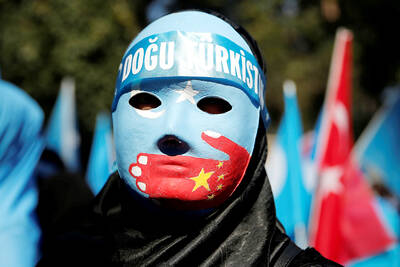
It seems every few days one bumps into one of those “real man” comments in which Taiwan is urged to “face reality” or similar, and “make a deal,” with the speaker implying that soon it will be too late. “Deal” advocates always present themselves as having a superior grip on reality, and the manly ability to make the “hard choice.” Their testosterone-laden language often echoes that of Taiwan sellout advocates. Note that such commentary always specifies a process (“make a deal, work with, make progress”), never the end state of what occupation by a violent authoritarian colonialist state will entail. In
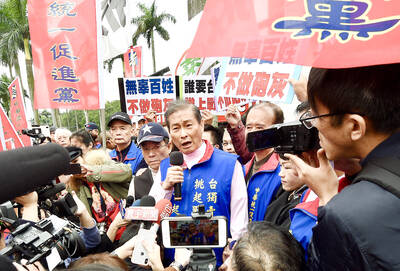
There are shadowy cabals plotting to sell out Taiwan to be annexed by China, by invasion if necessary. Fortunately, they are buffoons. In 2019, former Bamboo Union gangster and founder of the China Unification Promotion Party (CUPP), Chang An-le (張安樂, colorfully known as “White Wolf”), led a protest at the Legislative Yuan against comments made by then-premier Su Tseng-chang (蘇貞昌) that in the event of an attack by China, he would never surrender, but would protect the nation by fighting to the end, even if he only had a broom. Chang had party members bring a wooden casket that they
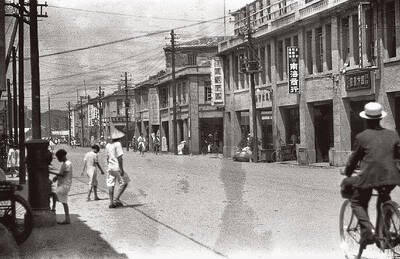
June 1 to June 7 "If all Taiwanese were as afraid of dying as you, then what would happen?” Physician Shih Chiang-nan (施江南) reportedly said this to his wife Chen Chiao-tung (陳焦桐) after she urged him to stop intervening on behalf of Taiwanese soldiers stranded overseas after serving in the Japanese Army during World War II. Shih had clashed with high-ranking officials over the issue, engaged in several heated arguments with Taiwan governor-general Chen Yi (陳儀) and allegedly shouted at general Ko Yuan-fen (柯遠芬), chief of staff of the Taiwan Garrison Command, over


 RSS
RSS