


The decor is a subtle mix of brown and cream and the only clue as to what's on the menu are the Zulu shields and haunting African masks that adorn the walls.
The South Africa Fish House, a one-story building that looks out of place sandwiched between the drab high rises of Xinyi Road and which from the front looks poky, fans out into a 17-table restaurant, 25m long. It specializes in just what the name says -- fish imported from the "Europe of Africa."
Green salad with banana slices, sounds like a recipe for disaster. But normally sweet, fragrant chunks of the yellow fruit are transformed with spices and an oil dressing to compliment the savory leaves. The contrasting textures of crisp leaves and banana took a few bites to get used to, but then as the senses realign, the dish can be fully appreciated.
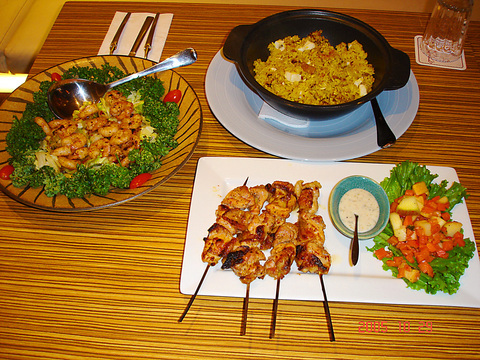
PHOTO: STEVE PRICE, TAIPEI TIMES
Jerry Chen (陳岡甫), a local entrepreneur with business
connections in South Africa, opened up in August and he imports a range of products from the "Rainbow Country,"
including parrot and monkfish. Amarula Cream is used to flavor the desserts, and Mrs. Ball's chutney -- an institution in South Africa -- adds a dash of flavor to the main dishes.
The fish and chips, a throwback to British influence on the region, was appealing and the crispy batter encasing the monkfish was surprisingly grease-free.
The owner, although keen on keeping his trade secrets close to heart (he refused to divulge the blend of spices used in the biltong-style veal), revealed that a long search for the perfect flour had ended successfully, with the discovery of one brand that allowed the fish to cook perfectly but also repelled much of the oil.
The dish was topped off with a dollop of the chutney, made from 12 fruits, which are fermented in vats. The sweet piquant fruit chutney enlivened taste buds that the fish alone did not.
None of the dishes on the menu are dull, particularly the shrimp peri peri, made using bird's eye chili peppers. Fruit pops up where it is least expected, like in the pork curry.
The wait staff are relaxed but nevertheless helpful in
choosing from the lengthy menu.
Taipei is home to a full range of ersatz foreign restaurants but the South African Fish House is unique. At the back there is a comfortable lounge area, which exudes an earthy, soothing appeal replete with armchairs, TV screen, rattan covered walls and ceiling.

Taiwan’s English education system is being pulled apart by three opposing forces. Bilingual Nation 2030 pulls students toward English and global communication. Artificial Intelligence (AI) readiness pulls them toward digital judgment, verification and AI-mediated work. But Taiwan’s old exam culture pulls them back toward memorization, grammar drills, timed reading and correct answers. If the education system keeps using old exams to define success, it risks producing graduates who are neither genuinely bilingual nor genuinely AI-ready, but trained for tasks machines can already perform. The first force is Bilingual Nation 2030. Launched in 2018, the policy aimed to “help Taiwan’s workforce connect
It seems every few days one bumps into one of those “real man” comments in which Taiwan is urged to “face reality” or similar, and “make a deal,” with the speaker implying that soon it will be too late. “Deal” advocates always present themselves as having a superior grip on reality, and the manly ability to make the “hard choice.” Their testosterone-laden language often echoes that of Taiwan sellout advocates. Note that such commentary always specifies a process (“make a deal, work with, make progress”), never the end state of what occupation by a violent authoritarian colonialist state will entail. In
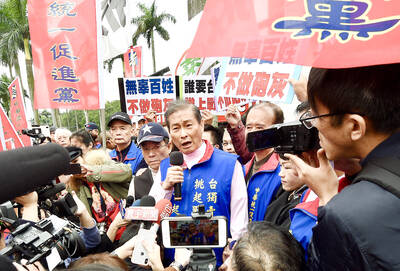
There are shadowy cabals plotting to sell out Taiwan to be annexed by China, by invasion if necessary. Fortunately, they are buffoons. In 2019, former Bamboo Union gangster and founder of the China Unification Promotion Party (CUPP), Chang An-le (張安樂, colorfully known as “White Wolf”), led a protest at the Legislative Yuan against comments made by then-premier Su Tseng-chang (蘇貞昌) that in the event of an attack by China, he would never surrender, but would protect the nation by fighting to the end, even if he only had a broom. Chang had party members bring a wooden casket that they
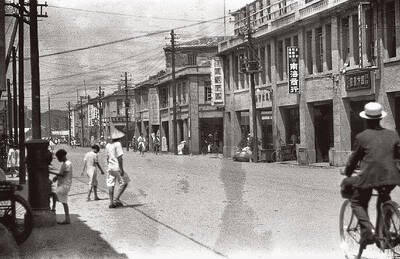
June 1 to June 7 "If all Taiwanese were as afraid of dying as you, then what would happen?” Physician Shih Chiang-nan (施江南) reportedly said this to his wife Chen Chiao-tung (陳焦桐) after she urged him to stop intervening on behalf of Taiwanese soldiers stranded overseas after serving in the Japanese Army during World War II. Shih had clashed with high-ranking officials over the issue, engaged in several heated arguments with Taiwan governor-general Chen Yi (陳儀) and allegedly shouted at general Ko Yuan-fen (柯遠芬), chief of staff of the Taiwan Garrison Command, over


 RSS
RSS