


American Neil Goldberg's Dream It circus show is on the road in Taiwan, mixing European "cirque" and Broadway spectacle
Goldberg's approach to circus takes acrobatics and routines out of the big top and puts them on stage in a dramatic, action-packed theatrical performance.
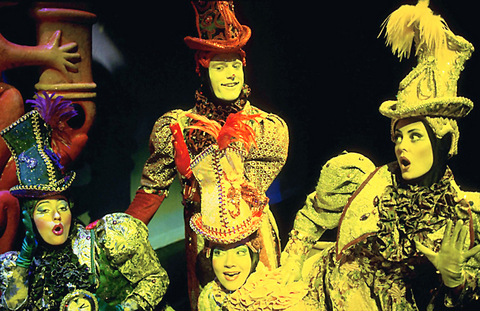
PHOTO COURTESY OF KHAM
The show features jump rope, aerial rope, hand balance, rola bola, duo trapeze, German wheel, fire and comedy juggling, and vocals.
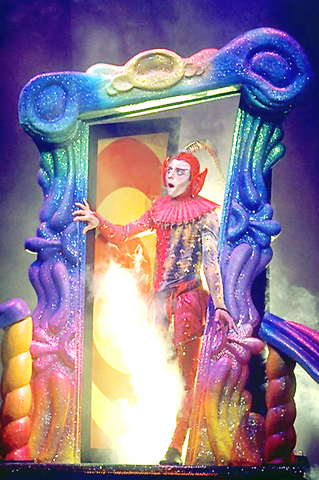
Dream It toured the US and South America last year and is one of many circus and dream-themed shows by Goldberg's company, Cirque Productions.
Goldberg's world famous cirque shows have been called "a sumptuous big top spectacle turned stage show" (Los Angeles Times) and mix cirque and contemporary theater. The European concept of cirque stems from Cirque Municipal, a circus devised by author Jules Verne in 1874.
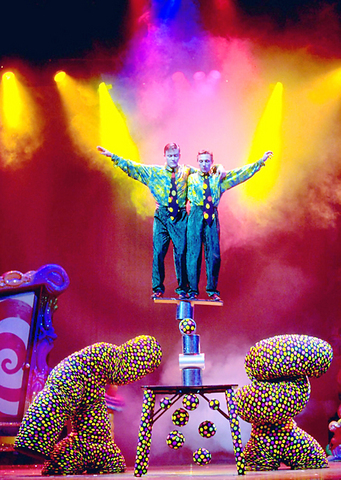
In 1993, Goldberg, who has a lot of theater experience, developed a show that used cirque concepts and produced it for corporate events. Goldberg's earliest shows combined cirque with choreography, cabaret and Vaudeville acts -- and the synthesis was successful right away.
In 1996, Goldberg opened "Cirque Ingenieux" at an Atlantic City casino and from there his fame grew.
Goldberg's circuses have performed worldwide at casinos, theaters, and world famous venues, including the Moulin Rouge in Paris and Prince Rainers' Circus in Monaco.
Cirque Productions attracts the best venues worldwide and the best talent, such as members of the the Mongolian School of Contortion, the Acrobatic Training Center of Beijing and the Moscow Circus. The troupe continues to grow quickly -- already from 12 in 1993 to over 100 today.
After every show, performing artists contact the company in hopes of getting an audition. The most talented hopefuls are sent to Cirque Productions' base in South Florida: Dream Studios.
There, contracted performers train for the shot at being cast in Goldberg's shows. All performers follow Cirque
Productions' mission statement, which says that each person is the actor and author of his or her own dreams. Cirque Productions are a place where dreams and reality collide and where audiences are inspired to let their imaginations soar.
Goldberg has also developed events for occasions, such as two Super Bowl halftime shows, two Miss Universe Pageants and various Walt Disney World productions.
In his many TV productions, Goldberg has worked with entertainers such as Elizabeth Taylor, Bob Hope, Diana Ross, and Muhammad Ali.
Besides Dream It and other tours, Cirque Productions hosts seasonal US shows such as Christmas Dreams, has put on Branson Missouri's "Cirque Branson," and the outdoor theme park entertainment experience Imaginique at Busch Gardens, Virginia. Goldberg's troupe also performs private shows for corporate parties.
For many people, Bilingual Nation 2030 begins and ends in the classroom. Since the policy was launched in 2018, the debate has centered on students, teachers and the pressure placed on schools. Yet the policy was never solely about English education. The government’s official plan also calls for bilingualization in Taiwan’s government services, laws and regulations, and living environment. The goal is to make Taiwan more inclusive and accessible to international enterprises and talent and better prepared for global economic and trade conditions. After eight years, that grand vision is due for a pulse check. RULES THAT CAN BE READ For Harper Chen (陳虹宇), an adviser
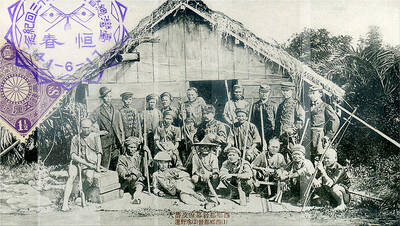
Traditionally, indigenous people in Taiwan’s mountains practice swidden cultivation, or “slash and burn” agriculture, a practice common in human history. According to a 2016 research article in the International Journal of Environmental Sustainability, among the Atayal people, this began with a search for suitable forested slopeland. The trees are burnt for fertilizer and the land cleared of stones. The stones and wood are then piled up to make fences, while both dead and standing trees are retained on the plot. The fences are used to grow climbing crops like squash and beans. The plot itself supports farming for three years.

President William Lai (賴清德) on Nov. 25 last year announced in a Washington Post op-ed that “my government will introduce a historic US$40 billion supplementary defense budget, an investment that underscores our commitment to defending Taiwan’s democracy.” Lai promised “significant new arms acquisitions from the United States” and to “invest in cutting-edge technologies and expand Taiwan’s defense industrial base,” to “bolster deterrence by inserting greater costs and uncertainties into Beijing’s decision-making on the use of force.” Announcing it in the Washington Post was a strategic gamble, both geopolitically and domestically, with Taiwan’s international credibility at stake. But Lai’s message was exactly
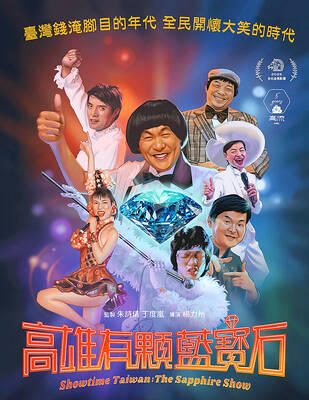
May 4 to May 10 It was once said that if you hadn’t performed at the Sapphire Grand Cabaret (藍寶石大歌廳), you couldn’t truly be considered a star. Taking the stage at the legendary Kaohsiung club was more than just a concert. Performers were expected to entertain in every sense, wearing outlandish or revealing costumes and staying quick on their feet as sharp-tongued, over-the-top hosts asked questions and delivered jokes that would be seen as vulgar, even offensive, by today’s standards. Opening in May 1967 during a period of strict political and social control, Sapphire offered a rare outlet for audiences in


 RSS
RSS