


Bangkok is the top destination for Asia-Pacific travelers and Taiwan is in the top 10 at number eight, an information query conducted by a travel service has found.
Hong Kong was the second favorite tourist destination and Singapore was third, according to a survey of people who book their trips over the Internet. Jakarta is the fourth-choice destination while Kuala Lumpur and London take fifth and sixth place in the poll of travelers by online flights and hotels broker Zuji.
Despite the terrorist attack that killed 200 people in 2002 and subsequent terror alerts, Bali is ranked seventh in the poll, followed by Taipei, Los Angeles and Sri Lanka.
Business and leisure travelers from around the region were polled for second quarterly survey of its kind by Zuji.
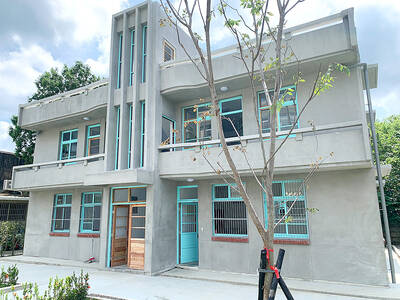
June 2 to June 8 Taiwan’s woodcutters believe that if they see even one speck of red in their cooked rice, no matter how small, an accident is going to happen. Peng Chin-tian (彭錦田) swears that this has proven to be true at every stop during his decades-long career in the logging industry. Along with mining, timber harvesting was once considered the most dangerous profession in Taiwan. Not only were mishaps common during all stages of processing, it was difficult to transport the injured to get medical treatment. Many died during the arduous journey. Peng recounts some of his accidents in

“Why does Taiwan identity decline?”a group of researchers lead by University of Nevada political scientist Austin Wang (王宏恩) asked in a recent paper. After all, it is not difficult to explain the rise in Taiwanese identity after the early 1990s. But no model predicted its decline during the 2016-2018 period, they say. After testing various alternative explanations, Wang et al argue that the fall-off in Taiwanese identity during that period is related to voter hedging based on the performance of the Democratic Progressive Party (DPP). Since the DPP is perceived as the guardian of Taiwan identity, when it performs well,

The Taiwan People’s Party (TPP) on May 18 held a rally in Taichung to mark the anniversary of President William Lai’s (賴清德) inauguration on May 20. The title of the rally could be loosely translated to “May 18 recall fraudulent goods” (518退貨ㄌㄨㄚˋ!). Unlike in English, where the terms are the same, “recall” (退貨) in this context refers to product recalls due to damaged, defective or fraudulent merchandise, not the political recalls (罷免) currently dominating the headlines. I attended the rally to determine if the impression was correct that the TPP under party Chairman Huang Kuo-Chang (黃國昌) had little of a

At Computex 2025, Nvidia CEO Jensen Huang (黃仁勳) urged the government to subsidize AI. “All schools in Taiwan must integrate AI into their curricula,” he declared. A few months earlier, he said, “If I were a student today, I’d immediately start using tools like ChatGPT, Gemini Pro and Grok to learn, write and accelerate my thinking.” Huang sees the AI-bullet train leaving the station. And as one of its drivers, he’s worried about youth not getting on board — bad for their careers, and bad for his workforce. As a semiconductor supply-chain powerhouse and AI hub wannabe, Taiwan is seeing


 RSS
RSS