


Wu Bai & China Blue 伍佰 & China Blue
Greatest Hits 愛你伍佰年
Rock
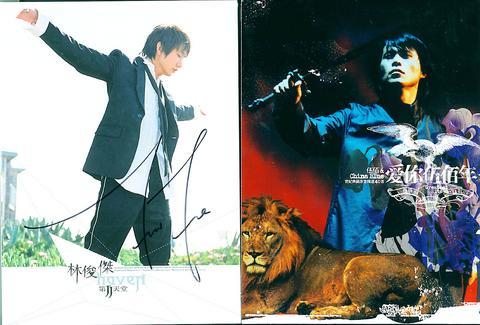
Wu Bai and his localized brand of rock/blues might be a household name throughout Asia, but it's safe to say that without his backing band he would never have gained such fame.
China Blue, or bassist Ju Jian-hui (朱劍輝), drummer Dino Zavolta and keyboard player Yu Dai-ho (余大豪), first appeared as China Blue on Wu Bai's 1994 album, Vagabonds Love Song (浪人情歌). Since then, the trio has been a central part of Wu Bai's sound on more than a dozen albums.
While the recently released collection of Wu Bai & China Blue tunes, Greatest Hits (愛你伍佰年), still features a photo of Wu Bai on its cover, the accompanying liner notes do thankfully give some credit to the often overlooked China Blue.
Featuring 40 tunes on three CDs, the album is the most chronological and comprehensive collection of Wu Bai & China Blue tunes ever put together. The gargantuan collection kicks in with a couple of moody blues tunes from his 1992 debut Loving Others is a Happy Thing (愛上別人是快樂的事) and goes on to plot Wu Bai & China Blue's musical development over a decade.
Along the way, listeners get to hear some of the combo's best material, including the alt-rock tune Beautiful World (美麗新世界), the Western-style, guitar driven Wash Away (沖沖沖) and the dance-club friendly Real World (真世界). The album comes to a crescendo with a selection of material taken from 2002's live album, Winter Fire (伍佰冬之火).
At times engaging, at others brilliant, yet never dull, Rock Records' three-CD Wu Bai "Best Of" does a great job of putting both the singer/songwriter and China Blue in perspective.
F.I.R.飛兒樂團
Warner
If you're a regular viewer of Channel V or MTV, then you've probably had your fill of F.I.R's
Formed by record producer Ian Chen
The two core members, vocalist Faye
It might all sound like a recipe for a cringe-inducing musical mistake, but the result of this odd musical coupling actually works quite well. While the band's self-titled debut does have its dud moments, most of the material makes for reasonably agreeable listening.
The thought and expert production that went into tunes like the J-pop inspired Fly Away, the orchestrated love song Lydia and the highly creative Your Smile
Nan Quan Mama 南拳媽媽
The Summer ...的夏天
ALFA
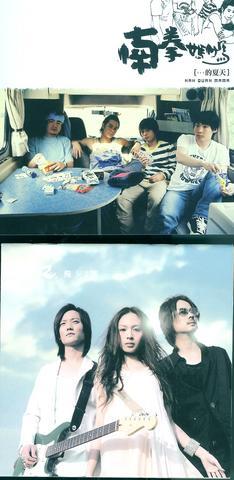
Tipped by Golden Melody award winner Jay Chou (周杰倫) as the next big thing, the all-male four-piece Nan Quan Mama (南拳媽媽) released it long-awaited debut, The Summer (...的夏天) to rather muted applause last month.
Part Mando-rap, part folk and with a little bit of rock-rap thrown in for good measure, the memorable moments on Nan Quan Mama's debut album are so few and far between that it sounds like Chou made the wrong call.
While Chou's forays into Mando-rap have paid dividends thanks to his already whopping fan base, Nan Quan Mama's attempts to emulate their idol fall sadly flat. Listeners are subjected to one wishy-washy tune after another. So same-same are the album's openers that doctors should prescribe them for sleeping disorders.
The only tune on the entire album worth a real mention is the Beastie Boys-influenced musical spoof of the classical Chinese tale Journey to the West (嘻遊記). If the boyz of Nan Quan Mama could have used this as a basis for the entire album, then things would have been very different.
Chou may well continue to dominate the Chinese pop scene for many years to come, but if Nan Quan Mama's drib-drab unimaginative debut is any indication of its future, then the four-piece act will fade away into easily forgettable oblivion.
Lin Jun-jie 林俊傑
Haven 第二天堂
Yellow
If record company executives in the Chinese-speaking world have their way, then Singapore born Lin Jun-jie (林俊傑) -- or Wayne Lim as he's known at home and in Hong Kong, JJ as he's known to adoring fans in Taiwan -- looks set to be the flavor of the year.
Haven is Lin's second album and will, no doubt, climb high in the local pop charts for no other reason than that people like and will buy whatever tripe record companies choose to plug.
Voted "Best Newcomer" at the 15th Golden Melody Awards in Taiwan earlier this year, Lin is packaged like every other record industry created act. There's nothing original about his clean cut and well polished photogenic image and there's even less to say about his studio-crafted style of Mando-pop. What does distinguish Lin from so many of his peers, however, is his ability to hold a tune.
The material on the album is not bad and makes for inoffensive listening and, whether you like it or not, it's virtually guaranteed that Lin will become a pin-up for giggly pre-pubescent girls throughout the Mando-pop world this year.

Taiwan’s English education system is being pulled apart by three opposing forces. Bilingual Nation 2030 pulls students toward English and global communication. Artificial Intelligence (AI) readiness pulls them toward digital judgment, verification and AI-mediated work. But Taiwan’s old exam culture pulls them back toward memorization, grammar drills, timed reading and correct answers. If the education system keeps using old exams to define success, it risks producing graduates who are neither genuinely bilingual nor genuinely AI-ready, but trained for tasks machines can already perform. The first force is Bilingual Nation 2030. Launched in 2018, the policy aimed to “help Taiwan’s workforce connect
It seems every few days one bumps into one of those “real man” comments in which Taiwan is urged to “face reality” or similar, and “make a deal,” with the speaker implying that soon it will be too late. “Deal” advocates always present themselves as having a superior grip on reality, and the manly ability to make the “hard choice.” Their testosterone-laden language often echoes that of Taiwan sellout advocates. Note that such commentary always specifies a process (“make a deal, work with, make progress”), never the end state of what occupation by a violent authoritarian colonialist state will entail. In

There are shadowy cabals plotting to sell out Taiwan to be annexed by China, by invasion if necessary. Fortunately, they are buffoons. In 2019, former Bamboo Union gangster and founder of the China Unification Promotion Party (CUPP), Chang An-le (張安樂, colorfully known as “White Wolf”), led a protest at the Legislative Yuan against comments made by then-premier Su Tseng-chang (蘇貞昌) that in the event of an attack by China, he would never surrender, but would protect the nation by fighting to the end, even if he only had a broom. Chang had party members bring a wooden casket that they
June 1 to June 7 "If all Taiwanese were as afraid of dying as you, then what would happen?” Physician Shih Chiang-nan (施江南) reportedly said this to his wife Chen Chiao-tung (陳焦桐) after she urged him to stop intervening on behalf of Taiwanese soldiers stranded overseas after serving in the Japanese Army during World War II. Shih had clashed with high-ranking officials over the issue, engaged in several heated arguments with Taiwan governor-general Chen Yi (陳儀) and allegedly shouted at general Ko Yuan-fen (柯遠芬), chief of staff of the Taiwan Garrison Command, over


 RSS
RSS