


This week, after three wildly successful years in the business, Sun Yanzi (
The Singaporean-born, Taiwan-based singer released six albums in the three years since she burst onto the scene seemingly from out of nowhere. Last week she released her seventh record, called The Moment, which is a compilation with five new tracks and made her farewell concert at last week's MTV show in Taipei.

In the Liberty Times Yanzi has written a farewell journal-style series addressed to her fans in which she says her main reasons for stepping out of the business for a period of time are personal. That's really not surprising at all, considering she's released an album at a rate of one every six months and has been tirelessly jetting around the region for concerts and endorsements.

In her own words, she says "there have been many things" she hasn't been able to savor, and many bad things she hasn't "been able to fully digest."
Fair enough. It's not every star that makes a graceful exit from the business, although Yanzi insists she'll be back.
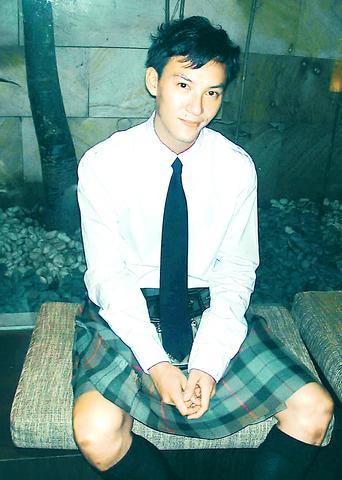
A going away gift for Yanzi would be her nomination for best female singer in the International Chinese Music Charts (
Curiously, Karen Mok (
On the men's side, the category is crowded with big names like Andy Lau (
If album sales are a factor in determining who wins, then the smart money will be on Jay Chou, whose newest album moved 80,000 copies in two weeks in Taiwan, which is a lot these days.
One band that isn't on the nomination list for any award is F4, that discardable flash-in-the-pan boy band of last summer. Not that the members care. They've mostly made smooth segues into TV. Last week, Tsai Tsai (
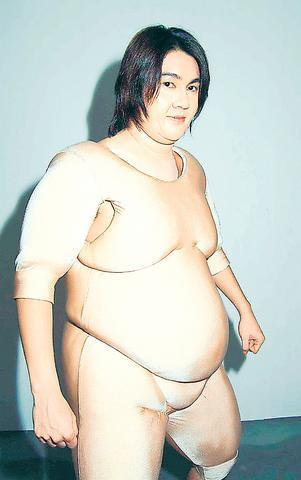
Audiences also got to see a lot more of TV host Chang Fei (
As spellbinding as Chang Fei going nude sounds, most people will probably be more eager to see the match-up of Chang Chen (
About a month ago, Pop Stop reported on the sad romantic fate of Lin You-wei (
Well, shed no more tears, because Lin has rebounded nicely by having a date with Little S (
To that, Little S turned and asked Lin if he had a big bed. He didn't answer then, but maybe now she knows.
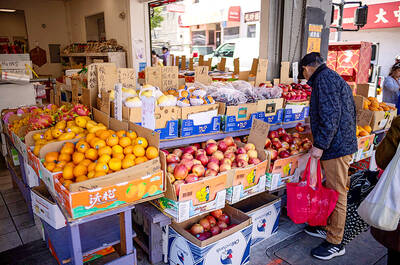
Ajay Verma, a consultant gastroenterologist at Kettering general hospital in Northamptonshire, says our gut is a “complex machine.” “It is constantly providing us with the nutrition we need, initially to grow and develop, and then for us to survive, thrive and repair from injury and illness.” How can we keep it functioning well? Put simply: “Make sure what you put into it is balanced, and that you clear out its waste products adequately,” Verma says. “In a general gastroenterology clinic, the most common conditions we see are irritable bowel syndrome (IBS), gastroesophageal reflux disease, inflammatory bowel disease and constipation,” says Nisha
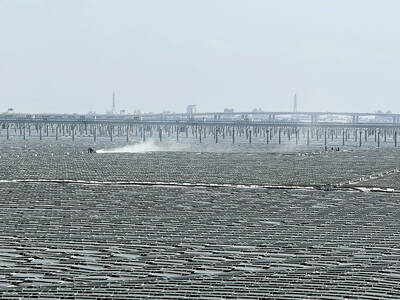
The arithmetic is straightforward and uncomfortable. By the end of 2025, Taiwan had committed itself to a 50-30-20 electricity mix — half natural gas, 30 per cent coal, 20 per cent renewables. The Ministry of Economic Affairs’s (MOEA) own monthly energy reports tell a different story. Natural gas reached 47.8 per cent of generation last year. Coal stood at 35.4 per cent, comfortably above its target ceiling. Renewables came in at 13.1 per cent, well short of the 20 per cent Taipei had pledged a decade earlier. Installed renewable capacity reached roughly half of the 12 gigawatts (GW) the government

Last week US President Donald Trump was asked by a reporter whether he would speak on the phone to the President of Taiwan. “l’ll speak to him. I speak to everybody. We have that situation very well in hand,” Trump said. This marked the second time in a couple of weeks he had said he would talk to the President of Taiwan. In 2016 he famously took a call from then-president Tsai Ing-wen (蔡英文), when he was president-elect. Despite warnings that the apocalypse was nigh because of a phone call, the world quickly forgot about the conversation between two democratically-elected presidents.

May 25 to May 31 Few believed that apples could be cultivated on a commercial scale in Taiwan’s high mountains. When horticulturalist Cheng Chao-hsiung (程兆熊) first proposed the idea in 1955, both American and Taiwanese colleagues dismissed it as implausible, arguing that temperate fruit could not be reliably grown on a subtropical island, especially on rugged terrain. However, it was this terrain in the Central Mountain Range where many Chinese Civil War veterans were resettled in the late 1950s. With limited job prospects and no family in Taiwan, they were placed on cooperative farms aimed toward self-sufficiency. Some say the conditions


 RSS
RSS