


Over the past few weeks, Taiwan's paparazzi has been turning its focus to teen idols and other singing megastars to begin the hype around the annual music industry extravaganza, the Golden Melody Awards, set to take place tomorrow at 8pm.
Foremost among topics has been the stars' anticipated dress on the big day. Taiwanese singer Showlen Maya (
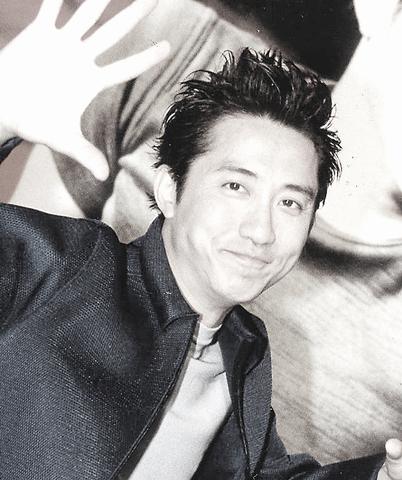
PHOTO: LIBERTY TIMES
Taiwan's Golden Melody recognizes music industry success and bathes the stars in a glamorous light that's frosted with money. The pool of talent it draws from includes singers, songwriters and producers from Taiwan, Hong Kong, Singapore and even in the case of China Dolls (

PHOTO: LIBERTY TIMES
But for many in Taiwan's music industry, especially those who pride themselves as musicians and creative types, the whole institution of the awards ceremony exists as an irking, aggravating, creeping-under-your-skin sort of affirmation of a status quo they don't like. The gripe is that awards often go to music that is unoriginal and to artists who are molded to popular tastes.
Up-and-coming bands, like MC Hotdog, Chthonic (
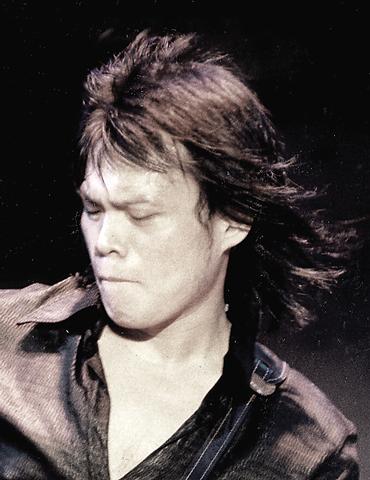
PHOTO: LIBERTY TIMES
"The music [recognized at the Golden Melodies] is a product," said Freddy (

PHOTO: LIBERTY TIMES
MC Hotdog recently released an album with one track that heavily disparages female pop singers and former Golden Melody participants like Coco Lee (李玟), Yuki (徐懷鈺) and Jolin Tsai (蔡依林), saying that they can do certain unprintable things to certain parts of his anatomy. In a recent interview, Hotdog was also quoted as saying that David Tao (陶吉吉), a producer up for an award this year and the generally recognized inventor of R&B in Taiwan, "has ripped off some songs very obviously."
Members of Sticky Rice, a wacky punk-funk ensemble that climbed onto local pop charts after years of playing basement clubs, have also criticized the pop music industry for "copying" music rather than writing it.

PHOTO: LIBERTY TIMES
The sentiments of Taiwan indie rock, however, are perhaps summed up best by Ko Ren-jian (

PHOTO: LIBERTY TIMES
Both Ko and Freddy are worried that their criticisms will not be received, however, because people will write them off as bitter, unsuccessful outsiders.
Their lack of success, however, is only relative. While these bands can't claim gargantuan sales totals like Faye Wong, who sold 170,000 CDs in Taiwan last year, they have made waves. MC Hotdog shot up to number one on Tower Record's sales charts earlier this month. Chthonic recently released its third CD based on respectable sales of 10,000 copies of its second album, and more impressively, last year became the first Taiwan band to ever attend Japan's Fuji Rock festival, where they played alongside the likes of the Beastie Boys and Sonic Youth. This year, L.T.K. has released its third CD and may follow Chthonic's footsteps, becoming Taiwan's second representative to Fuji Rock.
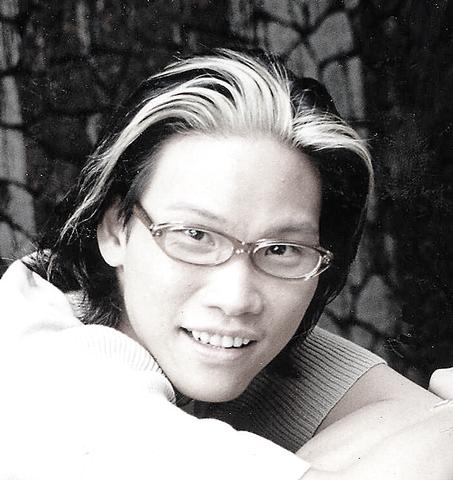
PHOTO: LIBERTY TIMES
Yet while Taiwan's underground rockers quietly seethe, local pop performers repeatedly expressed some mild resentment against the "amateurs" who took several awards at last year's Golden Melody Awards. Most of these "amateurs" were either from small record labels or aboriginal Taiwanese, like Chen Chian-nien (

PHOTO: LIBERTY TIMES
As a backlash, this year's awards have swung away from independent labels toward the giants of the industry: EMI, Sony Music, BMG, Warner, Universal and Rock Records. In late March and one week before Golden Melody Nominations were released, a source at Taiwan's Government Information Office (GIO) was even quoted in the China Times as saying that the major labels would be happy with this year's results.
The GIO is the major sponsor behind the Golden Melodies, responsible for choosing 15 of 18 judges in the pop music category and all nine judges in the traditional music category. The other three judges for pop music are supplied by MTV.
Freddy countered the charges of amateurism, saying the so-called amateurs are bands that play music all the time and that the so-called professionals "spend all their time on MTV talking about how they bought some new dog or a sports car, and half the time they copy their music."
This year's Golden Melody Awards will be held for the first time in Kaohsiung. The venue is the Kaohsiung City Cultural Center, which will be done up like a Las Vegas casino with a waterfall somewhere on stage.
ETTV won this year's broadcast rights away from TVBS in open bidding through the GIO. TVBS is not going to be left out in the cold completely, however. They are putting on their own free concert tonight in Taipei, featuring Wu Bai (伍佰), Harlem Yu (
As for the counterculture, Freddy says he will not attend the TVBS concert and that he will probably not watch the Golden Melody Awards on television (he's busy organizing a July concert involving Megadeath, Yellow Machine Gun and several other foreign acts). But he might read about them the next day in the newspaper. And even though he feels that the awards "suck" and "are a loss of face," he admits, "at the same time, you can't deny them because they have a lot of influence."
Nominees List:
Best album
Hsinsuan de Langman (
Fable (
Karen Mok's 12th Floor (
My Desired Happiness (
Jay (
Best video
Hard to get good weather (
Colorful Hsimenting (
Courage (
Taikwando (
Still Lonely (
Best male singer
Adia (
William So (
Yuan Wei Jen (
Lee-hom Wang (
Harlem Yu (
Best female singer
Na Ying (
Faye Wong (
Karen Mok (
A-mei (
Sun Yan-zi (
Best band
Mayday (
Hsinbaodao Kangledui (新寶島康樂隊)
Sticky Rice (
Best singing group
Beiyuan Shanmao (
WalkieTalkie (
China Dolls (
S.B.D.W.
Best new artist
Freya (
Penny (
Fan Fan (
Sun Yan-zi (
Jay Chou (

Last week, Viola Zhou published a marvelous deep dive into the culture clash between Taiwanese boss mentality and American labor practices at the Taiwan Semiconductor (TSMC) plant in Arizona in Rest of World. “The American engineers complained of rigid, counterproductive hierarchies at the company,” while the Taiwanese said American workers aren’t dedicated. The article is a delight, but what it is depicting is the clash between a work culture that offers employee autonomy and at least nods at work-life balance, and one that runs on hierarchical discipline enforced by chickenshit. And it runs on chickenshit because chickenshit is a cultural

My previous column Donovan’s Deep Dives: The powerful political force that vanished from the English press on April 23 began with three paragraphs of what would be to most English-language readers today incomprehensible gibberish, but are very typical descriptions of Democratic Progressive Party (DPP) internal politics in the local Chinese-language press. After a quiet period in the early 2010s, the English press stopped writing about the DPP factions, the factions changed and eventually local English-language journalists could not reintroduce the subject without a long explanation on the context that would not fit easily in a typical news article. That previous
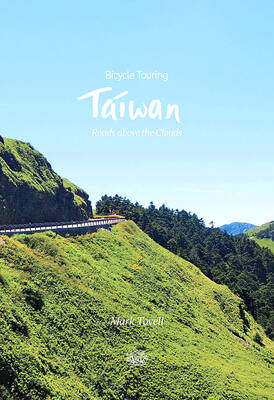
It’s hard to know where to begin with Mark Tovell’s Taiwan: Roads Above the Clouds. Having published a travelogue myself, as well as having contributed to several guidebooks, at first glance Tovell’s book appears to inhabit a middle ground — the kind of hard-to-sell nowheresville publishers detest. Leaf through the pages and you’ll find them suffuse with the purple prose best associated with travel literature: “When the sun is low on a warm, clear morning, and with the heat already rising, we stand at the riverside bike path leading south from Sanxia’s old cobble streets.” Hardly the stuff of your

April 29 to May 5 One month before the Taipei-Keelung New Road (北基新路) was set to open, the news that US general Douglas MacArthur had died, reached Taiwan. The military leader saw Taiwan as an “unsinkable aircraft carrier” that was of huge strategic value to the US. He’d been a proponent of keeping it out of Chinese Communist Party (CCP) hands. Coupled with the fact that the US had funded more than 50 percent of the road’s construction costs, the authorities at the last minute renamed it the MacArthur Thruway (麥帥公路) for his “great contributions to the free world and deep


 RSS
RSS