


As a parent, I understand the appeal of the announcement on Monday by the British prime minister that would prevent children under 16 from using social media. Right now, you are in constant battle with the infinite scroll for your child’s attention, while their impetus to explore the real world is subdued by endless entertainment always within reach. At best, their rapidly developing brains are rotted by a diet of the synthetic, sensationalist and shallow — humanity’s least impressive creative output catering to its lousiest instincts. At worst, they are being preyed upon by forces intent on manipulating, exploiting or recruiting them. You look around and wonder where they are, even as they are right under your nose. You worry they will never experience the boredom that leads to creativity and propels us forward.
The desire to protect children from an often-hostile environment makes sense, and the ban sends a signal of what we deem acceptable, and maybe even opens the possibility of a behavioral shift in how we use social media. However, evidence from Australia, where similar legislation was enacted last December, is not encouraging. One study found that two-thirds of young people retained their accounts, while 51percent of those most affected by the ban now see less news. The fact is that this demographic gets most of its news from social media feeds, consumed incidentally amid footage of fights, diet tips and dance crazes and conveyed by influencers whose shtick is authenticity not accuracy. But it is encountered, nonetheless. If we remove access, we need to create alternative routes to news and information.
Given social media platforms’ abandonment in recent years of trust and safety protocols, effective content moderation systems, support for third-party factcheckers and any real pretense at serving the public interest, you may not see them as the best place to get information. Seventy-three per cent of people in the UK would agree with you. But young people want to understand the world, and there is real value in helping them navigate the information ecosystems we have as we build those we wish for, particularly when those ecosystems play such an outsize role in real-world outcomes. In addition, young people use social media as a place to connect and express themselves. Why would they not, as other dedicated spaces such as youth clubs, community organizations and extracurricular school provisions close. Disconnection is dangerous, too.
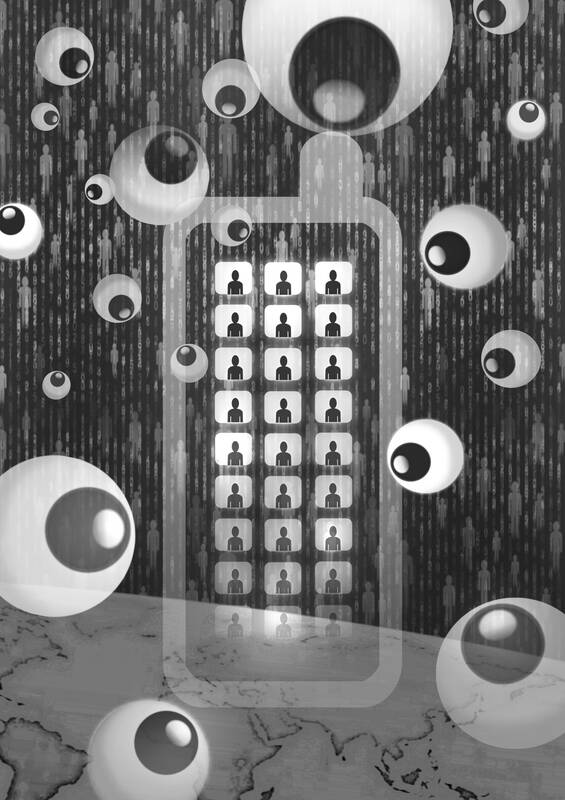
Illustration: Yusha
At the Guardian Foundation, we deliver media literacy programs in primary and secondary schools in the UK. We update our materials regularly to reflect rapid changes in the way that people are accessing news and information, but the journalistic process — verifying information, seeking alternative perspectives, challenging assumptions and providing context — remains a constant. Children develop the skills to assess the reliability of information, but they also learn about algorithms and platform economics. They discuss who might benefit from targeting them with misogynistic content, or why filter bubbles develop, or how outrage is incentivized and dopamine activated — and how all this might make them, and those around them, feel.
This is critical preparation for a world in which trust is eroding, and truth is increasingly contested, and particularly important in communities that have lost their local journalists and do not see their concerns reflected in the national media. Teachers tell us that they are better equipped to handle conversations they might otherwise avoid, and young people delight in creating their own journalism, paving the way for an active role as consumers and producers of information.
Media literacy will join the national curriculum in England in September 2028. If this fosters greater resilience to misinformation and disinformation and the ability to identify high-quality sources as conversational chatbots embed themselves in daily life, that will be good for all of us. Research has demonstrated how news consumption improves knowledge of current affairs and increases political participation, and our own research shows a strong correlation between media literacy and civic engagement. Conversely, the harms wrought by misinformation and disinformation are so well rehearsed they don’t bear repeating again.
However, it is an important addition in other ways: It is painfully felt by young people coming to the end of exam season that today’s education system emphasizes the acquisition and retention of knowledge just long enough to recall it for the marking schemes. While a solid mastery of some facts is, of course, important, the ability to critically assess and make productive use of the abundant information you will be deluged by is surely more so. That’s why the social media ban must be accompanied by other measures to help young people thrive in a digital world, including properly funded news and media literacy education and alternative spaces for safe connection and participation.
Without this holistic approach, we cannot hope to win the battle to help our children stay safe and make good choices, while engaging — as they must — with technology. The ban is just a signal that there is much more to do.
Rosie Parkyn is executive director of the Guardian Foundation.
Chinese Nationalist Party (KMT) Chairwoman Cheng Li-wun (鄭麗文) on Tuesday returned from her visit to the US, where she had met with several US senators and representatives, think tanks, and overseas Taiwanese and Chinese communities, espousing her vision of promoting cross-strait dialogue as a way to evade war. On Monday last week, she sat down with US academic Orville Schell and Asia Society Policy Institute distinguished fellow Daniel Russel. Russel is a seasoned diplomat who has served in positions related to East Asian and Indo-Pacific affairs. At the conclusion of the discussion, Russel employed his considerable diplomatic experience and knowledge
I arrived in Taiwan when I was 18, fresh out of high school and trying to navigate university life. Everything felt unfamiliar. My broken Mandarin quickly revealed what I already knew: I was not from here. When I told people I was from Indonesia, many told me that I did not look Indonesian. This caught me off guard, not because it was cruel, but because of how casually it was said. Sometimes it came with curiosity, sometimes surprise, occasionally admiration for my “fair skin.” More often than not, the people asking meant no harm. It is understandable. I look ethnically
Nearly three decades after the 1997 handover, Hong Kong has become a paradox: a place where financial dynamism coexists with political repression — a reality Taiwan cannot afford to ignore. Despite a sharp contraction of civic freedoms since 2020, Hong Kong remains a major global financial center. It has recently overtaken Switzerland as the world’s largest offshore wealth hub, supported by steady inflows of capital from China and across Asia. The territory continues to serve as a key intermediary linking Chinese firms, multinational investors and global markets. Institutional continuity has played a role. The Hong Kong dollar’s peg to the
Five weeks since US President Donald Trump met with Chinese President Xi Jinping (習近平) in Beijing, his administration now faces two important tests in the Indo-Pacific. The first test is one of the president’s own making. After meeting with Xi, Trump described arms sales to Taiwan as “a very good negotiating chip” and announced that a previously approved sale was now “in abeyance.” The Financial Times later reported that Beijing is holding approval for a visit by Elbridge Colby, the undersecretary of defense for policy, pending the president’s decision on the sale. During Trump’s first term in office, he regularized the arms


 RSS
RSS