

In 40 years of watching politics, I have never seen anything quite like Taipei mayoral candidate Puma Shen’s (沈伯洋) breed of politician. He has a presence that commands attention, and a combination of qualities that appear to be the result of powerful political currents. What is it that makes Shen different? Throughout the past decades of local elections, I have not seen anyone seriously discuss a long-term vision for urban planning, let alone with the kind of clarity and insight that Shen possesses that compels people to keep listening. He is an exceptional storyteller, with an ability to present a vision
China prefers to win without firing a shot in its bid to strangle Taiwan’s strategic autonomy. Chinese military strategist Sun Tzu (孫子) would have approved. Its central tool at sea is the “cabbage strategy”: the Chinese People’s Liberation Army Navy (PLAN) layers fishing boats, maritime militia, coast guard cutters and warships around Taiwan’s contested waters in overlapping rings. Each layer normalizes daily coercion, narrows Taiwan’s freedom of movement and chips away at its maritime sovereignty — all while staying below the threshold of armed conflict. This is “gray zone” warfare at its most cost-effective — one of Beijing’s most promising
Taiwanese writer Chu Yu-hsun (朱宥勳) this month spoke out about the difficulties of judging literary competitions when nearly 40 percent of the novel submissions he reviews appear to be generated by artificial intelligence (AI). He said he would refuse to serve as a judge for any literary award that does not explicitly prohibit the use of AI in creative writing. The use of AI in creative and academic work has become increasingly common. My son, who attends National Chengchi University, says he is exasperated after working to complete assignments on his own, only to receive lower grades than classmates who used
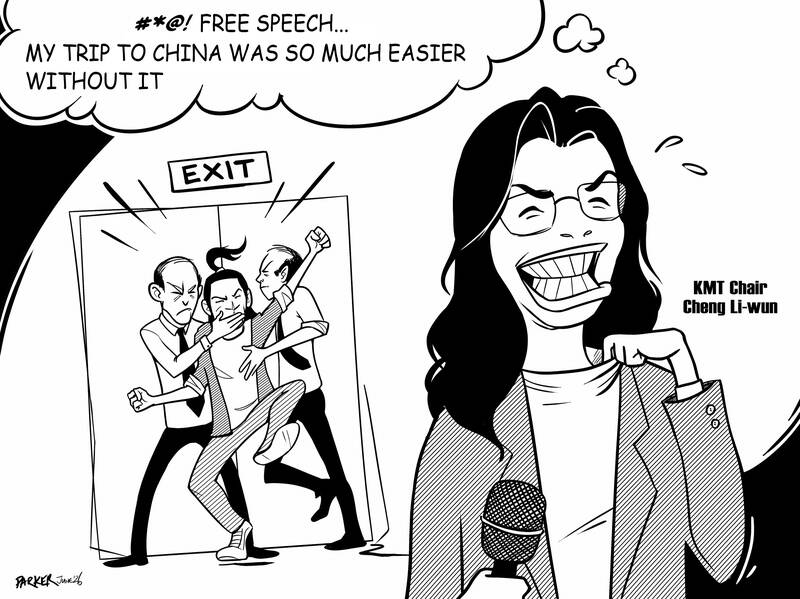
Freedom of expression is a precious gift from the times, civilization and history, Hong Kong writer Hon Lai-chu (韓麗珠) said on Wednesday last week when she received the Golden Tripod Award, the highest honor in Taiwan’s publishing industry, for her novel Flesh Mountain (祼山). “As a Hong Konger these days, I deeply feel that the freedom to write and publish should not be taken for granted,” she said. She said that for a reason. Hon, who rarely speaks publicly or accept interviews in Hong Kong because it could result in serious consequences, resigned from her long-running columnist post at the Chinese-language Hong



 RSS
RSS