


As Taiwan continues to attract international students, more people are quietly learning what it means to live between cultures.
I have lived in Taiwan for almost four years as an international student. Although many people say I do not look like a foreigner, my Chinese-speaking ability often says otherwise. I became embarrassed when I could not respond the way people expected. It made me feel like I did not fully belong.
However, I became more comfortable living in Taiwan, and getting used to its daily life and language. I have grown to love the version of myself I discovered in Taiwan.
The first time I returned home to Indonesia after living abroad, something felt off. During one summer vacation, I suddenly felt like I no longer belonged.
At first, I did not know why and I dismissed the feeling, but it became harder to ignore, and I began to wonder about it.
One day, it felt strange that going back to my home country felt more like a vacation than going home.
As much as I have tried to adjust to living in Taiwan, I have never felt like I completely belong here either. Yet when I am in Indonesia, I also feel like a stranger.
Conversations feel slightly out of sync, as if I am no longer fully part of the rhythm.
Sometimes, I find myself switching between languages or searching for the right words, only to realize I no longer express myself the same way I used to.
Old habits even feel slightly unfamiliar, as if I am adjusting all over again.
That was when the dilemma began. I found myself constantly comparing everything. When I am in Taiwan, I miss the warmth and familiarity of Indonesia, but when I am in Indonesia, I miss the independence that I have in Taiwan. Somewhere along the way, I started living between two places.
I believe this is not just a personal experience, but a shared one.
Many international students and migrant workers find themselves living between cultures and navigating identities that are not always understood.
As Taiwan becomes more international, such experiences are becoming increasingly common, but they are rarely acknowledged.
Welcoming people from abroad is not only about providing opportunities, but also about understanding the complex identities they carry.
This shared experience highlights the importance of building communities where people can feel less alone.
For some, the decision to live abroad is shaped by practical reasons, whether it is better opportunities or a different pace of life.
Beyond those reasons, there is also something less visible: a greater sense of self that develops. Living abroad not only changes our environment, but it also reshapes how we see the world and how we see ourselves.
Living between two places has allowed me to see the strengths and limitations of each. I am no longer tied to just one place, but shaped by both.
The question of where one truly belongs might not always have a single answer.
Perhaps it is not about choosing one place over another, but about learning to grow between them.
When we go somewhere new, we find new communities and create different versions of ourselves.
In that sense, this feeling of being “in between” is not something to fear, but something many people quietly experience. Even if we do not always talk about it, perhaps we are not as alone as we think.
Patricia Tong is a student in the Department of International Affairs at Wenzao Ursuline University of Languages.
KMT Chairwoman Cheng Li-wun’s (鄭麗文) recent visit to Beijing and her upcoming visit to Washington will serve as a high-level test of her diplomatic mettle. In Beijing, Cheng was received with symbolic gestures, a warm reception, and high-level access. In Washington, she will receive far less pomp and far sharper questions about the KMT’s vision for the future of Taiwan. Her challenge will be to persuade Washington that the KMT’s engagement with China can coexist with strong deterrence. Cheng’s April 7-12 visit to mainland China coincided with an intense period of conflict in Iran. Despite the strategic significance of Cheng’s trip,
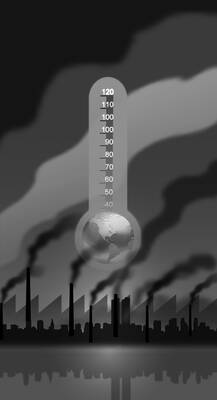
The closure of the Strait of Hormuz has sent the vast Asian chemicals industry into a tailspin. Deprived of the likes of Qatari natural gas and Saudi Arabian oil, the region’s fertilizer and plastics plants are slowing production or even shutting down. Everywhere except China, that is. In petrochemicals, China is unique. As well as a traditional industry that uses oil and gas as feedstock, it has parallel output that relies on its abundant domestic coal. Unsurprisingly, India and other regional powers want to copy and paste the Chinese method. This would not be easy — or climate friendly. The
Indonesian President Prabowo Subianto says he knows how to fix the problems facing Indonesia. Yet his economic mismanagement and authoritarian tendencies are steering the nation toward a familiar mix of currency instability and political chaos. The world’s fourth-most populous nation risks reversing the hard-won democratic and business reforms that came after the Asian Financial Crisis in 1997. At that time, the rupiah collapsed and the political upheaval that followed forced former president Haji Mohamed Suharto from power. Prabowo’s administration is ignoring similar warning signs. That disconnect was apparent in a national address on Wednesday, when Prabowo projected the swagger that has
“Of course you can choose not to be Taiwanese, just do not stay here,” chairwoman of Taipei 101 operator Taipei Financial Center Corp Janet Chia (賈永婕) said in an online interview with local entertainer Tai Chih-yuan (邰智源), triggering intense discussion on social media, with politicians across party lines weighing in. In the interview, which was aired on May 14, Chia and Tai’s discussion over a meal in Taipei 101 covered Chia’s career change from entertainer to chairwoman and US climber Alex Honnold’s free solo climb up the Taipei 101 building. During the interview, Chia said, “Being on this land, we


 RSS
RSS