


I have a guilty pleasure: reality TV, the trashier the better. A few years ago, I had a job that involved writing an early-morning political e-mail, which necessitated working through the night. At the end of a grueling shift, I would reward myself by unwinding with the most tawdry show of all: Married At First Sight, known in fan circles as MAFS.
For an hour or so I would let the dramas of a group of attractive twentysomethings wash over me while I tried to forget the political crisis of the day, a prerequisite to sleep. It seemed harmless enough, not much different from tuning into a sports podcast or listening to classical music, if a little lowbrow.
However, the dark reality of MAFS and shows like it has been laid bare in a BBC expose in which three former contestants claimed they were abused by their on-screen “husbands,” including two who alleged rape.

Illustration: Kevin Sheu
It should not have been a surprise. Over the years a succession of past participants from some of my favorite reality series — Dance Moms, The Biggest Loser and America’s Next Top Model — have come forward with horror stories about their mistreatment and the lack of protection offered by TV production teams. Even the most family-friendly of shows, the BBC’s flagship Strictly Come Dancing, has been tainted with scandal, with contestants claiming to have been abused by professionals tasked with teaching them to foxtrot and jive.
The latest allegations make clear that the potential for things to go awry is still very much with us and that safeguards introduced after the suicides of two former participants in the dating show Love Island in 2018 and 2019 could well be insufficient. This seems particularly clear in the case of programs such as MAFS and Love Island, where contestants are secluded and physical intimacy is not just encouraged but expected.
Channel 4, which broadcasts MAFS, has pulled the entire 10-series back catalog of the UK iteration from its streaming service, although the even more high-octane MAFS Australia is still available. The travel firm TUI, which sponsors both the UK and Australian versions, ended its deal with Channel 4 on May 23 in response to the latest abuse allegations. All three of the accused men deny wrongdoing and none of the women involved has made a police complaint.
Channel 4 chief executive Priya Dogra has said she is “deeply sorry” for the distress of participants, adding that while she believed the channel had acted appropriately, she had commissioned an external investigation. Legislators on Parliament’s powerful Culture Committee are demanding answers. Meanwhile, the show’s maker, CPL, says it has a “gold standard” duty-of-care regime, including vetting before casting, psychological checks, oversight by a trained welfare team, access to a psychologist and ongoing support. It is unclear, however, whether any safeguard would be up to the task of keeping participants safe.
For broadcasters, the risks must seem worth it. These shows are big business. Some episodes of MAFS get as many as 3 million viewers, a huge figure at a time when mainstream broadcasters are losing young viewers to social media platforms. No wonder producers are pushed to encourage contestants to be ever more sensational — and sexualized — or that afterward, when cameras stop rolling, some are left feeling exploited.
That creates dangers, especially for women pushed into a bubble in which they are isolated and encouraged to believe it is normal to share a bed with a stranger.
Those taking part in MAFS and shows like it have told of feeling pressured into going along with the “process,” fearful that resisting might open them up to negative editing or even being asked to leave the show.
It is not so much a determination to take advantage of their 15 minutes of fame, but a sense that they have by then invested so much time and emotional energy into appearing on the show — and are aware of the money spent on the production — that backing out seems impossible.
Professor Helen Woods of Aston University, who is conducting a study into reality TV, says the risk is heightened when participants are put into an unnatural environment with limited outside contact. On MAFS contestants have their phones taken away and even surrender their passports when they are overseas for the “honeymoon” portion of the show.
One of the women who claims to have been raped told the BBC, “I got so wrapped up in it all that I kind of lost what reality was actually like.” Creative Industries Independent Standards Authority chair Helen Kennedy says, “This is televised abuse.”
Just because content is popular with viewers, including me, does not mean it is appropriate entertainment. The respected former TV executive Michael Grade, who like Kennedy thinks these types of shows should no longer be broadcast, points out that in Charles Dickens’ account of revolutionary France, Madame Defarge got a kick out of bringing her knitting along to watch the guillotine. The modern variety is equally unsavory.
That means self-policing might not be enough. The Love Island series that followed the two suicides got the show’s highest viewing figures at the time.
I will not be watching any more. I get that the sex lives of vulnerable young people should not be broadcast for fun, whether or not it helps night workers unwind at the end of a shift.
Broadcasters need to be far more thoughtful and considerate toward the stars they make and break for our viewing pleasure. It is time to put the knitting down and wean ourselves off reality TV.
Rosa Prince is a Bloomberg Opinion columnist covering UK politics and policy. She was formerly an editor and writer at Politico and the Daily Telegraph, and is the author of Comrade Corbyn and Theresa May: The Enigmatic Prime Minister. This column reflects the personal views of the author and does not necessarily reflect the opinion of the editorial board or Bloomberg LP and its owners.
KMT Chairwoman Cheng Li-wun’s (鄭麗文) recent visit to Beijing and her upcoming visit to Washington will serve as a high-level test of her diplomatic mettle. In Beijing, Cheng was received with symbolic gestures, a warm reception, and high-level access. In Washington, she will receive far less pomp and far sharper questions about the KMT’s vision for the future of Taiwan. Her challenge will be to persuade Washington that the KMT’s engagement with China can coexist with strong deterrence. Cheng’s April 7-12 visit to mainland China coincided with an intense period of conflict in Iran. Despite the strategic significance of Cheng’s trip,
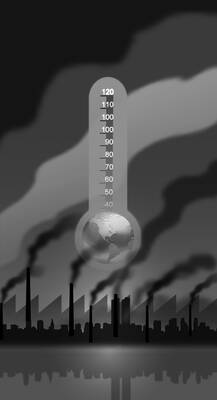
The closure of the Strait of Hormuz has sent the vast Asian chemicals industry into a tailspin. Deprived of the likes of Qatari natural gas and Saudi Arabian oil, the region’s fertilizer and plastics plants are slowing production or even shutting down. Everywhere except China, that is. In petrochemicals, China is unique. As well as a traditional industry that uses oil and gas as feedstock, it has parallel output that relies on its abundant domestic coal. Unsurprisingly, India and other regional powers want to copy and paste the Chinese method. This would not be easy — or climate friendly. The
Indonesian President Prabowo Subianto says he knows how to fix the problems facing Indonesia. Yet his economic mismanagement and authoritarian tendencies are steering the nation toward a familiar mix of currency instability and political chaos. The world’s fourth-most populous nation risks reversing the hard-won democratic and business reforms that came after the Asian Financial Crisis in 1997. At that time, the rupiah collapsed and the political upheaval that followed forced former president Haji Mohamed Suharto from power. Prabowo’s administration is ignoring similar warning signs. That disconnect was apparent in a national address on Wednesday, when Prabowo projected the swagger that has
“Of course you can choose not to be Taiwanese, just do not stay here,” chairwoman of Taipei 101 operator Taipei Financial Center Corp Janet Chia (賈永婕) said in an online interview with local entertainer Tai Chih-yuan (邰智源), triggering intense discussion on social media, with politicians across party lines weighing in. In the interview, which was aired on May 14, Chia and Tai’s discussion over a meal in Taipei 101 covered Chia’s career change from entertainer to chairwoman and US climber Alex Honnold’s free solo climb up the Taipei 101 building. During the interview, Chia said, “Being on this land, we


 RSS
RSS