


The Ministry of Digital Affairs recently announced the results of a cybersecurity assessment for four Chinese apps. In addition to concerns over the navigation app Amap (高德地圖), the widely used streaming platforms Bilibili (嗶哩嗶哩) and iQIYI (愛奇藝), along with the chat app BimoBimo (比萌比萌), were also found to pose cybersecurity risks.
The ministry has advised the public to carefully evaluate their use of the applications.
The four apps are commonly used because they are useful and inexpensive, leading users to overlook their potential cybersecurity risks.
However, beyond Chinese-made apps, public concern has also been heightened over the use of pinhole cameras and smart surveillance cameras following such devices being found at several cosmetic clinics.
Most of the cameras are also manufactured in China, with smart cameras produced by Xiaomi Corp being particularly popular in Taiwan.
Smart cameras manufactured by Xiaomi are likely widely used because they are inexpensive — an online purchase costs less than NT$600 per unit — compact and capable of producing clear images.
They also support voice control and video recording and can be remotely monitored using a smartphone.
In addition, household needs such as caring for elderly family members and theft prevention might lead people to purchase and install the cameras in living rooms or the bedrooms of older family members.
Xiaomi smart cameras claim to feature a proprietary security chip that helps prevent hacking and enables encrypted data transmission.
They also use an artificial intelligence (AI)-based human detection system that identifies movement and sends real-time alerts to users’ mobile phones.
However, concerns remain that data might still be transmitted to servers on the other side of the Taiwan Strait. If private data were sent to China and analyzed using AI, the consequences would be serious.
The ministry of digital affairs should not only assess cybersecurity risks in China-based apps, but also extend testing to smart surveillance cameras manufactured in China.
If risks are identified, the government should consider banning their sale in Taiwan to prevent potential data leaks or access by scammer groups, to protecy public safety and personal property.
Chen Hung-hui is a military instructor and university life resources officer.
Translated by Kyra Gustavsen
KMT Chairwoman Cheng Li-wun’s (鄭麗文) recent visit to Beijing and her upcoming visit to Washington will serve as a high-level test of her diplomatic mettle. In Beijing, Cheng was received with symbolic gestures, a warm reception, and high-level access. In Washington, she will receive far less pomp and far sharper questions about the KMT’s vision for the future of Taiwan. Her challenge will be to persuade Washington that the KMT’s engagement with China can coexist with strong deterrence. Cheng’s April 7-12 visit to mainland China coincided with an intense period of conflict in Iran. Despite the strategic significance of Cheng’s trip,
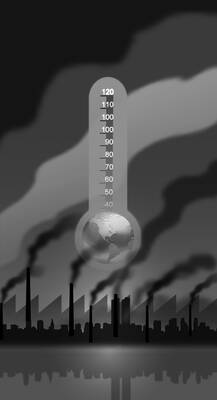
The closure of the Strait of Hormuz has sent the vast Asian chemicals industry into a tailspin. Deprived of the likes of Qatari natural gas and Saudi Arabian oil, the region’s fertilizer and plastics plants are slowing production or even shutting down. Everywhere except China, that is. In petrochemicals, China is unique. As well as a traditional industry that uses oil and gas as feedstock, it has parallel output that relies on its abundant domestic coal. Unsurprisingly, India and other regional powers want to copy and paste the Chinese method. This would not be easy — or climate friendly. The
Indonesian President Prabowo Subianto says he knows how to fix the problems facing Indonesia. Yet his economic mismanagement and authoritarian tendencies are steering the nation toward a familiar mix of currency instability and political chaos. The world’s fourth-most populous nation risks reversing the hard-won democratic and business reforms that came after the Asian Financial Crisis in 1997. At that time, the rupiah collapsed and the political upheaval that followed forced former president Haji Mohamed Suharto from power. Prabowo’s administration is ignoring similar warning signs. That disconnect was apparent in a national address on Wednesday, when Prabowo projected the swagger that has
“Of course you can choose not to be Taiwanese, just do not stay here,” chairwoman of Taipei 101 operator Taipei Financial Center Corp Janet Chia (賈永婕) said in an online interview with local entertainer Tai Chih-yuan (邰智源), triggering intense discussion on social media, with politicians across party lines weighing in. In the interview, which was aired on May 14, Chia and Tai’s discussion over a meal in Taipei 101 covered Chia’s career change from entertainer to chairwoman and US climber Alex Honnold’s free solo climb up the Taipei 101 building. During the interview, Chia said, “Being on this land, we


 RSS
RSS