


Recognition, respect and legitimacy are never permanently granted by institutions alone. They are ultimately commanded through achievement, resilience and moral authority.
History offers many examples. Mahatma Gandhi, perhaps the greatest global advocate of non-violence and peace, never received the Nobel Peace Prize during his lifetime.
After his assassination, the Nobel Committee later expressed regret that Gandhi had never been honored.
The absence of formal recognition did not diminish his global moral stature. Institutions merely failed to catch up with reality.
In many ways, Taiwan presents a similar challenge to the international system.
The debate around Taiwan’s sovereignty and international status has intensified again this year.
The controversy surrounding President William Lai’s (賴清德) diplomatic visit to the Kingdom of Eswatini exposed how aggressively Beijing seeks to restrict Taiwan’s international space. At about the same time, remarks by US President Donald Trump after meeting with Chinese President Xi Jinping (習近平) unsettled many across the Indo-Pacific region when he described Taiwan as a “negotiating chip” in dealing with China.
Yet beneath the geopolitical drama lies a deeper question: What does recognition actually mean in the 21st century?
Taiwan governs itself democratically, controls its territory, elects its leaders, maintains its own military, judiciary, immigration system and foreign policy, and plays a central role in the global economy through semiconductor manufacturing.
The Chinese Communist Party of China has never governed Taiwan. In practical terms, Taiwan already functions as a sovereign state.
Still, Taiwan remains excluded from many international institutions due to diplomatic pressure from Beijing and interpretations of UN General Assembly Resolution 2758. The resolution addressed who represented China at the UN, not Taiwan’s sovereignty.
Beijing has transformed the resolution into a broader diplomatic instrument claiming Taiwan has no separate international existence.
Many countries accepted this interpretation for strategic and economic reasons.
After the lifting of martial law in 1987, Taiwan became one of Asia’s most vibrant democracies. A distinct Taiwanese identity has strengthened, especially among younger generations.
Today, Taiwan is not only an economic powerhouse, but also an open society with advanced healthcare, technological innovation and democratic accountability.
Taiwan’s case exposes a contradiction in the modern international system.
Traditional Westphalian sovereignty depended on formal recognition, yet the 21st century produces entities that do not fit neatly into old categories.
Even Somaliland, though unrecognized, has maintained political stability, functioning institutions and democratic processes for decades compared with many recognized fragile states. Such cases increasingly distinguish sovereignty on paper from sovereignty in practice.
Perhaps the real crisis is not Taiwan’s ambiguity, but the inability of institutions to adapt.
The UN Charter emerged from 1945, shaped by post-World War II and colonial realities that no longer exist in the same form.
Yet global governance institutions have only partially adapted to democratic self-rule, technological interdependence and functional sovereignty.
Taiwan remains excluded from bodies such as the WHO despite world-class medical expertise, and is often blocked from climate and aviation forums despite deep integration into global supply chains.
Such exclusions weaken institutional credibility.
The problem is no longer Taiwan’s absence, but a system increasingly disconnected from reality.
The solution might not lie in immediate universal recognition, but in meaningful participation for Taiwan in global institutions dealing with health, aviation safety, disaster management, maritime security and technology governance.
A shadow recognition framework already exists — based on economic relevance, democratic legitimacy, institutional competence and international trust.
What remains absent is the honesty to acknowledge it.
Xi insists unification is inevitable. Taiwan’s leadership insists only its people can decide its future. That contest will continue, but Taiwan’s broader significance might lie elsewhere.
For centuries, legitimacy flowed downward from empires and institutions.
Taiwan suggests that in the future it might flow upward from democratic consent, effective governance, economic capability and popular will.
If that shift is under way, Taiwan is not an exception to the international order — it be its earliest signal of what comes next.
Mukesh Kaushik is deputy editor at Dainik Bhaskar, the largest published daily in India. He is a researcher at National Chengchi University on the Ministry of Foreign Affairs Taiwan Fellowship.
KMT Chairwoman Cheng Li-wun’s (鄭麗文) recent visit to Beijing and her upcoming visit to Washington will serve as a high-level test of her diplomatic mettle. In Beijing, Cheng was received with symbolic gestures, a warm reception, and high-level access. In Washington, she will receive far less pomp and far sharper questions about the KMT’s vision for the future of Taiwan. Her challenge will be to persuade Washington that the KMT’s engagement with China can coexist with strong deterrence. Cheng’s April 7-12 visit to mainland China coincided with an intense period of conflict in Iran. Despite the strategic significance of Cheng’s trip,
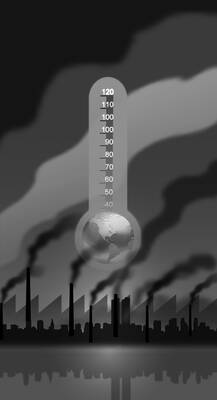
The closure of the Strait of Hormuz has sent the vast Asian chemicals industry into a tailspin. Deprived of the likes of Qatari natural gas and Saudi Arabian oil, the region’s fertilizer and plastics plants are slowing production or even shutting down. Everywhere except China, that is. In petrochemicals, China is unique. As well as a traditional industry that uses oil and gas as feedstock, it has parallel output that relies on its abundant domestic coal. Unsurprisingly, India and other regional powers want to copy and paste the Chinese method. This would not be easy — or climate friendly. The
Indonesian President Prabowo Subianto says he knows how to fix the problems facing Indonesia. Yet his economic mismanagement and authoritarian tendencies are steering the nation toward a familiar mix of currency instability and political chaos. The world’s fourth-most populous nation risks reversing the hard-won democratic and business reforms that came after the Asian Financial Crisis in 1997. At that time, the rupiah collapsed and the political upheaval that followed forced former president Haji Mohamed Suharto from power. Prabowo’s administration is ignoring similar warning signs. That disconnect was apparent in a national address on Wednesday, when Prabowo projected the swagger that has
“Of course you can choose not to be Taiwanese, just do not stay here,” chairwoman of Taipei 101 operator Taipei Financial Center Corp Janet Chia (賈永婕) said in an online interview with local entertainer Tai Chih-yuan (邰智源), triggering intense discussion on social media, with politicians across party lines weighing in. In the interview, which was aired on May 14, Chia and Tai’s discussion over a meal in Taipei 101 covered Chia’s career change from entertainer to chairwoman and US climber Alex Honnold’s free solo climb up the Taipei 101 building. During the interview, Chia said, “Being on this land, we


 RSS
RSS