


The unending string of construction projects at Daan Forest Park has become a collective gripe heard all too often among Taipei City residents.
Daan Forest Park should be a place where residents can relax, take a stroll and pause for a moment. However, large areas have been cordoned off, and access to footpaths and activity areas has been restricted. Beginning last summer, construction work ran overtime first into winter, then the new year and is still ongoing.
These concerns relate not only to the construction delays alone, but to broader questions of city-level governance.
The Taipei City Government told citizens that the first zone of the park’s drainage repairs and trail repaving plan was meant to conclude by the end of October last year, but was pushed back until the end of January this year due to construction delays, aging pipes in the fire mains and changes to the plan. The entire project is expected to wrap up on July 19, next year.
What is hard to believe is that this is not a project involving an underground MRT line or major traffic works, but simply the drains and pavement of a city park. If these renovations really require two years, it would seem the issue lies higher up the governance chain.
Government documents cited the discovery of aging pipes in the underground fire mains as a cause for delay. The question is: Did the Taipei City Government not already hold the data on this? Are the design consultants involved, and the city’s fire, water, parks and public works departments not talking to one another?
Taipei is the country’s best-resourced city with the most complete records available. If officials can only find out the situation once ground has been broken, it speaks to the inability of local government bodies to coordinate and communicate.
It did not help that after the first zone ran into a pipe-related roadblock, the plan was redrawn to shift resources toward commencing work on new zones. Management theory might call this adaptive scheduling, but to residents all means is that more of the park is now blocked off.
A construction plan originally meant to complete one zone at a time is today operating across multiple sites all at once.
The result is that elderly people must take detours, wheelchair users have an even harder time, mud piles up when it rains and weekend crowds are especially squeezed.
These might seem like minor grievances, but they add up.
Tokyo, Seoul and New York each have large central city parks. They too have faced repair and renovation challenges, but rarely have such issues resulted in the kind of public fatigue over never-ending construction that we are seeing in Taipei.
A mature city should be mindful not only of when a construction project can be finished, but also of how to minimize the impact on residents.
What residents want to know is simple: How can so much of the park possibly need to be taped off, dug up and reworked for so long?
Public works are about more than the project itself; they are a direct reflection of a city’s executive capacity.
This encompasses whether preliminary investigations are thorough, interdepartmental coordination is effective, process management is professional and whether the construction phase itself respects residents’ day-to-day lives.
If Taipei Mayor Chiang Wan-an (蔣萬安) is serious about his “Livable Taipei” pledge, he should understand that it is not just a matter of city image and event promotion.
Daan Forest Park aside, what is truly troubling is that the city has already begun to see this incompetence as the norm.
Hsiao Hsi-huei is a freelancer.
Translated by Gilda Knox Streader
KMT Chairwoman Cheng Li-wun’s (鄭麗文) recent visit to Beijing and her upcoming visit to Washington will serve as a high-level test of her diplomatic mettle. In Beijing, Cheng was received with symbolic gestures, a warm reception, and high-level access. In Washington, she will receive far less pomp and far sharper questions about the KMT’s vision for the future of Taiwan. Her challenge will be to persuade Washington that the KMT’s engagement with China can coexist with strong deterrence. Cheng’s April 7-12 visit to mainland China coincided with an intense period of conflict in Iran. Despite the strategic significance of Cheng’s trip,
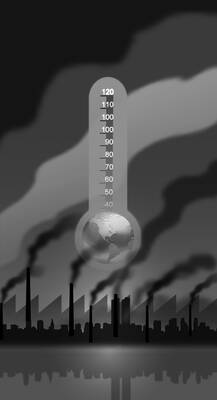
The closure of the Strait of Hormuz has sent the vast Asian chemicals industry into a tailspin. Deprived of the likes of Qatari natural gas and Saudi Arabian oil, the region’s fertilizer and plastics plants are slowing production or even shutting down. Everywhere except China, that is. In petrochemicals, China is unique. As well as a traditional industry that uses oil and gas as feedstock, it has parallel output that relies on its abundant domestic coal. Unsurprisingly, India and other regional powers want to copy and paste the Chinese method. This would not be easy — or climate friendly. The
Indonesian President Prabowo Subianto says he knows how to fix the problems facing Indonesia. Yet his economic mismanagement and authoritarian tendencies are steering the nation toward a familiar mix of currency instability and political chaos. The world’s fourth-most populous nation risks reversing the hard-won democratic and business reforms that came after the Asian Financial Crisis in 1997. At that time, the rupiah collapsed and the political upheaval that followed forced former president Haji Mohamed Suharto from power. Prabowo’s administration is ignoring similar warning signs. That disconnect was apparent in a national address on Wednesday, when Prabowo projected the swagger that has
“Of course you can choose not to be Taiwanese, just do not stay here,” chairwoman of Taipei 101 operator Taipei Financial Center Corp Janet Chia (賈永婕) said in an online interview with local entertainer Tai Chih-yuan (邰智源), triggering intense discussion on social media, with politicians across party lines weighing in. In the interview, which was aired on May 14, Chia and Tai’s discussion over a meal in Taipei 101 covered Chia’s career change from entertainer to chairwoman and US climber Alex Honnold’s free solo climb up the Taipei 101 building. During the interview, Chia said, “Being on this land, we


 RSS
RSS