


In calling for regulation of the digital revolution and foregrounding human dignity, the pontiff has contributed to a crucial ethical debate
When the present pope adopted his regnal name, he explained the choice by reference to a 19th-century predecessor who used the papacy to address the great social question of his time. In the 1891 encyclical Rerum Novarum (Of New Things), Pope Leo XIII analyzed the social forces unleashed by the Industrial Revolution and outlined principles for a just settlement between the forces of capital and labor. Pope Leo XIV hopes to do something similar in relation to the accelerating digital upheaval of our own age.
As anxiety grows over big tech’s impact on how we work and live, such ambition should be applauded. The early fruits of the pope’s work were presented in the Vatican on Monday after the publication of his first encyclical, Magnifica Humanitas (Magnificent Humanity). In 42,000 or so words, the document itemizes the daunting challenges posed by developments in artificial intelligence (AI) and urges political leaders to safeguard human dignity as new technologies emerge at a pace that is outstripping ethical regulation and control.
At its core is a salutary emphasis on the unique value and status of human beings. The pope underlines the importance of defending their interests against the threat of a dystopia in which the social role of large swathes of the population is usurped by machines. This is a moral starting point that can inform debate in areas from the provision of care to the ethics of autonomous warfare. As one speaker at the document’s launch noted, human flourishing and freedom would be gravely compromised should individuals be reduced to the status of “user tools of an algorithmic order.”
Such observations are particularly timely, given US President Donald Trump’s decision last week to postpone an executive order that would have mandated safety reviews of new AI models. As a technological arms race unfolds, the reckless hubris, profit-seeking and lack of accountability of figures such as Elon Musk represent a threat to the common good. As Magnifica Humanitas argues, state regulation is needed to ensure that the extraordinary innovations and benefits that AI can deliver are used for the good of all.
Remarkably, the presentation of Pope Leo’s encyclical included an address by Christopher Olah, the atheist cofounder of Anthropic. Excoriated by Trump after it refused to endorse the use of some of its tools for warfare and mass surveillance, Anthropic appears to be positioning itself as the ethically respectable face of AI. Olah’s presence led to some charges of “popewashing,” but the Vatican presumably sees such collaboration as symbolizing a necessary moral dialogue.
That seems to be a sensible approach, despite Anthropic’s distinctly un-Catholic claims for the potentially soulful qualities of its large language models known as Claude. The spectacle of a papal encyclical copresented with a world-leading machine learning researcher illustrates the uncharted nature of the territory we are in.
The pope’s intervention is naturally informed by a theological perspective. However, a humanity-first message is one that the secular world can get behind. As Leo puts it: “Each generation inherits the task of shaping its own era, of guiding history to become a place where the dignity of every person is safeguarded, justice is promoted and fraternity is made possible.”
Magnifica Humanitas is an important contribution to a crucial debate.
KMT Chairwoman Cheng Li-wun’s (鄭麗文) recent visit to Beijing and her upcoming visit to Washington will serve as a high-level test of her diplomatic mettle. In Beijing, Cheng was received with symbolic gestures, a warm reception, and high-level access. In Washington, she will receive far less pomp and far sharper questions about the KMT’s vision for the future of Taiwan. Her challenge will be to persuade Washington that the KMT’s engagement with China can coexist with strong deterrence. Cheng’s April 7-12 visit to mainland China coincided with an intense period of conflict in Iran. Despite the strategic significance of Cheng’s trip,
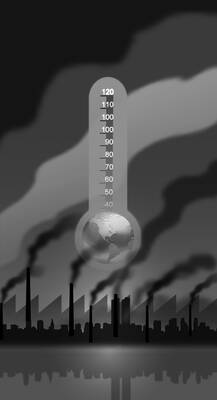
The closure of the Strait of Hormuz has sent the vast Asian chemicals industry into a tailspin. Deprived of the likes of Qatari natural gas and Saudi Arabian oil, the region’s fertilizer and plastics plants are slowing production or even shutting down. Everywhere except China, that is. In petrochemicals, China is unique. As well as a traditional industry that uses oil and gas as feedstock, it has parallel output that relies on its abundant domestic coal. Unsurprisingly, India and other regional powers want to copy and paste the Chinese method. This would not be easy — or climate friendly. The
Indonesian President Prabowo Subianto says he knows how to fix the problems facing Indonesia. Yet his economic mismanagement and authoritarian tendencies are steering the nation toward a familiar mix of currency instability and political chaos. The world’s fourth-most populous nation risks reversing the hard-won democratic and business reforms that came after the Asian Financial Crisis in 1997. At that time, the rupiah collapsed and the political upheaval that followed forced former president Haji Mohamed Suharto from power. Prabowo’s administration is ignoring similar warning signs. That disconnect was apparent in a national address on Wednesday, when Prabowo projected the swagger that has
“Of course you can choose not to be Taiwanese, just do not stay here,” chairwoman of Taipei 101 operator Taipei Financial Center Corp Janet Chia (賈永婕) said in an online interview with local entertainer Tai Chih-yuan (邰智源), triggering intense discussion on social media, with politicians across party lines weighing in. In the interview, which was aired on May 14, Chia and Tai’s discussion over a meal in Taipei 101 covered Chia’s career change from entertainer to chairwoman and US climber Alex Honnold’s free solo climb up the Taipei 101 building. During the interview, Chia said, “Being on this land, we


 RSS
RSS