


Winning this year’s International Booker Prize has transformed Taiwan Travelogue (台灣漫遊錄) from an acclaimed literary work into a cultural moment for Taiwan itself.
The novel had already made history in 2024 by becoming the first Taiwanese work to win the US National Book Award for Translated Literature, giving it considerable visibility in the English-speaking literary world even before the Booker recognition.
Taiwanese literature has often remained internationally overshadowed — frequently folded into broader categories such as “Chinese-language literature” or interpreted primarily through geopolitics rather than through its own literary imagination. The recognition of Yang Shuang-zi’s (楊双子) novel therefore matters not simply because a Taiwanese book has won a prestigious global prize, but because it signals that Taiwan’s complex historical experiences and cultural sensibilities are entering world literature on their own terms.
What surprised me most about reading Taiwan Travelogue was that it took me three attempts to truly enter the world of the novel. My first encounter with the English translation left me disoriented. The book carries an overwhelming Japanese flavor — in atmosphere, literary sensibility, manners and aesthetics — to the point that I found myself questioning its status as a “Taiwanese” novel.
After finishing the first chapter, I stopped. On my second attempt, I struggled again. The novel seemed almost like a catalogue of colonial travel: railway journeys, cafes, regional dishes, local customs and ethnographic detail unfolding in exquisite precision, but with little emotional force. I admired the writing, yet it still felt distant.
Only on the third reading did the novel begin to reveal itself. I realized that its focus on surfaces is precisely the point. The attention to food, etiquette, travel, language and cultural refinement is not decorative, but the mechanism through which the novel explores colonialism, desire, identity and power.
What initially appears gentle and aesthetic becomes haunted by subtle tensions — translation, intimacy, hierarchy and historical memory. The novel’s emotional and political force emerges almost imperceptibly through atmosphere and imbalance rather than dramatic confrontation. In retrospect, my difficulty entering it feels meaningful rather than accidental.
Taiwan Travelogue refuses to offer Taiwan as an easily consumable national narrative. Instead, it asks readers to inhabit the ambiguities of colonial modernity. Set during the Japanese colonial period, it follows a Japanese writer traveling through Taiwan with a Taiwanese female interpreter, yet the real subject is the unequal structures shaping how people see one another. Colonialism is portrayed less through overt violence than through everyday life: accents, literary taste, food culture, etiquette and the invisible hierarchies governing who speaks and who must translate themselves for others.
The relationship between the Japanese and Taiwanese characters is never fully equal, even amid admiration or affection. Colonialism operates not only through domination, but also through seduction, aspiration, imitation and emotional dependency. Food, in particular, becomes a key site where desire and power intersect. Meals are described with extraordinary sensuality and precision. At first glance, these passages seem nostalgic or pleasurable.
However, gradually, cuisine becomes political. Taiwan itself is transformed into something to be tasted, aestheticized, consumed and interpreted through the colonial gaze. Yet beneath the elegance lies quiet resistance: Taiwanese identity can never be fully absorbed into imperial narratives. Something always exceeds translation and possession. Language functions similarly throughout the novel.
Translation constantly occurs between Japanese, Taiwanese, Chinese and other cultural registers, yet genuine understanding remains elusive. Characters may speak fluently to one another while remaining emotionally and historically distant.
Yang captures the fractured consciousness produced by colonial modernity: People learn to inhabit the language of power publicly while privately carrying memories and identities that resist articulation. In recent years, global literary culture has shown growing interest in stories of empire, hybridity, migration and historical memory.
Taiwan Travelogue speaks powerfully to these concerns through a distinctly Taiwanese lens. Rather than presenting Taiwan through nationalist certainty, it portrays the nation as multilingual, hybrid and historically layered — shaped by encounters, translations and uneven histories.
Its Booker victory carries significance beyond literature. Internationally, it expands visibility for Taiwanese writing at a moment when Taiwan’s global presence remains politically constrained. Symbolically, it shows Taiwan can enter global conversations not only through geopolitics or cross-strait tensions, but through cultural production.
For Taiwanese readers, the novel’s success might encourage renewed confidence in local histories and literary traditions long marginalized within broader Sinophone frameworks. Yet what makes Taiwan Travelogue especially notable is its refusal to simplify history into moral slogans.
Japanese characters are not reduced to colonial caricatures, nor Taiwanese characters to passive victims. Instead, the novel examines how empire reshapes everyone psychologically and emotionally, entangling shame, admiration, loneliness, ambition, desire and self-fashioning with colonial power.
That complexity helps explain its international success. Rather than explaining Taiwan didactically, it invites readers to dwell in ambiguity, offering no easy catharsis or political resolution. Its beauty lies in its quietness. Perhaps that is why it took three attempts to appreciate it fully. By the end, the “travelogue” is not only a journey across colonial Taiwan, but through the unstable emotional landscapes of history itself.
Ming-yeh T. Rawnsley is a research associate at SOAS University of London’s Centre for Taiwan Studies.
KMT Chairwoman Cheng Li-wun’s (鄭麗文) recent visit to Beijing and her upcoming visit to Washington will serve as a high-level test of her diplomatic mettle. In Beijing, Cheng was received with symbolic gestures, a warm reception, and high-level access. In Washington, she will receive far less pomp and far sharper questions about the KMT’s vision for the future of Taiwan. Her challenge will be to persuade Washington that the KMT’s engagement with China can coexist with strong deterrence. Cheng’s April 7-12 visit to mainland China coincided with an intense period of conflict in Iran. Despite the strategic significance of Cheng’s trip,
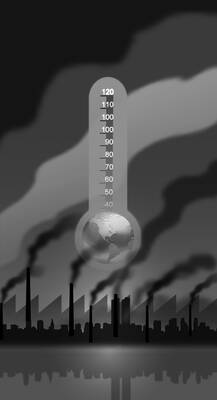
The closure of the Strait of Hormuz has sent the vast Asian chemicals industry into a tailspin. Deprived of the likes of Qatari natural gas and Saudi Arabian oil, the region’s fertilizer and plastics plants are slowing production or even shutting down. Everywhere except China, that is. In petrochemicals, China is unique. As well as a traditional industry that uses oil and gas as feedstock, it has parallel output that relies on its abundant domestic coal. Unsurprisingly, India and other regional powers want to copy and paste the Chinese method. This would not be easy — or climate friendly. The
Indonesian President Prabowo Subianto says he knows how to fix the problems facing Indonesia. Yet his economic mismanagement and authoritarian tendencies are steering the nation toward a familiar mix of currency instability and political chaos. The world’s fourth-most populous nation risks reversing the hard-won democratic and business reforms that came after the Asian Financial Crisis in 1997. At that time, the rupiah collapsed and the political upheaval that followed forced former president Haji Mohamed Suharto from power. Prabowo’s administration is ignoring similar warning signs. That disconnect was apparent in a national address on Wednesday, when Prabowo projected the swagger that has
“Of course you can choose not to be Taiwanese, just do not stay here,” chairwoman of Taipei 101 operator Taipei Financial Center Corp Janet Chia (賈永婕) said in an online interview with local entertainer Tai Chih-yuan (邰智源), triggering intense discussion on social media, with politicians across party lines weighing in. In the interview, which was aired on May 14, Chia and Tai’s discussion over a meal in Taipei 101 covered Chia’s career change from entertainer to chairwoman and US climber Alex Honnold’s free solo climb up the Taipei 101 building. During the interview, Chia said, “Being on this land, we


 RSS
RSS