


Three major drug-related car crashes have occurred in Changhua County over just 20 days this month, resulting in four deaths and eight injuries. Separately, another fatal accident in New Taipei City’s Jhonghe District (中和) occurred on Saturday at the hands of a drug-impaired driver.
Lives were lost in the most ordinary of moments: a family sitting outside of a hot pot restaurant, or a pair riding home on a motorcycle. This has become bigger than a traffic issue — it is a social safety crisis.
The most frightening part of drug-impaired driving is that, unlike ordinary traffic violations, it involves people knowingly putting themselves behind the wheel and putting the lives of others at risk. The hallucinations, disorientation and impaired judgement that drug use can cause mean that accidents are just a matter of time. Once someone loses control, lives are lost and families are torn apart. Their grief lasts a lifetime.
The government proclaims “zero tolerance” for drug-impaired driving, which is certainly the right direction. What the public wants to know, however, is how this will be realized. If drugs remain as easy to obtain as buying groceries — as some victims’ families have bitterly put it — then these slogans read like nothing more than platitudes of outrage after the fact.
The issue is that drugs have penetrated every corner of society. From “zombie vapes” containing etomidate to methamphetamine and heroin, users are becoming younger and access is becoming easier. Many people continue driving or riding after taking drugs, and by the time an accident occurs, it is already too late.
Anti-drug policy, therefore, cannot stop at imposing harsher penalties after offenders are caught. What truly matters is prevention beforehand.
First, efforts must begin at the source by cracking down on drugs.
The government should make dismantling drug supply chains a public security priority, particularly by increasing penalties for trafficking syndicates and those who manufacture or distribute drugs.
The people truly responsible are not just users, but those who profit from maintaining a continuous drug supply. If the supply of drugs continues uninterrupted, law enforcement would forever be fighting an uphill battle.
Second, the education system must intervene earlier.
Many young people lack awareness of emerging drugs and think of vape pens simply as e-cigarettes, offering a pick-me-up or something to help them relax — then addiction sets in. Schools cannot keep relying on the standard awareness campaigns; they should include real cases, stories from affected families, counselling and support, so that children understand how drugs can destroy lives.
Furthermore, the government should establish faster testing systems. At present, police procedures for drug-testing drivers are more complicated than breath alcohol testing, time-consuming, and are difficult to assess immediately.
Developing rapid drug-testing devices comparable to breath tests would improve frontline enforcement efficiency and strengthen deterrence.
In addition, the current penalty of license revocation alone might not be enough to solve the problem. Many drug-impaired drivers simply do not care about losing their licenses and continue driving illegally after release. Public calls to punish such offenses as severely as homicide are not just emotional reactions; they stem from the view that drug-impaired driving inherently exposes innocent people to fatal risk.
The most important function of the law is not punishment. It is prevention.
Only when penalties become severe enough to deter people from using drugs or driving under the influence of drugs can tragedies be prevented.
It is one of the public’s most basic rights to live without fear on the roads.
People walking down the street, standing outside a shop or riding home should not have to worry about being killed by a drug-impaired driver at any moment.
Only through simultaneous reforms — tackling drugs at the source, preventive education, technology-assisted enforcement, and stronger deterrence — can pedestrian safety, social stability and public peace of mind truly be achieved.
Chen Ching-yun is a former director of the Legislative Yuan’s Bureau of Legal Affairs.
Translated by Gilda Knox Streader
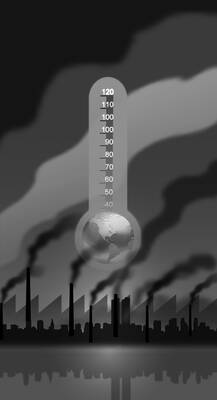
The closure of the Strait of Hormuz has sent the vast Asian chemicals industry into a tailspin. Deprived of the likes of Qatari natural gas and Saudi Arabian oil, the region’s fertilizer and plastics plants are slowing production or even shutting down. Everywhere except China, that is. In petrochemicals, China is unique. As well as a traditional industry that uses oil and gas as feedstock, it has parallel output that relies on its abundant domestic coal. Unsurprisingly, India and other regional powers want to copy and paste the Chinese method. This would not be easy — or climate friendly. The
KMT Chairwoman Cheng Li-wun’s (鄭麗文) recent visit to Beijing and her upcoming visit to Washington will serve as a high-level test of her diplomatic mettle. In Beijing, Cheng was received with symbolic gestures, a warm reception, and high-level access. In Washington, she will receive far less pomp and far sharper questions about the KMT’s vision for the future of Taiwan. Her challenge will be to persuade Washington that the KMT’s engagement with China can coexist with strong deterrence. Cheng’s April 7-12 visit to mainland China coincided with an intense period of conflict in Iran. Despite the strategic significance of Cheng’s trip,
History might remember 2026, not 2022, as the year artificial intelligence (AI) truly changed everything. ChatGPT’s launch was a product moment. What is happening now is an anthropological moment: AI is no longer merely answering questions. It is now taking initiative and learning from others to get things done, behaving less like software and more like a colleague. The economic consequence is the rise of the one-person company — a structure anticipated in the 2024 book The Choices Amid Great Changes, which I coauthored. The real target of AI is not labor. It is hierarchy. When AI sharply reduces the cost
US President Donald Trump recently repeated his claim that “Taiwan stole America’s chip industry,” reigniting public debate on the issue. As a former Taiwanese minister of economic affairs and an entrepreneur deeply involved in semiconductor supply chain development, I feel a responsibility to clarify this misunderstanding. From the perspective of global industrial evolution and the economic principle of comparative advantage, such a statement appears overly simplistic and risks obscuring the essence of the issue. The rise of Taiwan’s semiconductor industry was not built on “replacing America,” but rather emerged as a result of countries pursuing different development paths within the


 RSS
RSS