


As widely expected, the US Federal Open Market Committee (FOMC) on Wednesday last week kept the federal funds rate at 3.5 to 3.75 percent for a third consecutive meeting, citing economic uncertainty. However, this time, the message is significantly more complex and arrives amid concerns about the US Federal Reserve’s monetary policy independence.
First, four members of the committee cast dissenting votes, the highest level of dissent since 1992. While Fed Governor Stephen Miran continued to support a 25-basis-point cut, Cleveland Fed President Beth Hammack, Minneapolis Fed President Neel Kashkari and Dallas Fed President Lorie Logan opposed retaining language implying future rate cuts in the post-meeting Fed policy statement, even though they supported the rate decision.
That indicated a significant increase in the FOMC’s awareness of inflation risks as developments in the Middle East continue to evolve, but also highlighted the growing policy divide within the committee. While the policy statement kept language suggesting an easing bias, as most committee members were not yet willing to completely rule out rate cuts, policy discussions appeared to have gradually shifted from solely focusing on rate cuts toward a more neutral stance that does not assume a cut.
Second, Fed Chair Jerome Powell confirmed in the post-meeting news conference that he would remain on the Fed board as a governor after his term as chair ends on Friday next week, the first time since 1948 that a Fed chair was expected to stay on the board after their term ended. Powell did not say explicitly when he would leave the position, raising fears of legal attacks from the White House, but he pledged to keep a low profile under the incoming chair. Still, his decision set the stage for a showdown with US President Donald Trump, who has nominated former Fed governor Kevin Warsh as Powell’s successor.
The US Senate Banking Committee on Wednesday last week voted to advance Warsh, with the nomination set to go to the full Republican-controlled US Senate, which is expected to confirm Warsh as the 17th chair of the Fed since 1913. The next FOMC meeting on June 16-17 would be the first time in modern history that a new Fed chair would lead a committee that includes his predecessor.
For Warsh, the biggest challenge is not just policy direction, but how to lead an increasingly divided FOMC. The Fed has always adopted a collegial, consensus-based decisionmaking process, and its chair’s authority comes from persuading and uniting the committee, not from making unilateral decisions. If Warsh ignores hawkish dissent and pushes for rate cuts outright to better align with Trump’s views, it would mean the end of the Fed’s era of nonpartisan independence, and that could trigger significant market volatility.
Third, Powell is known for his ability to reconcile differences among FOMC members over the past eight years. Yet he, still faced growing dissent before leaving office, underscoring the complexity of the situation. It would undoubtedly be a challenge for the incoming chair amid the Middle East war that has disrupted global energy supplies and driven up prices.
Given the lingering inflation risks and the constraints imposed by rising hawkish voices, the likelihood of a Fed rate cut in the near term is low without supporting data on a significant deterioration in the labor market. Moreover, the market should expect less clarity on the direction of Fed decisions, with future FOMC meetings likely to be fraught with greater uncertainty and internal power struggles.
Finally, Warsh’s Senate testimony and his tenure as Fed governor from 2006 to 2011 suggested that he supports a stricter inflation doctrine, prefers a smaller Fed balance sheet and endorses the principle of central bank independence. At the same time, a Fed under him is likely to place less emphasis on formal forward guidance and potentially de-emphasize the dot-plot projections favored by previous chairs.
However, given many challenges ahead, it remains too early to tell how Warsh’s plans for a structural change at the Fed could be executed in the short term, let alone his push for rate cuts by assuming that an artificial intelligence (AI) boom would increase productivity without reigniting price pressures. Therefore, people should prepare for gradual changes, rather than abrupt Fed policy shifts any time soon.
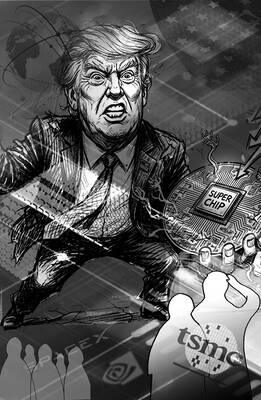
The White House’s decision to take a 9.9 percent stake in Intel Corp is looking like very shrewd business indeed. Since the government bought in at US$20.47 a share last August, the US chipmaker’s surging stock price has delivered the US a US$43 billion return. One of the reasons the investment has so far proved so sound is that the White House has made sure of it. According to The Wall Street Journal, Howard personally pushed deals on Intel’s behalf with some of the most lucrative clients imaginable. They include Nvidia Corp, the company at the heart of the AI
KMT Chairwoman Cheng Li-wun’s (鄭麗文) recent visit to Beijing and her upcoming visit to Washington will serve as a high-level test of her diplomatic mettle. In Beijing, Cheng was received with symbolic gestures, a warm reception, and high-level access. In Washington, she will receive far less pomp and far sharper questions about the KMT’s vision for the future of Taiwan. Her challenge will be to persuade Washington that the KMT’s engagement with China can coexist with strong deterrence. Cheng’s April 7-12 visit to mainland China coincided with an intense period of conflict in Iran. Despite the strategic significance of Cheng’s trip,
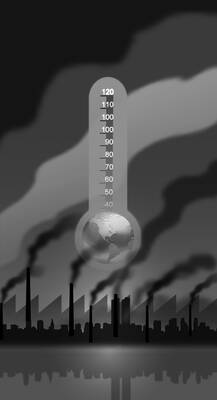
The closure of the Strait of Hormuz has sent the vast Asian chemicals industry into a tailspin. Deprived of the likes of Qatari natural gas and Saudi Arabian oil, the region’s fertilizer and plastics plants are slowing production or even shutting down. Everywhere except China, that is. In petrochemicals, China is unique. As well as a traditional industry that uses oil and gas as feedstock, it has parallel output that relies on its abundant domestic coal. Unsurprisingly, India and other regional powers want to copy and paste the Chinese method. This would not be easy — or climate friendly. The
Indonesian President Prabowo Subianto says he knows how to fix the problems facing Indonesia. Yet his economic mismanagement and authoritarian tendencies are steering the nation toward a familiar mix of currency instability and political chaos. The world’s fourth-most populous nation risks reversing the hard-won democratic and business reforms that came after the Asian Financial Crisis in 1997. At that time, the rupiah collapsed and the political upheaval that followed forced former president Haji Mohamed Suharto from power. Prabowo’s administration is ignoring similar warning signs. That disconnect was apparent in a national address on Wednesday, when Prabowo projected the swagger that has


 RSS
RSS