


Earth Day is celebrated on April 22 every year, and it is also my birthday. It seems that God had a purpose in letting me be born on this day.
It makes me happy to pick up trash: I try to clean the mountains when I go hiking, and clean the beaches when I go fishing.
When I go to the park almost every day, I take a walk around to clean the area, picking up litter as part of my daily routine. I am a professional ophthalmologist, and I enjoy being an amateur cleaner.
I am now in my 70s, and I have been picking up trash for at least 30 years. Some often jokingly call me “Dr Trash” (垃圾醫師), but I do not mind. On the contrary, I take pride in the title. After my birthday, I would like to share some reflections.
For me, picking up litter is the best form of exercise. It benefits me and those around me. My hobby reminds me of Jean-Jacques Rousseau’s claim that there are two books a person must read, one is “nature (自然), and the other is “oneself” (自我).
In the park at dawn, the morning light filters through the green leaves, casting a golden glow upon me. A gentle breeze blows, birds sing and flowers bloom.
Immersed in the warm, tranquil flora, I quietly observe nature’s wondrous changes, and my body, mind and soul are deeply refreshed.
Hectic medical work can be overwhelming sometimes. Luckily, the process of picking up trash allows me to calm my mind, face myself honestly, engage in self-dialogue and seek reconciliation with myself.
Picking up litter involves two simple actions: picking up and letting go. Is that not what life is all about?
In our youth, we are busy accumulating fame and fortune. But in our twilight years, what should we let go? This question is worth pondering.
Occasionally, when I am cleaning the environment, I encounter small dead animals such as dogs, cats or birds. Their bodies are often covered in maggots and can be very smelly.
Most people cover their noses and walk past. I am willing to be an “undertaker,” finding a lush green tree nearby, digging a pit beneath it, and burying them there so they can rest in piece. Through this, I also cultivate my compassion.
My spiritual mentor, the late Catholic Cardinal Paul Shan (單國璽), once said to me with a smile: “Dr. Chuang, the trash you clean will turn into an equal weight of gold when you reach heaven.”
Although I have never had such a grand hope, in the process of cleaning I have found a spiritual fulfillment that money cannot buy. Bending down has also made me more humble in life.
My birthday wish this year is that my beloved Taiwan, while pursuing economic growth, will not neglect environmental protection.
I hope more people will participate in environmental efforts so the Earth that nurtures us can remain healthy, clean and beautiful
Chuang Chung-chi is an ophthalmologist.
Translated by Eddy Chang
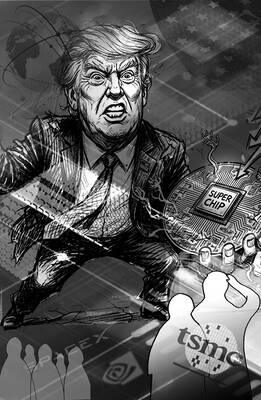
The White House’s decision to take a 9.9 percent stake in Intel Corp is looking like very shrewd business indeed. Since the government bought in at US$20.47 a share last August, the US chipmaker’s surging stock price has delivered the US a US$43 billion return. One of the reasons the investment has so far proved so sound is that the White House has made sure of it. According to The Wall Street Journal, Howard personally pushed deals on Intel’s behalf with some of the most lucrative clients imaginable. They include Nvidia Corp, the company at the heart of the AI
KMT Chairwoman Cheng Li-wun’s (鄭麗文) recent visit to Beijing and her upcoming visit to Washington will serve as a high-level test of her diplomatic mettle. In Beijing, Cheng was received with symbolic gestures, a warm reception, and high-level access. In Washington, she will receive far less pomp and far sharper questions about the KMT’s vision for the future of Taiwan. Her challenge will be to persuade Washington that the KMT’s engagement with China can coexist with strong deterrence. Cheng’s April 7-12 visit to mainland China coincided with an intense period of conflict in Iran. Despite the strategic significance of Cheng’s trip,
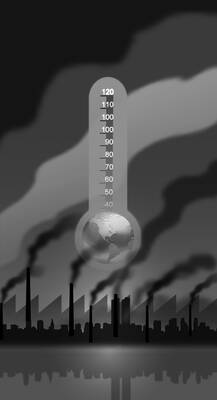
The closure of the Strait of Hormuz has sent the vast Asian chemicals industry into a tailspin. Deprived of the likes of Qatari natural gas and Saudi Arabian oil, the region’s fertilizer and plastics plants are slowing production or even shutting down. Everywhere except China, that is. In petrochemicals, China is unique. As well as a traditional industry that uses oil and gas as feedstock, it has parallel output that relies on its abundant domestic coal. Unsurprisingly, India and other regional powers want to copy and paste the Chinese method. This would not be easy — or climate friendly. The
Indonesian President Prabowo Subianto says he knows how to fix the problems facing Indonesia. Yet his economic mismanagement and authoritarian tendencies are steering the nation toward a familiar mix of currency instability and political chaos. The world’s fourth-most populous nation risks reversing the hard-won democratic and business reforms that came after the Asian Financial Crisis in 1997. At that time, the rupiah collapsed and the political upheaval that followed forced former president Haji Mohamed Suharto from power. Prabowo’s administration is ignoring similar warning signs. That disconnect was apparent in a national address on Wednesday, when Prabowo projected the swagger that has


 RSS
RSS