


President William Lai’s (賴清德) recent comparisons of colonial Japanese to early Chinese Nationalist Party (KMT) rule in Taiwan have started substantial debate across the public and legislature. However, such comparisons are ultimately unhelpful. Taiwan should instead focus on forging its own path and bolstering free and democratic values to ensure Taiwanese are the masters of their own future.
In 1994, Taiwan held its first provincial and municipal elections. The Democratic Progressive Party’s (DPP) Chen Ding-nan (陳定南) ran for provincial governor, calling the elections “the first battle in 400 years to change the color of the sky,” a framing central to his campaign. This referred to roughly 400 years since the first major wave of Han Chinese migration to Taiwan in the late Ming and early Qing dynasties. Since then, from Dutch rule to their ousting by Ming loyalist Cheng Cheng-kung (鄭成功), to Qing control under Admiral Shih Lang (施琅), to cession to Japan under the Treaty of Shimonoseki, and finally to KMT rule, Taiwan remained under foreign domination.
Those successive regimes shared common traits: exploitation of land and resources, influxes of foreign culture, concentration of political power and unequal treatment of different social groups. They did not view Taiwan as their homeland. They governed with a visitor mentality, ruling over a subjugated local population, maintaining ties to their motherlands and prioritizing those interests over Taiwan’s whenever conflicts arose.
Due to the sacrifice and dedication of earlier generations, Taiwan held its first direct presidential election in 1996, allowing its people to choose their leader and future without foreign interference. Today, after four centuries of colonial history, Taiwan is in its first era of democratic governance. Regardless of ethnicity or time of arrival, those committed to Taiwan as their home can now stand equally as masters of this land.
As a democracy, Taiwan is open to reciprocal international engagement, including with China. However, any exchange, discussion or agreement that carries preconditions or infringes on national sovereignty falls outside the public mandate.
If political parties distort sovereignty, enable foreign influence in domestic politics or cede national authority, they act as opportunists shaped by lingering colonial mindsets. It is therefore up to Taiwanese to hold them accountable.
Chen Chi-nung is principal of Shuili Junior High School in Nantou County.
Translated by Gilda Knox Streader
KMT Chairwoman Cheng Li-wun’s (鄭麗文) recent visit to Beijing and her upcoming visit to Washington will serve as a high-level test of her diplomatic mettle. In Beijing, Cheng was received with symbolic gestures, a warm reception, and high-level access. In Washington, she will receive far less pomp and far sharper questions about the KMT’s vision for the future of Taiwan. Her challenge will be to persuade Washington that the KMT’s engagement with China can coexist with strong deterrence. Cheng’s April 7-12 visit to mainland China coincided with an intense period of conflict in Iran. Despite the strategic significance of Cheng’s trip,
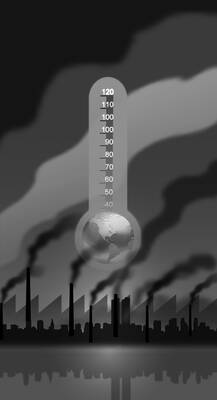
The closure of the Strait of Hormuz has sent the vast Asian chemicals industry into a tailspin. Deprived of the likes of Qatari natural gas and Saudi Arabian oil, the region’s fertilizer and plastics plants are slowing production or even shutting down. Everywhere except China, that is. In petrochemicals, China is unique. As well as a traditional industry that uses oil and gas as feedstock, it has parallel output that relies on its abundant domestic coal. Unsurprisingly, India and other regional powers want to copy and paste the Chinese method. This would not be easy — or climate friendly. The
Indonesian President Prabowo Subianto says he knows how to fix the problems facing Indonesia. Yet his economic mismanagement and authoritarian tendencies are steering the nation toward a familiar mix of currency instability and political chaos. The world’s fourth-most populous nation risks reversing the hard-won democratic and business reforms that came after the Asian Financial Crisis in 1997. At that time, the rupiah collapsed and the political upheaval that followed forced former president Haji Mohamed Suharto from power. Prabowo’s administration is ignoring similar warning signs. That disconnect was apparent in a national address on Wednesday, when Prabowo projected the swagger that has
“Of course you can choose not to be Taiwanese, just do not stay here,” chairwoman of Taipei 101 operator Taipei Financial Center Corp Janet Chia (賈永婕) said in an online interview with local entertainer Tai Chih-yuan (邰智源), triggering intense discussion on social media, with politicians across party lines weighing in. In the interview, which was aired on May 14, Chia and Tai’s discussion over a meal in Taipei 101 covered Chia’s career change from entertainer to chairwoman and US climber Alex Honnold’s free solo climb up the Taipei 101 building. During the interview, Chia said, “Being on this land, we


 RSS
RSS