


The opposition Chinese Nationalist Party (KMT) and Taiwan People’s Party (TPP) legislative caucuses on Monday last week held a hearing to present reasons for their proposal to impeach President William Lai (賴清德). It was not attended by Democratic Progressive Party (DPP) lawmakers, who called it a “political farce.”
The opposition-controlled legislature on Dec. 26 last year approved a motion to initiate impeachment proceedings after the Presidential Office and Executive Yuan declined to countersign and promulgate an amendment to the Act Governing the Allocation of Government Revenues and Expenditures (財政收支劃分法), passed on Nov. 14, to increase tax revenue allocations to local governments.
The Executive Yuan said its decision was constitutional, arguing the amendment infringes on executive authority, was passed in an undemocratic manner, and would create debt exceeding the legal ceiling.
However, the legislature last month agreed to hold an impeachment vote against Lai on the morning of May 19, a day before the second anniversary of his inauguration, widely seen as an attempt to humiliate him.
KMT and TPP lawmakers have repeatedly claimed Lai is running a “dictatorship.” At last week’s hearing, KMT caucus secretary-general Lo Chih-chiang (羅智強) cited former South Korean president Yoon Suk-yeol, sentenced to life in prison for his brief 2024 martial law declaration, and accused Lai of enforcing “silent martial law” and “paralyzing the legislature” by not promulgating a passed law.
KMT Legislator Weng Hsiao-ling (翁曉玲) echoed this, calling Lai “Taiwan’s Yoon Suk-yeol” and arguing “constitutional martial law” is worse than military rule.
However, when Weng asked a retired law professor if Lai’s actions amounted to constitutional martial law, the professor said martial law cannot be enacted unilaterally and is governed by procedures under the Martial Law Act (戒嚴法), with legislative checks in place, contradicting their claims.
May 19 marks the anniversary of the KMT-led government’s 1949 declaration of martial law, which began more than 38 years of authoritarian rule defined by repression and human rights abuses during the “White Terror” era, leaving lasting scars on Taiwanese society.
As the party that imposed one of the world’s longest continuous martial law periods, the KMT should recognize that Lai’s refusal to promulgate a bill, though unprecedented, is fundamentally different from imposing martial law.
KMT and TPP lawmakers also retain the constitutional power to pass a no-confidence motion against the premier, a key executive check.
However, opposition lawmakers overlook their own controversial actions since taking office, including efforts to expand legislative power later ruled unconstitutional by the Constitutional Court for encroaching on executive authority and violating citizens’ rights.
They also ignore China’s s long-standing threats to Taiwan’s security and transnational repression targeting Taiwanese, refusing to condemn Beijing while instead echoing its claims and urging trust in its “apparent friendliness.”
DPP lawmakers say the impeachment vote aims to humiliate the president, provoke conflict and stage a spectacle.
The vote is unlikely to pass, requiring two-thirds approval, while the DPP holds 51 of 113 seats, nearly half. Despite this, opposition lawmakers have pursued the effort for five months while neglecting their duty to review the overdue general budget and delaying a critical national defense budget bill.
Last month, they moved to extend the session through July, potentially marking a fifth consecutive extension without a break to return to local districts.
They again blamed Lai’s “unconstitutional” actions for needing to work “overtime,” but their justification is unconvincing, as they continue prioritizing symbolic gestures over substantive legislative work.
KMT Chairwoman Cheng Li-wun’s (鄭麗文) recent visit to Beijing and her upcoming visit to Washington will serve as a high-level test of her diplomatic mettle. In Beijing, Cheng was received with symbolic gestures, a warm reception, and high-level access. In Washington, she will receive far less pomp and far sharper questions about the KMT’s vision for the future of Taiwan. Her challenge will be to persuade Washington that the KMT’s engagement with China can coexist with strong deterrence. Cheng’s April 7-12 visit to mainland China coincided with an intense period of conflict in Iran. Despite the strategic significance of Cheng’s trip,
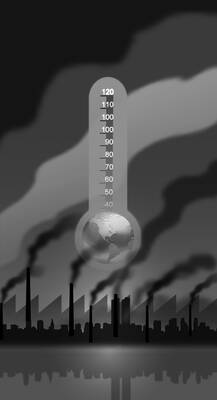
The closure of the Strait of Hormuz has sent the vast Asian chemicals industry into a tailspin. Deprived of the likes of Qatari natural gas and Saudi Arabian oil, the region’s fertilizer and plastics plants are slowing production or even shutting down. Everywhere except China, that is. In petrochemicals, China is unique. As well as a traditional industry that uses oil and gas as feedstock, it has parallel output that relies on its abundant domestic coal. Unsurprisingly, India and other regional powers want to copy and paste the Chinese method. This would not be easy — or climate friendly. The
Indonesian President Prabowo Subianto says he knows how to fix the problems facing Indonesia. Yet his economic mismanagement and authoritarian tendencies are steering the nation toward a familiar mix of currency instability and political chaos. The world’s fourth-most populous nation risks reversing the hard-won democratic and business reforms that came after the Asian Financial Crisis in 1997. At that time, the rupiah collapsed and the political upheaval that followed forced former president Haji Mohamed Suharto from power. Prabowo’s administration is ignoring similar warning signs. That disconnect was apparent in a national address on Wednesday, when Prabowo projected the swagger that has
“Of course you can choose not to be Taiwanese, just do not stay here,” chairwoman of Taipei 101 operator Taipei Financial Center Corp Janet Chia (賈永婕) said in an online interview with local entertainer Tai Chih-yuan (邰智源), triggering intense discussion on social media, with politicians across party lines weighing in. In the interview, which was aired on May 14, Chia and Tai’s discussion over a meal in Taipei 101 covered Chia’s career change from entertainer to chairwoman and US climber Alex Honnold’s free solo climb up the Taipei 101 building. During the interview, Chia said, “Being on this land, we


 RSS
RSS