


India’s semiconductor strategy is undergoing a quiet, but significant, recalibration. With the rollout of India Semiconductor Mission (ISM) 2.0, New Delhi is signaling a shift away from ambition-driven leaps toward a more grounded, capability-led approach rooted in industrial realities and institutional learning.
Rather than attempting to enter the most advanced nodes immediately, India has chosen to prioritize mature technologies in the 28-nanometer to 65-nanometer range. That would not be a retreat, but a strategic alignment with domestic capabilities, market demand and global supply chain gaps. The shift carries the imprimatur of Indian Prime Minister Narendra Modi, indicating that the recalibration is deliberate and politically backed.
The upcoming ISM 2.0 is expected to be backed by more than US$13 billion in public funding. In her budget speech, Indian Minister of Finance Nirmala Sitharaman emphasized a broader and more systemic focus, extending beyond fabrication to semiconductor equipment, materials, design ecosystems and supply chain resilience. The emphasis is clear: India is moving from a narrow manufacturing push to a full-stack semiconductor ecosystem strategy.
The shift has been shaped, in part, by institutional feedback. The Indian Parliamentary Standing Committee on Communications and Information Security flagged bottlenecks in the implementation of semiconductor schemes, including delays in project approvals, coordination issues across ministries and gaps in infrastructure readiness. The government appears to have moved swiftly to internalize the lessons. ISM 2.0 incorporates mechanisms to streamline clearances, improve interagency coordination and align policy incentives with execution timelines.
Recent developments reflect progress and urgency. Modi’s visit to Sanand in Gujarat to inaugurate the Kaynes Technology chip fab — during an active session of parliament — sent a strong signal of prioritization. It came against the backdrop of scrutiny over implementation delays, underscoring the government’s intent to accelerate execution.
At the same time, tangible milestones are beginning to emerge. The Micron Technology fab commenced commercial production on Feb. 28, marking a key step in demonstrating India’s ability to translate policy into operations. The Kaynes facility, completed in just 14 months, further highlights improving execution capabilities. With an investment of US$394 million and a daily output capacity of 6.3 million components, it reflects growing industrial momentum.
Taiwan’s role in the landscape is pivotal and strategic. Its expertise in semiconductor manufacturing, process discipline and ecosystem development offers India a proven template. A flagship example is the collaboration between Powerchip Semiconductor Manufacturing Corp and Tata Electronics to establish India’s first wafer fab in Dholera. The partnership is not merely a capital investment; it represents the transfer of manufacturing know-how, training systems and quality benchmarks that underpin Taiwan’s global leadership.
Beyond large-scale collaborations, ISM 2.0 opens meaningful opportunities for Taiwan’s small and medium-sized enterprises. The firms, which specialize in semiconductor materials, specialty chemicals, precision equipment and ancillary components, can play a critical role in strengthening India’s upstream and midstream supply chains. With targeted incentives and policy stability, India can position itself as an extension of Taiwan’s semiconductor ecosystem — enabling deeper codevelopment rather than transactional engagement.
Additional momentum is visible in the partnership between Hon Hai, also known as Foxconn Technology, and HCL Group under India Chip Private Ltd. Their proposed US$440 million outsourced semiconductor assembly and test facility in the National Capital Region, with a capacity of 20,000 wafers per month, adds another critical layer to India’s semiconductor value chain.
At the policy level, ISM 2.0 also reflects a more holistic understanding of structural vulnerabilities. The government envisions 10 major semiconductor projects across the country, with cumulative investments exceeding US$19.1 billion. The development of the indigenous “Dhruv 64” microprocessor signals an intent to build domestic intellectual property in strategic sectors such as 5G and automotive electronics.
Equally significant is the investment in human capital. The “Chips to Start-up” initiative has already deployed advanced design tools across 400 universities, with a target of training nearly 85,000 professionals. Parallel efforts in mineral recycling and the proposed “Rare Earth Corridor” indicate a growing awareness of supply chain resilience — an area where global disruptions have exposed critical dependencies.
India’s semiconductor market is projected to double from US$50 billion to US$100 billion by 2030. However, the government’s messaging goes beyond market size. There is a clear recognition that regulatory efficiency would be as important as financial incentives.
What emerges from ISM 2.0 is not just a revised strategy, but a more mature policy framework — one that acknowledges early challenges, incorporates institutional feedback and builds on international partnerships. India’s approach is no longer defined by the urgency to catch up, but by the discipline to build systematically — layer by layer — toward long-term technological capability and strategic autonomy.
Mukesh Kaushik is deputy editor at Dainik Bhaskar, the largest published daily in India. He is a researcher at National Chengchi University on the Ministry of Foreign Affairs Taiwan Fellowship.
KMT Chairwoman Cheng Li-wun’s (鄭麗文) recent visit to Beijing and her upcoming visit to Washington will serve as a high-level test of her diplomatic mettle. In Beijing, Cheng was received with symbolic gestures, a warm reception, and high-level access. In Washington, she will receive far less pomp and far sharper questions about the KMT’s vision for the future of Taiwan. Her challenge will be to persuade Washington that the KMT’s engagement with China can coexist with strong deterrence. Cheng’s April 7-12 visit to mainland China coincided with an intense period of conflict in Iran. Despite the strategic significance of Cheng’s trip,
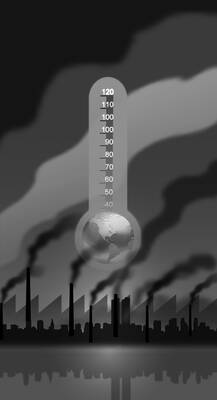
The closure of the Strait of Hormuz has sent the vast Asian chemicals industry into a tailspin. Deprived of the likes of Qatari natural gas and Saudi Arabian oil, the region’s fertilizer and plastics plants are slowing production or even shutting down. Everywhere except China, that is. In petrochemicals, China is unique. As well as a traditional industry that uses oil and gas as feedstock, it has parallel output that relies on its abundant domestic coal. Unsurprisingly, India and other regional powers want to copy and paste the Chinese method. This would not be easy — or climate friendly. The
Indonesian President Prabowo Subianto says he knows how to fix the problems facing Indonesia. Yet his economic mismanagement and authoritarian tendencies are steering the nation toward a familiar mix of currency instability and political chaos. The world’s fourth-most populous nation risks reversing the hard-won democratic and business reforms that came after the Asian Financial Crisis in 1997. At that time, the rupiah collapsed and the political upheaval that followed forced former president Haji Mohamed Suharto from power. Prabowo’s administration is ignoring similar warning signs. That disconnect was apparent in a national address on Wednesday, when Prabowo projected the swagger that has
“Of course you can choose not to be Taiwanese, just do not stay here,” chairwoman of Taipei 101 operator Taipei Financial Center Corp Janet Chia (賈永婕) said in an online interview with local entertainer Tai Chih-yuan (邰智源), triggering intense discussion on social media, with politicians across party lines weighing in. In the interview, which was aired on May 14, Chia and Tai’s discussion over a meal in Taipei 101 covered Chia’s career change from entertainer to chairwoman and US climber Alex Honnold’s free solo climb up the Taipei 101 building. During the interview, Chia said, “Being on this land, we


 RSS
RSS