


Lee Chiao (李喬), a prominent Hakka writer in Taiwan, published the short story The Informant (告密者) in 1985. Though fictional, it offers a sharp critique of life under Martial Law and a cautionary message, with the protagonist ultimately descending into madness. Taiwan’s martial law period was prolonged, and the Chinese Nationalist Party (KMT) remained in power until 2000.
In 1988, one year after martial law was lifted, democracy advocate Deng Nan-jung (鄭南榕) became a martyr when he locked himself in the offices of Freedom Era Weekly and set himself and the building on fire on April 7. This underscores how party-state control persisted beyond the formal end of Martial Law, arguably until the first direct presidential election in 1996 or the democratic transfer of power in 2000.
Earlier this month, Academia Historica held a book launch for Postwar Taiwan Political Cases: A Compilation of Historical Materials on the Cheng Nan-jung Case, drawing on extensive archived surveillance records across five volumes. These materials reveal how, during the era of party-state control, networks of informants were deployed to monitor dissidents, and those pursuing freedom and democracy.
Although Taiwan has since democratized, with transitional justice still incomplete, the shadows of party-state rule remain. The materials from Deng’s case expose traces of these informant networks, bringing fragments of this history into the light.
At a democracy and human rights-related gathering, a young attendee showed me files tied to my own “case.” They included surveillance records on my work as a literary figure, covering my involvement with Taiwan Literature and Arts magazine the Taiwan Association for Human Rights, Taiwan PEN, and even my visits to overseas Taiwanese communities. Seeing them brought back memories of the early 1980s, when personnel from the Taiwan Garrison Command investigated the company where I worked.
I have written and translated poetry, novels, essays, and commentaries. Since the 1970s, I was involved in editing literary publications, linking cultural movements with political reform. In the 1980s, I wrote newspaper columns expressing a vision of Taiwan as a nation, which made me a target of surveillance.
Now that such documents are accessible, it appears some within the KMT at the time were more inclined toward alignment with the Chinese Communist Party (CCP) than toward strengthening Taiwan itself.
Access to surveillance records from the Martial Law period can now be applied for through the National Archives Administration, effectively making them public.
During the White Terror era, some individuals, whether due to ignorance, weakness or coercion, became informants or collaborators, leaving troubling records behind.
For the full realization of transitional justice, such individuals should acknowledge their involvement and seek understanding and forgiveness. If they refuse, public condemnation is a natural consequence.
The psychological contortions of KMT members who shifted from anti-CCP to pro-CCP positions may reflect the lingering effects of incomplete transitional justice.
Some may seek to atone for past actions by aligning with the CCP. What they often overlook is that those who remained in China after 1949, including members of the Revolutionary Committee of the Chinese Kuomintang (中國國民黨革命委員會), also faced political purges and persecution.
Taiwan’s democracy must continue to develop. The formation of a national collective requires learning through setbacks and reflection. Truth and apology must precede forgiveness or reconciliation.
The tragedies in Taiwan’s history stem not only from external oppression but also internal divisions. As Taiwanese look toward a new future and national vision, they must also confront and clear away the residue of the past.
Lee Min-yung is a poet.
Translated by Gilda Knox Streader
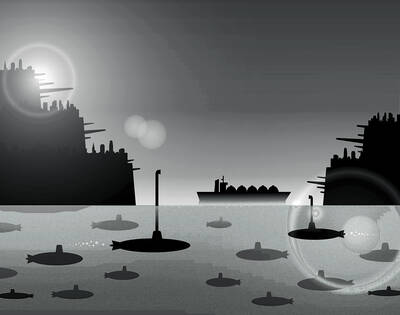
In the event of a war with China, Taiwan has some surprisingly tough defenses that could make it as difficult to tackle as a porcupine: A shoreline dotted with swamps, rocks and concrete barriers; conscription for all adult men; highways and airports that are built to double as hardened combat facilities. This porcupine has a soft underbelly, though, and the war in Iran is exposing it: energy. About 39,000 ships dock at Taiwan’s ports each year, more than the 30,000 that transit the Strait of Hormuz. About one-fifth of their inbound tonnage is coal, oil, refined fuels and liquefied natural gas (LNG),
To counter the CCP’s escalating threats, Taiwan must build a national consensus and demonstrate the capability and the will to fight. The Chinese Communist Party (CCP) often leans on a seductive mantra to soften its threats, such as “Chinese do not kill Chinese.” The slogan is designed to frame territorial conquest (annexation) as a domestic family matter. A look at the historical ledger reveals a different truth. For the CCP, being labeled “family” has never been a guarantee of safety; it has been the primary prerequisite for state-sanctioned slaughter. From the forced starvation of 150,000 civilians at the Siege of Changchun
The two major opposition parties, the Chinese Nationalist Party (KMT) and the Taiwan People’s Party (TPP), jointly announced on Tuesday last week that former TPP lawmaker Chang Chi-kai (張啟楷) would be their joint candidate for Chiayi mayor, following polling conducted earlier this month. It is the first case of blue-white (KMT-TPP) cooperation in selecting a joint candidate under an agreement signed by their chairpersons last month. KMT and TPP supporters have blamed their 2024 presidential election loss on failing to decide on a joint candidate, which ended in a dramatic breakdown with participants pointing fingers, calling polls unfair, sobbing and walking
In the opening remarks of her meeting with Chinese President Xi Jinping (習近平) in the Great Hall of the People in Beijing on Friday, Chinese Nationalist Party (KMT) Chairwoman Cheng Li-wun (鄭麗文) framed her visit as a historic occasion. In his own remarks, Xi had also emphasized the history of the relationship between the KMT and the Chinese Communist Party (CCP). Where they differed was that Cheng’s account, while flawed by its omissions, at least partially corresponded to reality. The meeting was certainly historic, albeit not in the way that Cheng and Xi were signaling, and not from the perspective


 RSS
RSS