


Across Europe, governments are reviving a Cold War doctrine with renewed urgency: National security is anchored not only in military power, but in the resilience of society as a whole. Power grids, digital infrastructure and supply chains are no longer economic assets — they are strategic pillars of national defense and targets of hybrid warfare. Citizens are not bystanders to defense; they are part of it. Whole-of-society resilience has emerged as a strategic concept — one that resonates strongly with debates and experiences in Taiwan.
For decades, security in Europe was defined in conventional terms: armies, borders and military alliances. After 1990, this understanding broadened, shaped by a European belief, and expectation of a more peaceful and stable future. That assumption no longer holds.
Modern threats are multi-dimensional and simultaneous, combining cyberattacks, foreign information manipulation and interference, energy disruptions, pandemics or extreme weather events — often at the same time.
Russia’s full-scale invasion of Ukraine in 2022 forced Europeans to face a new reality that had already been quietly emerging: Security is not only about defending territory, but about protecting the functioning of society itself.
This is the essence of “total defense,” a concept largely set aside after the Cold War. Its logic is straightforward. When modern threats target entire systems of society, resilience must comprise the entire system in response, too. Governments, the private sector, civil society and citizens all have to contribute to national preparedness.
The Nordic countries offer perhaps the best example of how this works in practice in Europe. Sweden and Finland do not see preparedness as something that begins when a crisis erupts. It is built into everyday governance and the web of their societies. National strategies are designed to ensure that the country remains functional under stress, from natural disasters to a full-fledged invasion.
This model relies on a broad understanding of responsibility. While security ministries and armed forces play a central role, they form only one part of a much larger system. Hospitals, telecommunications networks, food supply chains, financial institutions and energy providers are all considered elements of national resilience. As many of these services are operated by private companies, cooperation between the government and businesses has become key.
Strong preparedness also requires practice. Regular national exercises in Sweden and Finland, such as Rescue Borealis last year, regularly bring together ministries, local authorities, infrastructure providers and emergency services.
Constant exercises and simulations test whether critical systems — from electricity grids to digital networks — can continue functioning during a crisis and reveal weaknesses before a real emergency occurs.
However, the most important element of resilience lies in society itself. In the Nordic model, citizens are not viewed only as victims to be protected. They are essential resources in enhancing preparedness. Governments guide households in preparing for emergencies and communicate openly about potential risks. Trust between institutions and the public is high and a key ingredient of resilience.
Threat perceptions have converged across Europe in response to growing hybrid threats from aggressive, norm-defiant actors, but this convergence is yet to translate into EU-level cohesion. Member states are yet to align their diverse security cultures.
For now, Europe is far from united in how it approaches these questions. Some EU member states, such as Greece, remain focused on traditional military defense, while others, such as Poland, are moving toward an integrated civil protection approach.
In Europe, a serious debate on how far societies should mobilize — and be mobilized — for resilience, especially within democratic systems, has just started. Nonetheless, the EU has significantly increased efforts to facilitate cross-border cooperation, and a coordinated, cross-sectoral approach has started to emerge. A collective and effective EU-level framework would empower societies across the EU to become more resilient and prepared.
For democracies around the world, this evolving European experience raises an important question: How can a society best prepare for a crisis while remaining open, democratic and resilient at the same time? Taiwan, a testing ground for China’s hybrid warfare, has been grappling with this challenge for decades.
Faced with an existential threat, Taiwan has developed expertise to resist hybrid influence with a whole-of-society, whole-of-government approach.
Empowering civil society to act as a proactive force demanding more transparency from the state has delivered results in terms of bolstering local resilience and boosting civilian preparedness. Taiwan’s National Public Safety Guide released last year strives to prepare society to survive a crisis. This also requires immunity against false narratives, particularly within its polarized political climate. In other words, Taiwan treats psychological and physical security as critical pillars of preparedness.
Seen from Europe, Taiwan offers hard-earned and highly relevant lessons to share. Yet its experience — its strengths and shortcomings, including gaps in coordination between government agencies and non-governmental organizations — remains poorly understood across Europe.
Taiwan should prioritize expanding and deepening civil preparedness cooperation with Europe, exchanging best practices with like-minded stakeholders across all EU member states, expanding existing partnerships and building new ones. Doing so would help anchor Taiwan more firmly in European security thinking. For both sides, this exchange is not symbolic — it is direct investment in collective security and resilience.
Zsuzsa Anna Ferenczy is visiting fellow. Peter Hefele is policy director at Martens Centre in Brussels.

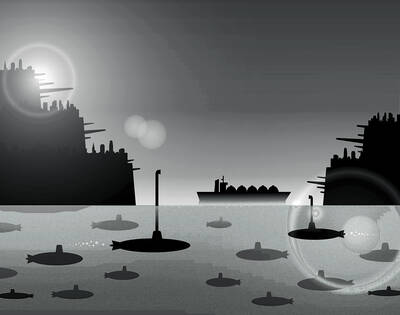
In the event of a war with China, Taiwan has some surprisingly tough defenses that could make it as difficult to tackle as a porcupine: A shoreline dotted with swamps, rocks and concrete barriers; conscription for all adult men; highways and airports that are built to double as hardened combat facilities. This porcupine has a soft underbelly, though, and the war in Iran is exposing it: energy. About 39,000 ships dock at Taiwan’s ports each year, more than the 30,000 that transit the Strait of Hormuz. About one-fifth of their inbound tonnage is coal, oil, refined fuels and liquefied natural gas (LNG),
On Monday, the day before Chinese Nationalist Party (KMT) Chairwoman Cheng Li-wun (鄭麗文) departed on her visit to China, the party released a promotional video titled “Only with peace can we ‘lie flat’” to highlight its desire to have peace across the Taiwan Strait. However, its use of the expression “lie flat” (tang ping, 躺平) drew sarcastic comments, with critics saying it sounded as if the party was “bowing down” to the Chinese Communist Party (CCP). Amid the controversy over the opposition parties blocking proposed defense budgets, Cheng departed for China after receiving an invitation from the CCP, with a meeting with
Chinese Nationalist Party (KMT) Chairwoman Cheng Li-wun (鄭麗文) is leading a delegation to China through Sunday. She is expected to meet with Chinese President Xi Jinping (習近平) in Beijing tomorrow. That date coincides with the anniversary of the signing of the Taiwan Relations Act (TRA), which marked a cornerstone of Taiwan-US relations. Staging their meeting on this date makes it clear that the Chinese Communist Party (CCP) intends to challenge the US and demonstrate its “authority” over Taiwan. Since the US severed official diplomatic relations with Taiwan in 1979, it has relied on the TRA as a legal basis for all
To counter the CCP’s escalating threats, Taiwan must build a national consensus and demonstrate the capability and the will to fight. The Chinese Communist Party (CCP) often leans on a seductive mantra to soften its threats, such as “Chinese do not kill Chinese.” The slogan is designed to frame territorial conquest (annexation) as a domestic family matter. A look at the historical ledger reveals a different truth. For the CCP, being labeled “family” has never been a guarantee of safety; it has been the primary prerequisite for state-sanctioned slaughter. From the forced starvation of 150,000 civilians at the Siege of Changchun


 RSS
RSS