


China on Sunday last week raised the issue of building a bridge connecting Xiamen, China, with Kinmen County, alongside proposals for gas, water and electricity links between the two areas.
“The bridge would be a positive development if China has the benefit of the people in mind and acknowledges Taiwanese sovereignty over Taiwan’s territories,” Derek Chen (陳金德) of the Public Construction Commission said, adding that Taiwan would need to carefully evaluate the projects if China continues to pose a threat to Taiwanese sovereignty.
The proposals, known as the “new four links,” have been discussed for years, but have always stalled over national security concerns.
Some might assume the concerns would be over an invasion, which could be facilitated by a bridge allowing fast deployments of Chinese troops into the county.
Although a valid concern, this is not the main problem.
Kinmen County is already highly vulnerable to a Chinese attack, even without a bridge. If one existed, it is unlikely it would factor into Chinese invasion plans since the Chinese People’s Liberation Army would expect the bridge to be sabotaged.
The real concerns center on how the bridge would be used in peacetime.
A permanent link would allow for far easier movement of people, goods and vehicles, which would increase opportunities for espionage, infiltration by intelligence operatives and covert transport of surveillance equipment.
Past incursions by Chinese drones into Kinmen’s airspace — including over sensitive militarily areas — show that China is interested in surveilling the county. Devices could be smuggled across the border in vehicles and pass through undetected if border control mechanisms were overwhelmed by traffic.
If the bridge was tied to utilities, Kinmen could become dependent on Chinese supply systems. Beijing could leverage that reliance to impose supply disruptions as a form of political pressure.
There is also the cybersecurity aspect. If integrated systems such as transport, communications or utilities are built, they might introduce shared networks. That would increase the risk of cyberintrusion or sabotage of critical infrastructure. If shared networks interfaced with national-level ones, China would effectively have a back door into Taiwan’s critical infrastructure.
A bridge could also enable rapid mobilization of civilian or paramilitary personnel, or make use of large-scale “tourism” or traffic surges. This type of “gray zone” pressure tactic could overwhelm local systems, create political and social pressure, or test response thresholds without open conflict.
Finally, infrastructure linking Xiamen and Kinmen could introduce legal and jurisdictional complexity. Questions might arise at any time over which side controls parts of the infrastructure and how disputes should be handled. This can create ambiguities exploitable for political leverage, which China could use at a moment’s notice to restrict access to the bridge.
It is not out of the ordinary for countries with ideological differences to engage in trade with each other. Russia and the EU still trade in energy, and many countries who criticize China’s human rights record have trade agreements with Beijing.
However, Taiwan’s relationship with China is particularly precarious given that China represents an existential threat to the sovereignty of the Republic of China, and to the Taiwanese way of life.
Allowing tourists from China to visit Kinmen and Lienchiang (Matsu) counties — presuming a reasonable amount of scrutiny — is perfectly fine, as is buying some resources for the counties from China. On the other hand, introducing unnecessary dependency on China, or physically connecting Kinmen with Xiamen, is a terrible idea as long as Taiwan and China remain at odds with each other.
A bridge can also be symbolic. For example, the bridge to Crimea, the Kerch Strait Bridge, represents Russia’s 2014 annexation and supposed permanent control over the peninsula. With its construction personally overseen by Russian President Vladimir Putin, the bridge represents a pet project embodying the “reunification” of Crimea with Russia. Beyond symbolism, it is a crucial military supply line.
There is no question that a bridge built between Kinmen and Xiamen would be framed in China as a gesture of the unstoppable march toward the unification of China and Taiwan. This symbolism would be demoralizing for the majority of Taiwanese who do not want unification, as evidenced by innumerable surveys on the subject.
Taiwan should continue to keep China at a safe distance, allowing trade in the same way that other countries trade with China, but avoiding arrangements that would jeopardize Taiwanese sovereignty. The convenience gained by linking Kinmen and Xiamen by bridge would be far outweighed by the risks introduced by doing so.
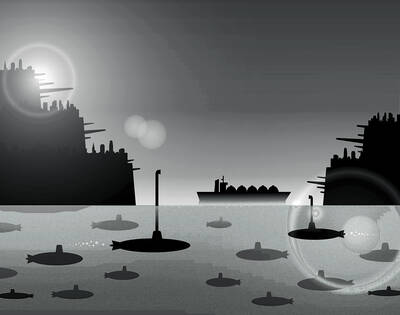
In the event of a war with China, Taiwan has some surprisingly tough defenses that could make it as difficult to tackle as a porcupine: A shoreline dotted with swamps, rocks and concrete barriers; conscription for all adult men; highways and airports that are built to double as hardened combat facilities. This porcupine has a soft underbelly, though, and the war in Iran is exposing it: energy. About 39,000 ships dock at Taiwan’s ports each year, more than the 30,000 that transit the Strait of Hormuz. About one-fifth of their inbound tonnage is coal, oil, refined fuels and liquefied natural gas (LNG),
On Monday, the day before Chinese Nationalist Party (KMT) Chairwoman Cheng Li-wun (鄭麗文) departed on her visit to China, the party released a promotional video titled “Only with peace can we ‘lie flat’” to highlight its desire to have peace across the Taiwan Strait. However, its use of the expression “lie flat” (tang ping, 躺平) drew sarcastic comments, with critics saying it sounded as if the party was “bowing down” to the Chinese Communist Party (CCP). Amid the controversy over the opposition parties blocking proposed defense budgets, Cheng departed for China after receiving an invitation from the CCP, with a meeting with
To counter the CCP’s escalating threats, Taiwan must build a national consensus and demonstrate the capability and the will to fight. The Chinese Communist Party (CCP) often leans on a seductive mantra to soften its threats, such as “Chinese do not kill Chinese.” The slogan is designed to frame territorial conquest (annexation) as a domestic family matter. A look at the historical ledger reveals a different truth. For the CCP, being labeled “family” has never been a guarantee of safety; it has been the primary prerequisite for state-sanctioned slaughter. From the forced starvation of 150,000 civilians at the Siege of Changchun
The two major opposition parties, the Chinese Nationalist Party (KMT) and the Taiwan People’s Party (TPP), jointly announced on Tuesday last week that former TPP lawmaker Chang Chi-kai (張啟楷) would be their joint candidate for Chiayi mayor, following polling conducted earlier this month. It is the first case of blue-white (KMT-TPP) cooperation in selecting a joint candidate under an agreement signed by their chairpersons last month. KMT and TPP supporters have blamed their 2024 presidential election loss on failing to decide on a joint candidate, which ended in a dramatic breakdown with participants pointing fingers, calling polls unfair, sobbing and walking


 RSS
RSS