


A Formosan black bear re-emerged in Hualien County last month, breaking into a chicken coop, eating 12 chickens and damaging a fence before being captured.
The bear was tagged, which showed that it was the same one that was captured in the same place, Jhuosi Township’s (卓溪) Cingshuei village (清水), last year and released back into the wild elsewhere. The incident indicates that there is a cycle of capture, release and recapture.
Fully mature at 15 years old, the bear should be roaming Taiwan’s mountainous forests, but weighing only 70kg, its lifestyle seems to be closer to that of a malnourished vagrant, wandering the border zones of forests and human settlements — and their hen houses.
After capture, the bear was taken to an emergency center for observation, where experts could assess whether it was fit for release. That sounds perfectly rational — civilized, even.
However, a broad view shows an absurd sequence of events.
The bear is captured because it encroaches on human territory, then it is released back into the forest, but it returns, because its forest habitat has been fragmented and is under pressure.
Reporting on human-bear conflict frames it as if it were the meeting of two equal species on a level playing field, but in reality the “conflicts” have always been about space. Mountain forests are carved up with highways, encroached on by farmland expansion and criss-crossed with hiking trails, which pushes viable bear habitats back to furthest fringes of the map.
Black bears in human settlements is no invasion: They are simply roaming where they always have, but now they find villages and chicken coops.
The government’s “bear-friendly partners” plan is designed to help residents in rural areas install electric fences and monitoring cameras, and to manage potential food attractants. Those measures are reasonable and necessary. They make it possible to avoid the use of poisons and guns, so that getting close to where people live is not a death sentence.
However, the word “friendly” should give people some pause.
For farmers, it represents another fence, some more equipment and a deeper requirement to understand wild animals.
Meanwhile, for the bears, it means permission to exist — conditionally, at that.
This has led to a remarkable model of modern governance of bear management and education of the public. Conflicts and interactions between the two are institutionalized, and even repurposed for brand-building.
Taitung County’s Chihshang Township (池上) is home to a chicken farm that has embraced the policy. It has a “bear-friendly partner” tag on its products to encourage consumers to support the initiative. This has made the black bear’s image an ethical tag.
The real issue is both simpler and more difficult to solve than managing farm visits. If black bears are continuing to show up in human areas, the question is not why, but where do they have left to go?
Since the days of black bears being seen as “spirits of the mountain” and up until becoming the target species for conservation, people have known that bears belong in the mountains.
The issue is how much mountainous forest habitat remains? Ecological fragmentation has made bear encounters not exceptional occurrences, but the norm, while “capture, release and recapture” is set to become standard.
If people fail to act, these stories of returning bears, missing chickens and evaluations for release will become more common.
Meanwhile, the bears caught in the middle of this management cycle are becoming weaker with each iteration.
Liu Che-ting is a writer.
Translated by Gilda Knox Streader
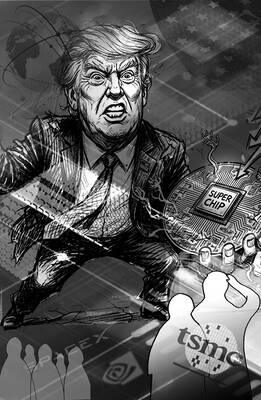
The White House’s decision to take a 9.9 percent stake in Intel Corp is looking like very shrewd business indeed. Since the government bought in at US$20.47 a share last August, the US chipmaker’s surging stock price has delivered the US a US$43 billion return. One of the reasons the investment has so far proved so sound is that the White House has made sure of it. According to The Wall Street Journal, Howard personally pushed deals on Intel’s behalf with some of the most lucrative clients imaginable. They include Nvidia Corp, the company at the heart of the AI
KMT Chairwoman Cheng Li-wun’s (鄭麗文) recent visit to Beijing and her upcoming visit to Washington will serve as a high-level test of her diplomatic mettle. In Beijing, Cheng was received with symbolic gestures, a warm reception, and high-level access. In Washington, she will receive far less pomp and far sharper questions about the KMT’s vision for the future of Taiwan. Her challenge will be to persuade Washington that the KMT’s engagement with China can coexist with strong deterrence. Cheng’s April 7-12 visit to mainland China coincided with an intense period of conflict in Iran. Despite the strategic significance of Cheng’s trip,
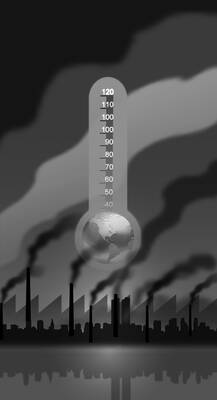
The closure of the Strait of Hormuz has sent the vast Asian chemicals industry into a tailspin. Deprived of the likes of Qatari natural gas and Saudi Arabian oil, the region’s fertilizer and plastics plants are slowing production or even shutting down. Everywhere except China, that is. In petrochemicals, China is unique. As well as a traditional industry that uses oil and gas as feedstock, it has parallel output that relies on its abundant domestic coal. Unsurprisingly, India and other regional powers want to copy and paste the Chinese method. This would not be easy — or climate friendly. The
Indonesian President Prabowo Subianto says he knows how to fix the problems facing Indonesia. Yet his economic mismanagement and authoritarian tendencies are steering the nation toward a familiar mix of currency instability and political chaos. The world’s fourth-most populous nation risks reversing the hard-won democratic and business reforms that came after the Asian Financial Crisis in 1997. At that time, the rupiah collapsed and the political upheaval that followed forced former president Haji Mohamed Suharto from power. Prabowo’s administration is ignoring similar warning signs. That disconnect was apparent in a national address on Wednesday, when Prabowo projected the swagger that has


 RSS
RSS