


Yesterday was Children’s Day, but the mental health of children and adolescents across Taiwan is raising serious red flags. According to statistics, while the declining birthrate has caused the total number of students to drop by 630,000 over the past decade, reported cases of student suicide and self-harm have surged twelvefold. In response to concerns raised by legislators, the Ministry of Education stated that it is considering extending mental health leave, which is sometimes called “psychological leave” or “psychological adjustment leave,” to junior-high and elementary-school students.
The intent behind this policy is commendable — it would provide children with legal space to breathe when they are mentally exhausted. However, to maximize the effectiveness of a well-intentioned policy, implementing supporting measures at the junior high and elementary school levels would be a crucial step. Under the Child and Juvenile Welfare and Rights Protection Act (兒童及少年福利與權益保障法), children are not to be left unattended — this means that children’s mental health leave must be accompanied by high-quality care from a parent or guardian. However, reality is harsh. For many dual-income working families, family care leave is classified as personal leave, and is often unpaid. Workplace and financial pressures often lead working-class parents reluctant to take leave unless absolutely necessary.
To better align with societal needs, the labor system should carry the baton by further promoting the institutionalization of “parental education leave,” along with exploring a reasonable mechanism for paid leave. This would allow children from diverse socioeconomic backgrounds to receive warmth and support from their parents in times of emotional distress. Such a measure would not only represent an improvement of labor rights, but a concrete realization of the social safety net.
The parental education leave advocated for by the National Federation of Teachers Unions aligns closely with President William Lai’s (賴清德) vision of a sense of shared responsibility. From a labor rights perspective, parental involvement should not be regarded as a family matter, but rather as a necessary investment in maintaining social resilience and mitigating future medical and social costs. If the Ministry of Labor could coordinate with the Ministry of Education to provide workers with more flexible time for parental participation, businesses could also transform into pillars of family-friendly support, thereby investing in the nation’s future sustainable competitiveness.
Supporting young people is the nation’s most urgent responsibility to its future. Only by promoting parental education leave through legislation — transforming the pressure on individual families into shared societal resilience — can we truly hope to build a strong psychological safety net within our schools. We hope that cross-ministerial collaboration between the executive and legislative branches can replace the current model, allowing for more comprehensive parental support to become a solid line of psychological defense for children. In turn, they can grow into the resilient force that safeguards the nation. This would be the most heartfelt promise Taiwan could offer its future this year in honor of Children’s Day.
Yang Chih-chiang is a teacher.
Translated by Kyra Gustavsen
A gap appears to be emerging between Washington’s foreign policy elites and the broader American public on how the United States should respond to China’s rise. From my vantage working at a think tank in Washington, DC, and through regular travel around the United States, I increasingly experience two distinct discussions. This divergence — between America’s elite hawkishness and public caution — may become one of the least appreciated and most consequential external factors influencing Taiwan’s security environment in the years ahead. Within the American policy community, the dominant view of China has grown unmistakably tough. Many members of Congress, as
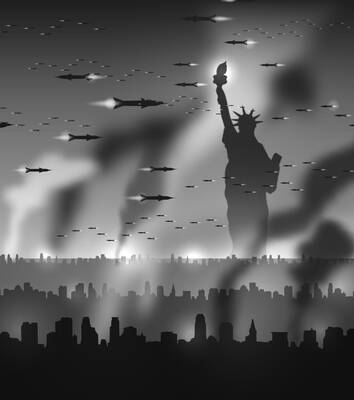
After declaring Iran’s military “gone,” US President Donald Trump appealed to the UK, France, Japan and South Korea — as well as China, Iran’s strategic partner — to send minesweepers and naval forces to reopen the Strait of Hormuz. When allies balked, the request turned into a warning: NATO would face “a very bad” future if it refused. The prevailing wisdom is that Trump faces a credibility problem: having spent years insulting allies, he finds they would not rally when he needs them. That is true, but superficial, as though a structural collapse could be caused by wounded feelings. Something
Former Taipei mayor and Taiwan People’s Party (TPP) founding chairman Ko Wen-je (柯文哲) was sentenced to 17 years in prison on Thursday, making headlines across major media. However, another case linked to the TPP — the indictment of Chinese immigrant Xu Chunying (徐春鶯) for alleged violations of the Anti-Infiltration Act (反滲透法) on Tuesday — has also stirred up heated discussions. Born in Shanghai, Xu became a resident of Taiwan through marriage in 1993. Currently the director of the Taiwan New Immigrant Development Association, she was elected to serve as legislator-at-large for the TPP in 2023, but was later charged with involvement
Out of 64 participating universities in this year’s Stars Program — through which schools directly recommend their top students to universities for admission — only 19 filled their admissions quotas. There were 922 vacancies, down more than 200 from last year; top universities had 37 unfilled places, 40 fewer than last year. The original purpose of the Stars Program was to expand admissions to a wider range of students. However, certain departments at elite universities that failed to meet their admissions quotas are not improving. Vacancies at top universities are linked to students’ program preferences on their applications, but inappropriate admission


 RSS
RSS