


The Honduran National Congress recently approved a motion urging the Honduran Ministry of Foreign Affairs to make a report on the state of the agreements signed with China by previous administrations and an overall analysis of the state of relations with China, following allegations that Cuban consular officials were representing Honduras in Chinese territory.
The motion received broad, bipartisan backing, signaling growing institutional concern over the direction and management of the relationship.
National Congress President Tomas Zambrano, a member of the same National Party of Honduras as Honduran President Nasry Asfura, supported the measure and reiterated criticism of China’s economic impact, saying that the relationship has “affected local commerce” and failed to deliver tangible benefits after nearly three years.
During an interview with HCH broadcast news, Zambrano expressed his support for Taiwan, and commented on the relationship between Honduras and China, saying that it has only harmed local trade.
This shift from economic dissatisfaction to formal legislative scrutiny suggests that Honduras’ diplomatic pivot toward China is entering a more politically fragile phase.
The Central American nation’s diplomatic break with Taiwan in 2023 seemed like an irreversible choice, but in less than two years, Beijing began to realize how politically fragile it was. During presidential campaigning last year, Asfura repeatedly said that he would review the decision by the previous administration and reconsider Tegucigalpa’s relationship with Taipei.
Two months into Asfura’s presidency, his administration has still not announced a definitive shift in diplomatic recognition. Instead, the government has taken a series of incremental steps that suggest the China relationship is being quietly reassessed.
People working within the Honduran administration have indicated that the decision was never meant to be abrupt. However, with no established timeline, a central question arises: What factors will ultimately push Honduras to make a final decision?
One possibility is that the decisive factor might come not from Tegucigalpa, Beijing or Taipei, but from Washington.
Under US President Donald Trump, the US has intensified efforts to counter Chinese influence in the Western hemisphere. For smaller countries such as Honduras, whose economy and migration flows remain deeply tied to the US, that geopolitical pressure could prove decisive.
One of the most visible signals was the meeting between Asfura and Trump on the sidelines of a recent meeting of the Shield of the Americas military coalition in the US.
During the meeting, the two discussed migration, trade and security cooperation, with Asfura reportedly asking Trump to review the situation of Hondurans given Temporary Protected Status in the US, a program established in 1999, a year after Hurricane Mitch, that continues to protect thousands of Honduran migrants from deportation.
For Honduras, the relationship with Washington carries enormous weight. The US remains the country’s largest trading partner and the primary destination for Honduran migrants, whose remittances account for roughly 25 percent of GDP. A strategic realignment between Washington and Beijing would inevitably shape Honduras’ diplomatic calculations.
Beyond the bilateral relationship, diplomatic recognition of Taiwan carries broader geopolitical implications. Taiwan remains central to the global technology supply chain, producing most of the world’s most advanced semiconductors through companies such as Taiwan Semiconductor Manufacturing Company.
For the US and its allies, maintaining Taiwan’s international partnerships has become part of a wider effort to counter China’s growing influence and preserve the balance of power in the Indo-Pacific region.
Beijing has spent decades encouraging countries to switch diplomatic recognition away from Taipei as part of its “one China” policy.
Although Honduras is a relatively small country, each diplomatic recognition of Taiwan carries symbolic and strategic weight. In this context, Honduras’ position extends beyond Central America and intersects with broader great-power competition.
Honduras has not fully disengaged from Beijing. On Feb. 26, Honduran Minister of Foreign Affairs Mireya Aguero met with Chinese Ambassador to Honduras Yu Bo (于波) in Tegucigalpa to discuss bilateral matters.
However, the meeting took place just one week before the summit called by Trump, raising questions about timing and strategic signaling. In addition, Asfura has suspended roughly 20 cooperation agreements and memoranda of understanding signed with Beijing, including a free-trade agreement that had been under negotiations for two years.
Another notable development is that Honduras has not appointed a new ambassador to China since January, leaving the relationship in an unusual state of ambiguity since Salvador Moncada left the post.
Domestic pressure is also increasing. The parents’ association representing Honduran students in Taiwan has publicly urged the government to restore relations, citing the loss of scholarship opportunities.
Economic dissatisfaction has intensified the debate. Shrimp exports, which totaled approximately US$106 million in 2022, fell to about US$16 million by the end of last year, representing cumulative losses of roughly US$150 million since the diplomatic switch.
Public frustration has also grown amid controversies surrounding the entry of Chinese workers linked to infrastructure projects, including concerns over visa overstays and lack of transparency.
Taiwan retains a narrow but meaningful window to re-engage with Honduras. At the end of December last year, Taiwanese officials touted maintaining direct communication with key political actors in the Asfura campaign. That channel could now be used not only to signal willingness to restore cooperation frameworks, but to present concrete economic proposals, particularly in sectors such as shrimp exports, with Taiwanese buyers having indicated readiness to absorb larger volumes than before the rupture.
At the same time, Taipei should avoid framing any outreach in overtly diplomatic terms while Tegucigalpa’s internal debate remains unresolved. Instead, it could rely on civil society organizations and non-governmental platforms such as the Taiwan Digital Diplomacy Association, which previous to the rupture contacted public relations companies in Honduras to keep the Hondurans informed about the projects that Taiwan was doing to help the country using local media to reach most of the population.
Beyond trade, Taiwan could position itself as a partner in institutional capacity building, particularly in areas where China’s presence has generated controversy, such as transparency in infrastructure projects and labor practices.
That would differentiate Taiwan not only economically, but also politically, aligning its offer with concerns now emerging within Honduras’ legislature.
For now, Honduras has not made a final announcement regarding the future of its diplomatic recognition.
However, the convergence of legislative scrutiny, economic dissatisfaction and geopolitical pressure suggests that the decision will have to take several factors into consideration, including Honduras’ biggest trade partner, the US.
The choice has not only diplomatic implications, it is a question of strategic leverage between the world’s two largest powers.
In that context, Trump might not be the only factor influencing Honduras’ decision, but he might be the one who forces Tegucigalpa to make it.
Juan Fernando Herrera Ramos is a Honduran journalist based in Taipei. His work on Taiwan-China-Latin America relations has been published in Nikkei Asia, The Diplomat and the Taipei Times.
KMT Chairwoman Cheng Li-wun’s (鄭麗文) recent visit to Beijing and her upcoming visit to Washington will serve as a high-level test of her diplomatic mettle. In Beijing, Cheng was received with symbolic gestures, a warm reception, and high-level access. In Washington, she will receive far less pomp and far sharper questions about the KMT’s vision for the future of Taiwan. Her challenge will be to persuade Washington that the KMT’s engagement with China can coexist with strong deterrence. Cheng’s April 7-12 visit to mainland China coincided with an intense period of conflict in Iran. Despite the strategic significance of Cheng’s trip,
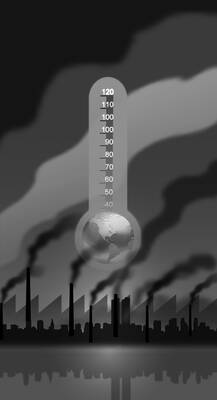
The closure of the Strait of Hormuz has sent the vast Asian chemicals industry into a tailspin. Deprived of the likes of Qatari natural gas and Saudi Arabian oil, the region’s fertilizer and plastics plants are slowing production or even shutting down. Everywhere except China, that is. In petrochemicals, China is unique. As well as a traditional industry that uses oil and gas as feedstock, it has parallel output that relies on its abundant domestic coal. Unsurprisingly, India and other regional powers want to copy and paste the Chinese method. This would not be easy — or climate friendly. The
Indonesian President Prabowo Subianto says he knows how to fix the problems facing Indonesia. Yet his economic mismanagement and authoritarian tendencies are steering the nation toward a familiar mix of currency instability and political chaos. The world’s fourth-most populous nation risks reversing the hard-won democratic and business reforms that came after the Asian Financial Crisis in 1997. At that time, the rupiah collapsed and the political upheaval that followed forced former president Haji Mohamed Suharto from power. Prabowo’s administration is ignoring similar warning signs. That disconnect was apparent in a national address on Wednesday, when Prabowo projected the swagger that has
“Of course you can choose not to be Taiwanese, just do not stay here,” chairwoman of Taipei 101 operator Taipei Financial Center Corp Janet Chia (賈永婕) said in an online interview with local entertainer Tai Chih-yuan (邰智源), triggering intense discussion on social media, with politicians across party lines weighing in. In the interview, which was aired on May 14, Chia and Tai’s discussion over a meal in Taipei 101 covered Chia’s career change from entertainer to chairwoman and US climber Alex Honnold’s free solo climb up the Taipei 101 building. During the interview, Chia said, “Being on this land, we


 RSS
RSS