


The fighting in the Middle East has the world on tenterhooks, but the economic shocks hitting Asia are so alarming that usually guarded regional leaders are speaking out. From its most resilient countries to the most vulnerable, the region is uniquely dependent on energy flowing through the Strait of Hormuz.
Singaporean Minister of Foreign Affairs Vivian Balakrishnan put it bluntly when he described the US as “a revisionist power” that some would even call a “disruptor.” He was speaking about the Iran war and the US’ role in Asia, but also something larger: The erosion of the Washington-led post-World War II order that “underpinned a remarkable period of peace and prosperity” — a foundation that, as he said last week, is now gone.
This is not simply anxious rhetoric. Instead, it reflects a deeper disquiet about how a conflict far from Asia’s shores, shaped by decisions made in Washington and Jersusalem, is now landing squarely on the region’s households and businesses.

Illustration: Mountain People
About 90 percent of the oil and 83 percent of the liquefied natural gas that normally pass through the Strait of Hormuz are bound for Asia, Balakrishnan said.
“Right now the closure of the Strait of Hormuz is, in a sense, an Asian crisis,” he added.
The wealthy city-state is typically measured in its language, so when Singapore speaks this directly, the region listens. I have heard similar frustration from several diplomats across Asia who have privately told me they are fatigued by US President Donald Trump’s volatile foreign policy.
First, it was his unpredictable tariff regime they were forced to absorb, then demands to spend more on their own defense — unsettling decades-old security guarantees — and now the growing sense that they are being made to pay for someone else’s war.
Wealthier economies like China, Japan and Singapore, with deep pockets and strategic reserves, can cushion the blow — in the short term at least — but others are more exposed. Most Southeast Asian countries have enough reserves of oil stocks to last only 20 to 50 days, said the Economic Research Institute for ASEAN and East Asia.
Some governments are being forced into drastic action, from declaring a national energy emergency to closing universities early, and even asking cricket fans to stay home and watch matches on television to conserve fuel.
The political fallout is already becoming difficult to contain, and it is likely to intensify, with Houthi involvement raising the risk of trade disruptions in the Red Sea, another critical artery for Asian energy supplies. Across the region, rising fuel costs are triggering unrest: Transport workers have gone on strike in the Philippines, there is panic buying in parts of Thailand and in India, tighter supplies of liquefied petroleum gas used for cooking have prompted protests by opposition lawmakers.
The conflict is also reshaping regional geopolitics in significant ways. Faced with a national fuel emergency, Philippine President Ferdinand Marcos Jr has suggested that Manila — one of Beijing’s most vocal adversaries over competing claims in the South China Sea — would be open to joint oil and gas exploration in the disputed waters. That this is even on the table reflects not trust, but desperation.
China is gaining ground diplomatically, too. It has positioned itself as a global peacemaker, offering its assistance to end hostilities. At the annual Boao Forum for Asia in Hainan — often described as China’s answer to Davos — Singaporean Prime Minister Lawrence Wong (黃循財) called for Beijing to play a larger role in supporting regional stability and growth, highlighting the pull of its vast domestic market.
Some of this is wishful thinking. China’s economy is slowing, and its long-promised consumption boom has yet to materialize. A trade surplus exceeding US$1 trillion is sending a wave of exports into Asian markets, squeezing local industries and jobs, as I have noted before. At the same time, the rapid military buildup of the People’s Liberation Army, more frequent confrontations in the South China Sea and sustained pressure around Taiwan continue to fuel regional unease. Beijing could present itself as a stabilizing force, but the reality is far more complex.
The pragmatic response for Asia, then, is not to choose sides, but to reduce exposure to oil shocks. Diversifying energy supplies, building larger strategic reserves and strengthening regional cooperation would help. Some of this is already happening — the commitment by Australia and Singapore to work together on energy security is a good template for others to follow. These coalitions, formed out of necessity, could become the building blocks of a new regional order, replacing an architecture that no longer reflects today’s realities.
The Strait of Hormuz crisis has exposed a fundamental weakness: Asia is being forced to absorb the costs of a conflict far outside its control. Reducing that dependence would be difficult, but the cost of failing to do so is now impossible to ignore.
Karishma Vaswani is a Bloomberg Opinion columnist covering Asia politics with a special focus on China. Previously, she was the BBC’s lead Asia presenter and worked for the BBC across Asia and South Asia for two decades. This column reflects the personal views of the author and does not necessarily reflect the opinion of the editorial board or Bloomberg LP and its owners.
KMT Chairwoman Cheng Li-wun’s (鄭麗文) recent visit to Beijing and her upcoming visit to Washington will serve as a high-level test of her diplomatic mettle. In Beijing, Cheng was received with symbolic gestures, a warm reception, and high-level access. In Washington, she will receive far less pomp and far sharper questions about the KMT’s vision for the future of Taiwan. Her challenge will be to persuade Washington that the KMT’s engagement with China can coexist with strong deterrence. Cheng’s April 7-12 visit to mainland China coincided with an intense period of conflict in Iran. Despite the strategic significance of Cheng’s trip,
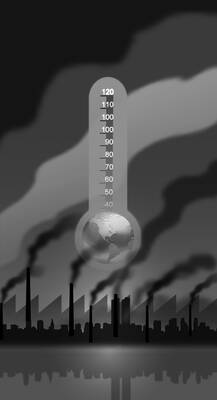
The closure of the Strait of Hormuz has sent the vast Asian chemicals industry into a tailspin. Deprived of the likes of Qatari natural gas and Saudi Arabian oil, the region’s fertilizer and plastics plants are slowing production or even shutting down. Everywhere except China, that is. In petrochemicals, China is unique. As well as a traditional industry that uses oil and gas as feedstock, it has parallel output that relies on its abundant domestic coal. Unsurprisingly, India and other regional powers want to copy and paste the Chinese method. This would not be easy — or climate friendly. The
Indonesian President Prabowo Subianto says he knows how to fix the problems facing Indonesia. Yet his economic mismanagement and authoritarian tendencies are steering the nation toward a familiar mix of currency instability and political chaos. The world’s fourth-most populous nation risks reversing the hard-won democratic and business reforms that came after the Asian Financial Crisis in 1997. At that time, the rupiah collapsed and the political upheaval that followed forced former president Haji Mohamed Suharto from power. Prabowo’s administration is ignoring similar warning signs. That disconnect was apparent in a national address on Wednesday, when Prabowo projected the swagger that has
“Of course you can choose not to be Taiwanese, just do not stay here,” chairwoman of Taipei 101 operator Taipei Financial Center Corp Janet Chia (賈永婕) said in an online interview with local entertainer Tai Chih-yuan (邰智源), triggering intense discussion on social media, with politicians across party lines weighing in. In the interview, which was aired on May 14, Chia and Tai’s discussion over a meal in Taipei 101 covered Chia’s career change from entertainer to chairwoman and US climber Alex Honnold’s free solo climb up the Taipei 101 building. During the interview, Chia said, “Being on this land, we


 RSS
RSS