


In Taiwan’s judicial practice, it is not easy to establish the crime of corruption. Amendments in 2001 to the Anti-Corruption Act (貪污治罪條例) significantly narrowed the conditions for a conviction, requiring proof that the official in question intended to seek unlawful gains while clearly knowing their act contravenes the law, and that profits were ultimately gained. Therefore, in most cases, lower-level civil servants are not convicted of a criminal offense for misinterpreting the law and allowing a member of the public to benefit as a result.
That said, is former Taipei mayor Ko Wen-je (柯文哲) justified in claiming he is innocent, and are his supporters justified in shouting accusations of judicial injustice and political persecution?
Firstly, in the case of the Core Pacific City (京華城購物中心) redevelopment project, there was no alleged cognitive gap. Typically, an “information deficiency error” refers to a situation where a public official fails to keep abreast of the latest administrative interpretations or legal changes and makes a decision based on their existing understanding of the law, only to later discover a discrepancy.
Because such cases lack awareness of illegality, they generally do not constitute a crime of seeking unlawful gains. However, in this case, expert meetings had already clearly identified concerns over legality and the lack of public interest, and relevant authorities had also issued multiple warnings — even explicitly pointing out the possibility of private parties receiving improper gains.
More importantly, all of these opinions were attached to the signed official document that was used for decisionmaking. In other words, when Ko made the final decision, it was not out of ignorance — he made the choice with full knowledge of all relevant information.
Secondly, discretionary authority is also difficult to establish in this case. When an administrative agency makes differing decisions within the scope of its lawful authorization — even if the result benefits a specific party — it generally falls within the bounds of administrative discretion. However, the core issue in this case is that the floor area ratio (FAR) bonuses granted to the project lacked any legal basis.
Moreover, the allocation of FAR involves significant public interests, and — according to the constitutional principle of legal reservation — should be supported by clear statutory authorization. The absence of such authorization constitutes an overreach of authority. Therefore, Ko’s claim that there existed room for professional judgement is legally untenable.
Lastly, from the perspective of the decisionmaking timeline, “subjective intent” is even more concrete. The relevant claims in this case had already been rejected through administrative appeal and failed in administrative litigation, so the legal judgement was not undetermined. If, despite this, the applicant was still granted benefits through the creation of an alternative plan, it would effectively amount to the deliberate circumvention of existing legal conclusions. Ko chose to approve the plan, making his cognizance of the situation a clearly identifiable form of subjective intent.
In summary, the Core Pacific City corruption case was not a mere error in administrative judgement. Rather than continuing to frame the matter in political terms and claiming injustice or persecution, Ko would be better served by returning to and examining the legal facts. The crux of the issue is not that Ko failed to understand the law, but that he understood it clearly and nonetheless chose to cross the legal red line.
Yeh Yu-cheng is a legal professional.
Translated by Kyra Gustavsen
Minister of Labor Hung Sun-han (洪申翰) on April 9 said that the first group of Indian workers could arrive as early as this year as part of a memorandum of understanding (MOU) between the Taipei Economic and Cultural Center in India and the India Taipei Association. Signed in February 2024, the MOU stipulates that Taipei would decide the number of migrant workers and which industries would employ them, while New Delhi would manage recruitment and training. Employment would be governed by the laws of both countries. Months after its signing, the two sides agreed that 1,000 migrant workers from India would
In recent weeks, Taiwan has witnessed a surge of public anxiety over the possible introduction of Indian migrant workers. What began as a policy signal from the Ministry of Labor quickly escalated into a broader controversy. Petitions gathered thousands of signatures within days, political figures issued strong warnings, and social media became saturated with concerns about public safety and social stability. At first glance, this appears to be a straightforward policy question: Should Taiwan introduce Indian migrant workers or not? However, this framing is misleading. The current debate is not fundamentally about India. It is about Taiwan’s labor system, its
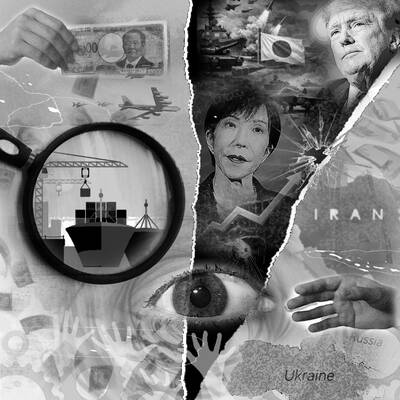
Japan’s imminent easing of arms export rules has sparked strong interest from Warsaw to Manila, Reuters reporting found, as US President Donald Trump wavers on security commitments to allies, and the wars in Iran and Ukraine strain US weapons supplies. Japanese Prime Minister Sanae Takaichi’s ruling party approved the changes this week as she tries to invigorate the pacifist country’s military industrial base. Her government would formally adopt the new rules as soon as this month, three Japanese government officials told Reuters. Despite largely isolating itself from global arms markets since World War II, Japan spends enough on its own
On March 31, the South Korean Ministry of Foreign Affairs released declassified diplomatic records from 1995 that drew wide domestic media attention. One revelation stood out: North Korea had once raised the possibility of diplomatic relations with Taiwan. In a meeting with visiting Chinese officials in May 1995, as then-Chinese president Jiang Zemin (江澤民) prepared for a visit to South Korea, North Korean officials objected to Beijing’s growing ties with Seoul and raised Taiwan directly. According to the newly released records, North Korean officials asked why Pyongyang should refrain from developing relations with Taiwan while China and South Korea were expanding high-level


 RSS
RSS