


Taiwan’s industries developed rapidly following World War II and the entire nation was entirely dependent on imported oil. To mitigate risk in its energy strategy, the government planned the Jinshan Nuclear Power Plant in New Taipei City’s Shihmen District (石門). During its construction, the 1973 Yom Kippur War — a joint attack on Israel by Egypt and Syria — triggered the first oil crisis, which led the government to plan for the Guosheng Nuclear Power Plant in New Taipei City’s Wanli District (萬里) and the Ma-anshan Nuclear Power Plant next to Ma-anshan (馬鞍山) in Pingtung County.
Taiwan’s anti-nuclear movement largely began in 1987 with the planned construction of the Fourth Nuclear Power Plant in New Taipei City’s Gongliao District (貢寮). Since then, energy debates in Taiwan have centered on supporting nuclear power, leading the uninformed to assume that most of the nation’s energy comes from nuclear power. In reality, thermal power generation has always been the main source of Taiwan’s electricity supply.
The anti-nuclear movement initially did not receive broad public support. It was not until the 2011 nuclear crisis at the Fukushima Dai-ichi nuclear power plant in Japan that nuclear power plant safety came under global scrutiny again. As a result, Japan temporarily shut down all of its nuclear reactors, and Germany resolved to move toward denuclearization.
In Taiwan, the safety of the Fourth Nuclear Power Plant was once again called into question.
The stop-and-go nature of the plant’s design and construction raised significant safety concerns. Based on cases of other nuclear plants of the same generation worldwide, it was also likely to become a massive financial black hole, plagued by continuous delays and budget overruns. Its eventual mothballing should be considered a rational decision and a major victory for the anti-nuclear movement. However, Germany’s decisive nuclear phaseout, combined with its rapid decarbonization efforts and the elimination of coal-fired power, led to a heavy reliance on natural gas from Russia — which might have contributed to the outbreak of the Ukraine war.
Although gas-fired power generation has many advantages, there are undeniable vulnerabilities associated with the transport and storage of liquefied natural gas. After shutting down its nuclear program, Japan largely replaced it with gas-fired power, raising its share of electricity generation to about 30 percent. However, recognizing the national security risks such a move posed, Japan is working to restore nuclear power plant operations to reduce that proportion. The ongoing conflict in Iran caused a sharp surge in natural gas prices globally, validating Japan’s foresight and highlighting the importance of energy diversification.
Former president Tsai Ing-wen’s (蔡英文) administration championed a nuclear-free policy, while also aiming to phase out the use of coal-fired power, which led to plans for natural gas to account for as much as 50 percent of the nation’s energy mix. At the time, this was justified and aligned with prevailing global trends, but even if one is not a strategic expert or energy specialist, it is clear that such a high proportion carries significant strategic risks. The US has since undergone a change in administration, and the rapid development of artificial intelligence is causing a surge in global energy demand. US President Donald Trump’s efforts to counter authoritarian regimes have escalated regional strategic risks, Japan is actively restarting its nuclear reactors and European nations are comprehensively reviewing their nuclear policies.
With all of this in mind, should Taiwan become the only outlier, a living fossil from the previous US administration?
Taiwan’s industries are booming, but a substantial energy shortage looms. As global strategic risks intensify, energy sources must be diversified. While the safety concerns surrounding the Fourth Nuclear Power Plant rule it out as an option, extending the operations of the Guosheng and Ma-anshan plants — which previously operated without major incidents — should be considered as one possible solution. Many nuclear power plants from the same generation worldwide have already undergone license extensions. Of course, this move would first require thorough inspections and necessary upgrades.
At this critical juncture, anti-nuclear sentiment has become a sacred tenet of the democratic movement — nuclear cannot even be mentioned, let alone considered. This has given rise to crises in Taiwan’s energy, industries and strategic positioning — even leading to the loss of former minister of economic affairs J.W. Kuo (郭智輝).
President William Lai (賴清德) has announced that he is willing to do what must be done and bear responsibility for the nation’s survival, while Kuo spoke candidly of the need for pragmatic courage.
Energy strategy should be a matter of pragmatism and realism, not one of ideology or values. Nor should critical policies tied to the nation’s survival be opposed on the basis of personal beliefs. If the opposition supports nuclear energy, they should not exploit divisions or provoke conflict. The entire nation should unite in giving the president its fullest support.
Tommy Lin is chairman of the Formosa Republican Association and director of the Taiwan United Nations Alliance.
Translated by Kyra Gustavsen
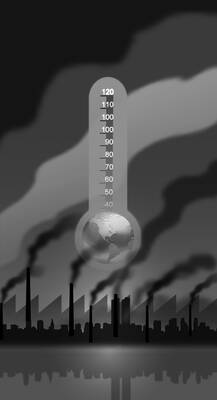
The closure of the Strait of Hormuz has sent the vast Asian chemicals industry into a tailspin. Deprived of the likes of Qatari natural gas and Saudi Arabian oil, the region’s fertilizer and plastics plants are slowing production or even shutting down. Everywhere except China, that is. In petrochemicals, China is unique. As well as a traditional industry that uses oil and gas as feedstock, it has parallel output that relies on its abundant domestic coal. Unsurprisingly, India and other regional powers want to copy and paste the Chinese method. This would not be easy — or climate friendly. The
KMT Chairwoman Cheng Li-wun’s (鄭麗文) recent visit to Beijing and her upcoming visit to Washington will serve as a high-level test of her diplomatic mettle. In Beijing, Cheng was received with symbolic gestures, a warm reception, and high-level access. In Washington, she will receive far less pomp and far sharper questions about the KMT’s vision for the future of Taiwan. Her challenge will be to persuade Washington that the KMT’s engagement with China can coexist with strong deterrence. Cheng’s April 7-12 visit to mainland China coincided with an intense period of conflict in Iran. Despite the strategic significance of Cheng’s trip,
History might remember 2026, not 2022, as the year artificial intelligence (AI) truly changed everything. ChatGPT’s launch was a product moment. What is happening now is an anthropological moment: AI is no longer merely answering questions. It is now taking initiative and learning from others to get things done, behaving less like software and more like a colleague. The economic consequence is the rise of the one-person company — a structure anticipated in the 2024 book The Choices Amid Great Changes, which I coauthored. The real target of AI is not labor. It is hierarchy. When AI sharply reduces the cost
US President Donald Trump recently repeated his claim that “Taiwan stole America’s chip industry,” reigniting public debate on the issue. As a former Taiwanese minister of economic affairs and an entrepreneur deeply involved in semiconductor supply chain development, I feel a responsibility to clarify this misunderstanding. From the perspective of global industrial evolution and the economic principle of comparative advantage, such a statement appears overly simplistic and risks obscuring the essence of the issue. The rise of Taiwan’s semiconductor industry was not built on “replacing America,” but rather emerged as a result of countries pursuing different development paths within the


 RSS
RSS