


The government and Taiwanese semiconductor companies should focus on enhancing local domestic supply chain resilience as geopolitical tensions and war in the Middle East pose a growing risk to chip production.
Semiconductors are a strategic resource due to the intensifying US-China technology race and global trade shocks, and Taiwanese semiconductor companies such as Taiwan Semiconductor Manufacturing Co (TSMC) and its suppliers — from clean room install services providers and raw material suppliers to semiconductor inspection services providers — are under pressure to set up production lines in Japan, the US or Europe to minimize the risk of supply disruption.
About 25 percent of SEMI Taiwan’s member corporations said they are planning to set up new operations or manufacturing factories in the US in response to requests from customers amid geopolitical conflicts, a survey showed.
TSMC has committed to investing US$165 billion to build advanced chip fabrication plants in the US. Its local manufacturing facilities and clean room builder, United Integrated Services Co, special chemicals supplier Chang Chun Petrochemical Co, and semiconductor inspection service provider Msscorps Co, as well as Rayzher Industrial Co, which specializes in installing mains systems and gas pipelines to transmit utilities for semiconductor manufacturers, have set up operations in Arizona, near TSMC’s fabs.
Other suppliers are still assessing the feasibility of following TSMC, balancing expensive labor costs and high factory construction costs against the potential returns.
The Iran war has become the newest challenge for semiconductor companies, as spikes in transportation costs drive up operational costs, a secondary effect of the closure of the Strait of Hormuz.
Some suppliers of chemical filters and other components said that costs have increased more than 100 percent due to disrupted shipping, spiking fuel prices and growing maritime insurance premiums.
Many semiconductor companies believe that supply chain disruption is a distant headache, with significantly stronger supply chain resilience and countermeasures put in place after the COVID-19 pandemic and Russia’s invasion of Ukraine.
The Ukraine invasion halted neon output for one of the world’s largest producers of the noble gas in 2021, creating a bottleneck for chip production. Ukraine’s production made up about 50 to 70 percent of global semiconductor-grade neon.
Taiwan’s semiconductor companies have learned from the two shocks to the global order at the start of this decade, significantly increasing their safety margins of key materials and chemicals to one to three months, creating a buffer against supply uncertainties.
Taiwan’s extensive semiconductor ecosystem could help protect it from short-term external shocks, but some key semiconductor materials, such as some gases and photoresistant materials, have shelf lives of only four to six months.
The war against Iran could affect the industry more drastically if the conflict drags on for six months or more or the scope of the conflict broadens, although US President Donald Trump said he wants to end the war soon.
Industry experts urged companies to adopt multiple procurement sources and look to sources beyond the Middle East.
The supply of helium, used in semiconductor production, could become a choke point after Qatar shut down its liquefied natural gas (LNG) production and helium output following strikes on its infrastructure.
While the Ministry of Economic Affairs is confident that LNG supplies are adequate, supply chain resilience must cover many bases.
The ministry last week said that the supply of LNG and helium in Taiwan is sufficient, while it has options to pivot to sources such as Australia and the US.
On Monday, it said that LNG supply would be stable through the end of May.
In response to the geopolitical tensions in the Middle East, CPC Corp, Taiwan has expanded its procurement of gas to sources outside the Middle East to ensure sufficient supplies, the ministry said.
“There is absolutely no natural gas shortage crisis as reported by foreign media,” it said.
However, as peace talks crawl along, semiconductor companies should shift their efforts to improve domestic supply chain resilience and avoid supply constraints of all of their critical materials from becoming a bottleneck for chip production.
KMT Chairwoman Cheng Li-wun’s (鄭麗文) recent visit to Beijing and her upcoming visit to Washington will serve as a high-level test of her diplomatic mettle. In Beijing, Cheng was received with symbolic gestures, a warm reception, and high-level access. In Washington, she will receive far less pomp and far sharper questions about the KMT’s vision for the future of Taiwan. Her challenge will be to persuade Washington that the KMT’s engagement with China can coexist with strong deterrence. Cheng’s April 7-12 visit to mainland China coincided with an intense period of conflict in Iran. Despite the strategic significance of Cheng’s trip,
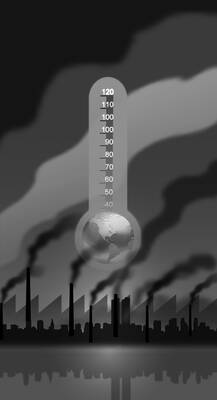
The closure of the Strait of Hormuz has sent the vast Asian chemicals industry into a tailspin. Deprived of the likes of Qatari natural gas and Saudi Arabian oil, the region’s fertilizer and plastics plants are slowing production or even shutting down. Everywhere except China, that is. In petrochemicals, China is unique. As well as a traditional industry that uses oil and gas as feedstock, it has parallel output that relies on its abundant domestic coal. Unsurprisingly, India and other regional powers want to copy and paste the Chinese method. This would not be easy — or climate friendly. The
Indonesian President Prabowo Subianto says he knows how to fix the problems facing Indonesia. Yet his economic mismanagement and authoritarian tendencies are steering the nation toward a familiar mix of currency instability and political chaos. The world’s fourth-most populous nation risks reversing the hard-won democratic and business reforms that came after the Asian Financial Crisis in 1997. At that time, the rupiah collapsed and the political upheaval that followed forced former president Haji Mohamed Suharto from power. Prabowo’s administration is ignoring similar warning signs. That disconnect was apparent in a national address on Wednesday, when Prabowo projected the swagger that has
“Of course you can choose not to be Taiwanese, just do not stay here,” chairwoman of Taipei 101 operator Taipei Financial Center Corp Janet Chia (賈永婕) said in an online interview with local entertainer Tai Chih-yuan (邰智源), triggering intense discussion on social media, with politicians across party lines weighing in. In the interview, which was aired on May 14, Chia and Tai’s discussion over a meal in Taipei 101 covered Chia’s career change from entertainer to chairwoman and US climber Alex Honnold’s free solo climb up the Taipei 101 building. During the interview, Chia said, “Being on this land, we


 RSS
RSS