


Public discourse around the nation’s energy transition has increasingly been reduced to single-line, reductive narratives — for example, portraying green energy as a “futile pipe dream,” questioning the pace of Taiwan’s renewable energy development or even rejecting the transition’s overall direction. Such remarks might sound sharp, but they oversimplify the complex realities of energy governance, and tend to conflate the inevitable challenges of the transition process with the failure of the transition itself.
An energy transition is not a short-term undertaking, but a long-term restructuring that involves power grid construction, energy storage deployment, land-usage coordination and an overhaul of market mechanisms. To judge renewable energy as being infeasible based solely on changes in the share of electricity generation over the past few years is, in itself, a fallacy that uses short-term results to negate long-term policies. Applying the same standard to nuclear power would lead to a similar conclusion — getting from planning and review to actual commercial operation often takes more than a decade. As such, short-term performance is an inappropriate basis for assessing feasibility.
Some critics tend to focus on the land-use controversies surrounding solar power, yet fail to fully account for the diverse technological and institutional paths of renewable energy development. Rooftop systems, agrivoltaics and floating installations are precisely the policy choices adopted in many other countries to reduce land-use conflicts and enhance spatial efficiency. When the entire discussion focuses on just a few highly contentious cases, it risks obscuring the issues that truly warrant attention — namely, whether policy design is comprehensive and governance capacity adequate.
Furthermore, equating unmet policy targets directly with policy failure can easily lead to misjudgements in public evaluation. By nature, public policy must be adjusted in response to market conditions, technological maturity and the external environment. Throughout the past decade, the cost of renewable energy has continued to fall and global investment has grown rapidly, demonstrating that the energy transition’s overall trajectory has not been reversed as a result of short-term setbacks. Rather than rejecting the energy transition’s overall direction, what warrants closer scrutiny is whether institutional supports have kept pace with its demands.
More importantly, energy choices cannot exist separately from Taiwan’s structural realities. With a heavy reliance on imported energy, rising carbon costs and international supply chain demands for green electricity, Taiwan cannot avoid the long-term challenges of its energy transition. Advocating for a return to a highly centralized or import-dependent energy structure solely because of the difficulties encountered during the transition could expose the nation to even greater risks with regard to energy security and economic stability.
The energy transition is imperfect and requires continuous ajustments, but negatively labeling the entire process fails to address real-world challenges such as energy security, industrial competitiveness and climate risks. Public discussions should focus on how to strengthen institutional design and improve implementation capacity, rather than letting emotional judgements replace rational analysis.
In an era of rapid global energy restructuring, what Taiwan needs is a more mature discussion surrounding energy governance. Only through continuous adjustments across institutional, technological and social conditions can the energy transition become a policy choice that is demonstrable and worthy of public trust.
Lin Ren-bin is an academic member of the Taiwan Environmental Protection Union and an associate professor at Chinese Culture University’s chemical and materials engineering department.
Translated by Kyra Gustavsen
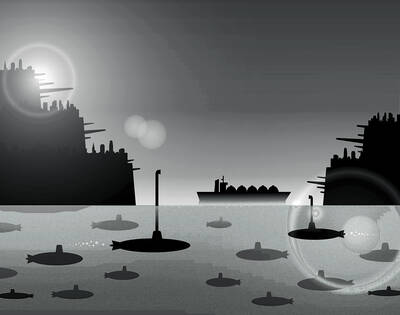
In the event of a war with China, Taiwan has some surprisingly tough defenses that could make it as difficult to tackle as a porcupine: A shoreline dotted with swamps, rocks and concrete barriers; conscription for all adult men; highways and airports that are built to double as hardened combat facilities. This porcupine has a soft underbelly, though, and the war in Iran is exposing it: energy. About 39,000 ships dock at Taiwan’s ports each year, more than the 30,000 that transit the Strait of Hormuz. About one-fifth of their inbound tonnage is coal, oil, refined fuels and liquefied natural gas (LNG),

To counter the CCP’s escalating threats, Taiwan must build a national consensus and demonstrate the capability and the will to fight. The Chinese Communist Party (CCP) often leans on a seductive mantra to soften its threats, such as “Chinese do not kill Chinese.” The slogan is designed to frame territorial conquest (annexation) as a domestic family matter. A look at the historical ledger reveals a different truth. For the CCP, being labeled “family” has never been a guarantee of safety; it has been the primary prerequisite for state-sanctioned slaughter. From the forced starvation of 150,000 civilians at the Siege of Changchun
The two major opposition parties, the Chinese Nationalist Party (KMT) and the Taiwan People’s Party (TPP), jointly announced on Tuesday last week that former TPP lawmaker Chang Chi-kai (張啟楷) would be their joint candidate for Chiayi mayor, following polling conducted earlier this month. It is the first case of blue-white (KMT-TPP) cooperation in selecting a joint candidate under an agreement signed by their chairpersons last month. KMT and TPP supporters have blamed their 2024 presidential election loss on failing to decide on a joint candidate, which ended in a dramatic breakdown with participants pointing fingers, calling polls unfair, sobbing and walking
In recent weeks, Taiwan has witnessed a surge of public anxiety over the possible introduction of Indian migrant workers. What began as a policy signal from the Ministry of Labor quickly escalated into a broader controversy. Petitions gathered thousands of signatures within days, political figures issued strong warnings, and social media became saturated with concerns about public safety and social stability. At first glance, this appears to be a straightforward policy question: Should Taiwan introduce Indian migrant workers or not? However, this framing is misleading. The current debate is not fundamentally about India. It is about Taiwan’s labor system, its


 RSS
RSS