


The Ministry of Education recently launched an online learning resource on transitional justice. Beginning with a class on the 228 Incident of 1947, the Web site provides videos and extended readings organized in a thoughtfully designed online classroom. It compiles Taiwan’s most unsavory chapters of history into accessible pieces of content for people to brush up on their understanding of the historical background of authoritarian rule.
It sounds reasonable; thoughtful, even. However, the challenge that transitional justice faces is not that of a missing history class on the 228 Incident. Rather, it is by design that Taiwan has forgotten key elements of the past.
Textbooks make reference to periods of authoritarian rule, social unrest and political “incidents,” but are rarely explicit about who sent the orders, who executed them and who benefitted. Thus, what is left is an abstraction of violence. Responsibility is diluted, and episodes of history come to be understood as something that simply came and went as naturally as transitory rain. In this sense, the government’s new online resource is more of the same.
Consider South Korea. When South Korean students rallied against martial law in the Gwangju Uprising of 1980, they were quickly suppressed by then-South Korean general Chun Doo-hwan sending in troops to crush the protests. However, Chun was later arrested and sentenced to life in prison, and victims were compensated in the 1990s. Although Chun denied any wrongdoing, history bears the proof of his indictment. South Korea did not just teach about the tragedy; they held those behind it accountable.
Even more symbolic was when Chun’s grandson knelt before the families of the victims to apologize and name his grandfather as responsible for the massacre. It was not a historical lesson, but a practice of historical ethics where descendants account for the violence of their predecessors.
In comparison, Taiwan’s situation is nothing less than absurd. Central Taipei boasts the enormous monument to an authoritarian past, the Chiang Kai-shek Memorial Hall. It is surrounded by various Zhongzheng roads, a name also referring to the former president and dictator Chiang Kai-shek (蔣介石).
This contradiction is a product of Taiwan’s competing versions of transitional justice in our classrooms and physical spaces. While textbooks emphasize democracy, rights and reflect on history, our cities are full of symbols commemorating authoritarian leaders. Students learn about transitional justice in school, but as soon as they step outside they are faced with a world steeped in the memory of power yet to be dismantled.
It is not just students, but Taiwanese society as a whole that needs to revisit history. The focus should not just be on facts, but ethics. While accountability remains hazy, the historical violence can be romanticized all too easily. Meanwhile, a strange situation has emerged where talking about 228 is written off as political manipulation, and discussing responsibility is equated with sowing ethnic division.
How did we get here? It is the result of an ingenious kind of sophistry that frames those in pursuit of accountability as troublemakers, and leaving historical power structures intact. What is politicized is not history, but its memory.
The ministry’s new learning resource of course has its place. History education needs space for new narratives and more publicly available resources, but if the symbols of historical memory do not change within our institutions, these efforts would be little more than window dressing.
Transitional justice has never been a question of just education — it is also about politics and ethics.
Historical amends are not achieved by simply “understanding one another;” they require narrative clarity as to who sent the order, who was harmed and who benefited from the enabling systems of power. Without this as a bare minimum, democracy is lost to institutional amnesia.
Liu Che-ting is a writer.
Translated by Gilda Knox Streader
Minister of Labor Hung Sun-han (洪申翰) on April 9 said that the first group of Indian workers could arrive as early as this year as part of a memorandum of understanding (MOU) between the Taipei Economic and Cultural Center in India and the India Taipei Association. Signed in February 2024, the MOU stipulates that Taipei would decide the number of migrant workers and which industries would employ them, while New Delhi would manage recruitment and training. Employment would be governed by the laws of both countries. Months after its signing, the two sides agreed that 1,000 migrant workers from India would
In recent weeks, Taiwan has witnessed a surge of public anxiety over the possible introduction of Indian migrant workers. What began as a policy signal from the Ministry of Labor quickly escalated into a broader controversy. Petitions gathered thousands of signatures within days, political figures issued strong warnings, and social media became saturated with concerns about public safety and social stability. At first glance, this appears to be a straightforward policy question: Should Taiwan introduce Indian migrant workers or not? However, this framing is misleading. The current debate is not fundamentally about India. It is about Taiwan’s labor system, its
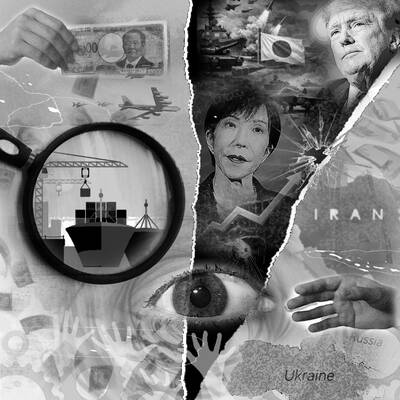
Japan’s imminent easing of arms export rules has sparked strong interest from Warsaw to Manila, Reuters reporting found, as US President Donald Trump wavers on security commitments to allies, and the wars in Iran and Ukraine strain US weapons supplies. Japanese Prime Minister Sanae Takaichi’s ruling party approved the changes this week as she tries to invigorate the pacifist country’s military industrial base. Her government would formally adopt the new rules as soon as this month, three Japanese government officials told Reuters. Despite largely isolating itself from global arms markets since World War II, Japan spends enough on its own
On March 31, the South Korean Ministry of Foreign Affairs released declassified diplomatic records from 1995 that drew wide domestic media attention. One revelation stood out: North Korea had once raised the possibility of diplomatic relations with Taiwan. In a meeting with visiting Chinese officials in May 1995, as then-Chinese president Jiang Zemin (江澤民) prepared for a visit to South Korea, North Korean officials objected to Beijing’s growing ties with Seoul and raised Taiwan directly. According to the newly released records, North Korean officials asked why Pyongyang should refrain from developing relations with Taiwan while China and South Korea were expanding high-level


 RSS
RSS