


Premier Cho Jung-tai (卓榮泰) made a surprise appearance on Saturday at the Tokyo Dome — accompanied by Representative to Japan Lee Yi-yang (李逸洋), Minister of Sports Lee Yang (李洋) and Chinese Professional Baseball League commissioner Tsai Chi-chang (蔡其昌) — to watch the World Baseball Classic (WBC) match. His presence might have boosted the morale of the Taiwanese team, who went on to thrash the Czech Republic 14-0.
Cho’s appearance is the first time an incumbent Taiwanese premier has visited Japan since Taipei and Tokyo severed diplomatic ties in 1972, with the Asahi Shimbun running the story on its front page. There are at least four layers of significance revealed by Cho’s trip.
First is the continued warming of Taiwan-Japan exchanges. Visits to Japan by high-ranking Taiwanese officials have become increasingly frequent in the past few years. In 2022, then-vice president William Lai (賴清德) made a condolence visit following the assassination of former Japanese prime minister Shinzo Abe and former vice premier Cheng Wen-tsan (鄭文燦) visited the following year. Minister of Foreign Affairs Lin Chia-lung (林佳龍) visited in July last year, while Legislative Speaker Han Kuo-yu (韓國瑜) visited in September. Although these visits do not have formal diplomatic status, they represent unofficial exchanges that have been inching forward amid pressure from China.
Second is a softening attitude within the Japanese Ministry of Foreign Affairs. The unit in the ministry that handles Taiwan affairs falls under the First China and Mongolia Division of the Asian and Oceanian Affairs Bureau, alongside Hong Kong and Macau. Because many bureaucrats within that unit view posts in China as a key career objective, they often exercise caution in Taiwan-Japan exchanges, carefully observing China’s reactions. As regional circumstances have changed and Taiwan-Japan interactions have deepened, the attitude of these bureaucrats toward Taiwan has softened as well.
Next is strong backing from Japanese Prime Minister Sanae Takaichi. As Taiwan and Japan do not maintain formal diplomatic relations, Japan places certain restrictions on visits by incumbent Taiwanese officials. That Cho was able to visit Japan last weekend, under the watchful eye of China, would likely not have been possible without Takaichi’s tacit support. This small sign illustrates a broader trend — the Takaichi administration has already made changes in its Taiwan policy.
Lastly is the success of nemawashi — in which people first lay the groundwork for consensus through private, behind-the-scenes communication before any formal decision is publicly announced — diplomacy. According to informed sources, the key players behind this instance of nemawashi diplomacy were Taiwan-Japan Relations Association chairman Frank Hsieh (謝長廷) and Japan’s Liberal Democratic Party executive secretary-general Koichi Hagiuda. In particular, Hsieh has been making frequent visits to Japan to facilitate the trip. He shares a strong rapport with Cho as the latter’s former superior. Lee acted as an intermediary, coordinating other matters behind the scenes and allowing this low-key diplomacy to be fully realized.
As Japan-China relations gradually become more fraught, Takaichi is preparing a visit to the US and US President Donald Trump is preparing for a visit to China, bureaucrats within Japan’s Ministry of Foreign Affairs would ordinarily advise Taiwan to back down to avoid complications. Instead, Japan facilitated Cho’s visit to Japan. This could indicate that Japan is acting with growing confidence and gradually removing political barriers — the symbolic significance of which is self-evident.
The idea that Taiwan and Japan are “as close as lips and teeth” — to use the Chinese expression — was once a common political slogan. Today, as the level of exchanges continues to rise and mechanisms for cooperation take shape, Taiwan-Japan relations are being transformed into an institutionalized community of shared destiny.
Wang Hui-sheng is a founding member of the East Asian Research Institute.
Translated by Kyra Gustavsen
A gap appears to be emerging between Washington’s foreign policy elites and the broader American public on how the United States should respond to China’s rise. From my vantage working at a think tank in Washington, DC, and through regular travel around the United States, I increasingly experience two distinct discussions. This divergence — between America’s elite hawkishness and public caution — may become one of the least appreciated and most consequential external factors influencing Taiwan’s security environment in the years ahead. Within the American policy community, the dominant view of China has grown unmistakably tough. Many members of Congress, as
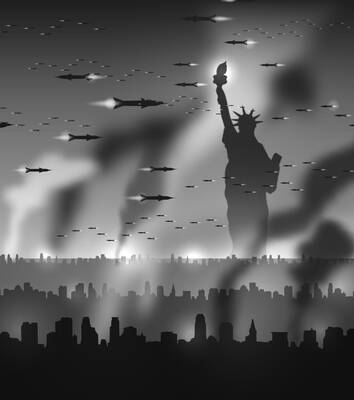
After declaring Iran’s military “gone,” US President Donald Trump appealed to the UK, France, Japan and South Korea — as well as China, Iran’s strategic partner — to send minesweepers and naval forces to reopen the Strait of Hormuz. When allies balked, the request turned into a warning: NATO would face “a very bad” future if it refused. The prevailing wisdom is that Trump faces a credibility problem: having spent years insulting allies, he finds they would not rally when he needs them. That is true, but superficial, as though a structural collapse could be caused by wounded feelings. Something
Former Taipei mayor and Taiwan People’s Party (TPP) founding chairman Ko Wen-je (柯文哲) was sentenced to 17 years in prison on Thursday, making headlines across major media. However, another case linked to the TPP — the indictment of Chinese immigrant Xu Chunying (徐春鶯) for alleged violations of the Anti-Infiltration Act (反滲透法) on Tuesday — has also stirred up heated discussions. Born in Shanghai, Xu became a resident of Taiwan through marriage in 1993. Currently the director of the Taiwan New Immigrant Development Association, she was elected to serve as legislator-at-large for the TPP in 2023, but was later charged with involvement
Out of 64 participating universities in this year’s Stars Program — through which schools directly recommend their top students to universities for admission — only 19 filled their admissions quotas. There were 922 vacancies, down more than 200 from last year; top universities had 37 unfilled places, 40 fewer than last year. The original purpose of the Stars Program was to expand admissions to a wider range of students. However, certain departments at elite universities that failed to meet their admissions quotas are not improving. Vacancies at top universities are linked to students’ program preferences on their applications, but inappropriate admission


 RSS
RSS