


The National Health Insurance Administration’s (NHIA) new breast cancer care improvement program represents a thoughtful, structurally sound step forward in a fight that Taiwan cannot afford to wage incrementally. With approximately 17,000 new diagnoses in 2023 and an incidence rate that has almost tripled since 1995, breast cancer is a rapidly accelerating public health challenge with distinct demographic features that demand a tailored response.
The program’s commitment to “all-stage enrollment” — covering newly diagnosed patients, recurrence cases and even male breast cancer — signals an inclusive vision. The promotion of multidisciplinary teams comprising breast surgeons, radiologists and case managers under a single-window consultation model is an evidence-based approach that reduces fragmentation and eases the burden that cancer places on patients navigating a complex healthcare landscape.
Perhaps most forward-looking is the NHIA’s introduction of a “value-based healthcare payment” model, under which hospitals would receive tiered rewards based on team integration and patient outcomes. Globally, the shift from fee-for-service to value-based payment in oncology has been widely discussed, but unevenly implemented. The WHO’s global breast cancer initiative calls on countries to ensure that at least 60 percent of breast cancer cases are diagnosed at an early stage, that diagnosis occurs within 60 days and that 80 percent of patients complete recommended treatment. Aligning financial incentives with these kinds of benchmarks is exactly the structural reform that can transform how care is delivered.
Moreover, the plan to build a national breast cancer database collecting clinical records across partner hospitals could prove to be the program’s most consequential legacy. This provides the analytic foundation to identify treatment variations, close gaps and refine clinical guidelines with evidence rather than assumptions.
However, the program’s allocated budget is NT$40 million (US$1.3 million). For an initiative spanning database construction, multidisciplinary team incentives, five-year follow-up care payments and value-based reward tiers across the nation’s hospitals, that figure invites scrutiny. Policymakers should be transparent about whether this funding is a down payment on a larger commitment or the full envelope.
The screening gap also remains a big problem. Taiwan Breast Cancer Society president Chen Fang-ming (陳芳銘) said Taiwan’s breast cancer screening rate hovers between 40 and 50 percent, held down in part by fear. This is notable in a society with universal health insurance coverage and a well-established public screening infrastructure offering free biennial mammography to women aged 45 to 69. While Taiwan’s rate is above the regional average, it still falls short of what is needed for meaningful population-level mortality reduction.
Early screening contributes to about 25 percent of mortality reduction while 75 percent depends on comprehensive treatment. This a crucial reframing. It argues for exactly the kind of downstream treatment investment the NHIA program envisions, while simultaneously reminding us that screening remains the indispensable upstream complement.
Few health systems in Asia have attempted to marry a single-payer universal coverage framework with value-based oncology payment at the national level. If the NHIA’s database matures into a genuine learning system, it could offer a replicable model for peers’ health systems. The building blocks are there, but it remains to be seen whether the investment, political will and institutional follow-through can match the blueprint’s promise.
Y. Tony Yang is an endowed professor at George Washington University.
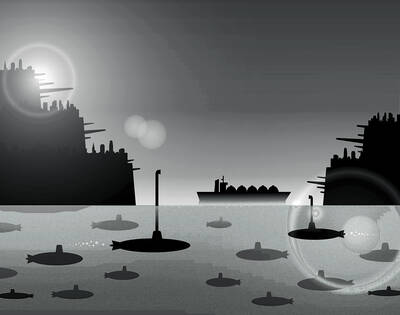
In the event of a war with China, Taiwan has some surprisingly tough defenses that could make it as difficult to tackle as a porcupine: A shoreline dotted with swamps, rocks and concrete barriers; conscription for all adult men; highways and airports that are built to double as hardened combat facilities. This porcupine has a soft underbelly, though, and the war in Iran is exposing it: energy. About 39,000 ships dock at Taiwan’s ports each year, more than the 30,000 that transit the Strait of Hormuz. About one-fifth of their inbound tonnage is coal, oil, refined fuels and liquefied natural gas (LNG),
On Monday, the day before Chinese Nationalist Party (KMT) Chairwoman Cheng Li-wun (鄭麗文) departed on her visit to China, the party released a promotional video titled “Only with peace can we ‘lie flat’” to highlight its desire to have peace across the Taiwan Strait. However, its use of the expression “lie flat” (tang ping, 躺平) drew sarcastic comments, with critics saying it sounded as if the party was “bowing down” to the Chinese Communist Party (CCP). Amid the controversy over the opposition parties blocking proposed defense budgets, Cheng departed for China after receiving an invitation from the CCP, with a meeting with
To counter the CCP’s escalating threats, Taiwan must build a national consensus and demonstrate the capability and the will to fight. The Chinese Communist Party (CCP) often leans on a seductive mantra to soften its threats, such as “Chinese do not kill Chinese.” The slogan is designed to frame territorial conquest (annexation) as a domestic family matter. A look at the historical ledger reveals a different truth. For the CCP, being labeled “family” has never been a guarantee of safety; it has been the primary prerequisite for state-sanctioned slaughter. From the forced starvation of 150,000 civilians at the Siege of Changchun
The two major opposition parties, the Chinese Nationalist Party (KMT) and the Taiwan People’s Party (TPP), jointly announced on Tuesday last week that former TPP lawmaker Chang Chi-kai (張啟楷) would be their joint candidate for Chiayi mayor, following polling conducted earlier this month. It is the first case of blue-white (KMT-TPP) cooperation in selecting a joint candidate under an agreement signed by their chairpersons last month. KMT and TPP supporters have blamed their 2024 presidential election loss on failing to decide on a joint candidate, which ended in a dramatic breakdown with participants pointing fingers, calling polls unfair, sobbing and walking


 RSS
RSS