


The commentaries by Deborah Haynes on Sky News, titled “The US war against Iran brings a new era of conflict and peril,” and Richard Haass in the Taipei Times (“Donald Trump’s risky war of choice in Iran”, March 3, page 7) said the world tilted into “peril” and “disarray.” They said that the US-Israeli strikes have replaced diplomacy with missiles, create a dangerous precedent for autocrats and embarked on a “war of choice” that cannot succeed.
This framing sounds principled. It is not. It is a defense of a status quo that has long since failed.
First, we must reject the moral equivalence between aggression and enforcement. Both critics say this strike hands a “rhetorical win” to leaders such as Russian President Vladimir Putin or Chinese President Xi Jinping (習近平).
Russia’s invasion of Ukraine is a war of annexation; the strike against the Iranian regime is a war of accountability. To say that a targeted strike against a regime that exports terror, pursues nuclear brinkmanship and hangs its own citizens is “the same” as the conquest of a peaceful neighbor is to flatten the moral distinctions that make international law worth defending.
Second, Haass said this is a “war of choice,” saying diplomacy still held promise. For whom? For the Iranian people who were ruthlessly suppressed during the January protests? For regional neighbors targeted by Iranian-made drones?
When a regime uses the “fog of negotiations” to advance its ballistic and nuclear programs, continuing diplomacy is complicity. A rules-based order does not collapse because a violator is finally confronted; it collapses because the rules carry no cost for those who break them.
Third, the lament about “limited means” failing to achieve “regime change” misses the point of deterrence. Critics such as Haass warn that decapitation rarely works. This might be true in a vacuum, but by destroying missile infrastructure and removing the ideological architect of regional chaos, the US is not just hoping for a new government; it is physically stripping a hostile actor of its ability to project violence. The goal is not to build a democracy overnight; it is to ensure that the regime’s “terrorist proxies” can no longer destabilize the globe with impunity.
Fourth, the argument that US action in Iran distracts from the Indo-Pacific region ignores the reality that deterrence is indivisible. Beijing has spent billions turning Iran into a “strategic asset” designed to divert US resources. By dismantling this pillar of China’s regional strategy, the US is signaling that it can strike swiftly in one theater while maintaining its commitments in another. If Chinese planners conclude that the US would no longer be paralyzed by the fear of escalation, the deterrent landscape in the Taiwan Strait becomes significantly sharper.
Finally, the argument that this action “lowers the threshold” for force reverses cause and effect. What truly lowers the threshold for war is inaction. Decades of hesitation have allowed the Strait of Hormuz to become a site where 20 percent of the world’s oil supply can be threatened. Deterrence does not emerge from hand-wringing about “dangerous precedents.” It emerges from established, credible limits.
The old world order, upheld by a paralyzed UN had already been hollowed out by the very autocrats they fear could be emboldened. Calling this moment the collapse of international order misunderstands the fragility of that order and the responsibilities required to sustain it. If anything defines this era, it is not the reckless abandonment of norms — but the end of impunity.
John Cheng is a retired businessman from Hong Kong now living in Taiwan.
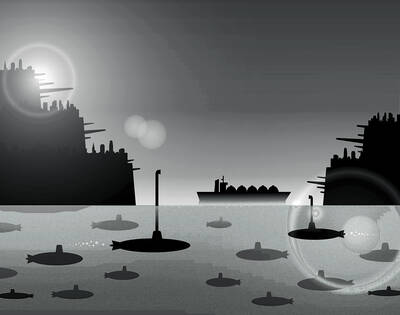
In the event of a war with China, Taiwan has some surprisingly tough defenses that could make it as difficult to tackle as a porcupine: A shoreline dotted with swamps, rocks and concrete barriers; conscription for all adult men; highways and airports that are built to double as hardened combat facilities. This porcupine has a soft underbelly, though, and the war in Iran is exposing it: energy. About 39,000 ships dock at Taiwan’s ports each year, more than the 30,000 that transit the Strait of Hormuz. About one-fifth of their inbound tonnage is coal, oil, refined fuels and liquefied natural gas (LNG),
On Monday, the day before Chinese Nationalist Party (KMT) Chairwoman Cheng Li-wun (鄭麗文) departed on her visit to China, the party released a promotional video titled “Only with peace can we ‘lie flat’” to highlight its desire to have peace across the Taiwan Strait. However, its use of the expression “lie flat” (tang ping, 躺平) drew sarcastic comments, with critics saying it sounded as if the party was “bowing down” to the Chinese Communist Party (CCP). Amid the controversy over the opposition parties blocking proposed defense budgets, Cheng departed for China after receiving an invitation from the CCP, with a meeting with
To counter the CCP’s escalating threats, Taiwan must build a national consensus and demonstrate the capability and the will to fight. The Chinese Communist Party (CCP) often leans on a seductive mantra to soften its threats, such as “Chinese do not kill Chinese.” The slogan is designed to frame territorial conquest (annexation) as a domestic family matter. A look at the historical ledger reveals a different truth. For the CCP, being labeled “family” has never been a guarantee of safety; it has been the primary prerequisite for state-sanctioned slaughter. From the forced starvation of 150,000 civilians at the Siege of Changchun
The two major opposition parties, the Chinese Nationalist Party (KMT) and the Taiwan People’s Party (TPP), jointly announced on Tuesday last week that former TPP lawmaker Chang Chi-kai (張啟楷) would be their joint candidate for Chiayi mayor, following polling conducted earlier this month. It is the first case of blue-white (KMT-TPP) cooperation in selecting a joint candidate under an agreement signed by their chairpersons last month. KMT and TPP supporters have blamed their 2024 presidential election loss on failing to decide on a joint candidate, which ended in a dramatic breakdown with participants pointing fingers, calling polls unfair, sobbing and walking


 RSS
RSS