


The US-Israeli military action against Iran is dominating the headlines and this page, and for good reason: The repercussions will be considerable, in large part due to the increased instability and unpredictability the intervention has injected into an international situation already in dangerous flux.
We can focus here on a narrow exploration of the implications for Taiwan’s national security and the strength of its position in the three-way dynamic between Taiwan, the US and China.
The first question to explore is to what extent does the show of not just pre-emptive but preventive force by Taiwan’s main security backer strengthens or weakens the nation’s security calculus in terms of deterrence — even, as some would argue, despite the contradictions in Taiwan’s moral and legal argument that the government, academia, think tanks, civic groups and overseas supporters have been at such pains to develop over decades.
The second issue is how this latest action changes the negotiating position of US President Donald Trump, specifically on navigating the question of Taiwan, if he goes to Beijing to meet his Chinese counterpart, Xi Jinping (習近平), at the end of this month as planned.
Within Taiwan, the commentary — reflected on this page yesterday in “Iran’s impact on US-China meeting” by Tzou Jiing-wen (鄒景雯), editor-in-chief of the Liberty Times (sister paper of the Taipei Times), and on today’s page by retired diplomat Michael Lin (林正二) and Tamkang University assistant professor Bonnie Yushih Liao (廖雨詩) — falls into two strands: the realist perspective represented by Tzou and Lin, and the more cautious moral and legal argument presented by Liao.
Liao wrote that US material deterrence and the credibility of international law are indispensable pillars on which Taiwan’s security rests.
Trump’s decision to launch a preventive war against Iran to eliminate a potential danger before it materializes, and which many analysts believe falls far short of a justifiable level, is a strategic choice similar to the one the US rejected as Russian President Vladimir Putin’s rationale for attacking Ukraine, she wrote.
The realist argument says that the demonstration of effective force and operational sophistication is sufficient deterrence, without the need for the cover of legal or moral legitimacy.
One could argue that that realist argument stands in the short term, but is considerably weakened over the long term.
As Liao observes, a jettisoning of the moral and legal argument in favor of the realist approach places small and middle powers at the mercy of the major powers.
For Taiwan, the crucial aspect is whether the chances of a potential war in the Taiwan Strait diminish after the US’ airstrikes. Deterrence derives not only from actual strength, but also from the perception of risk of taking a given action. Xi would be weighing up the effectiveness of US actions in Venezuela and Iran against the readiness of the Chinese People’s Liberation Army, especially after successive waves of hollowing out its command infrastructure.
Tsou and Lin have pointed to how the Trump administration’s actions in the Panama Canal, Venezuela and Iran have hollowed out Beijing’s influence in Latin America and the Middle East.
Moreover, Xi might be troubled by the Trump administration’s explicit goal of achieving regime change in Iran, while calling on Iranians to revolt against their government. Regime stability is of paramount importance to Xi in his Leninist model of strong but brittle one-party rule. It comes down to the degree to which Xi is paranoid or secure in the Chinese populace’s satisfaction with his stewardship.
China is not Iran, but perception is reality. When the US Supreme Court rejected the Trump administration’s weaponization of tariffs, some commentators predicted that Trump would be walking into negotiations with Xi with a significantly depleted hand — see “Xi gains leverage ahead of Trump summit after tariff reversal” (Feb. 25, page 7).
Tsou cited an article in Foreign Affairs by Peking University academic Wang Jisi (王緝思) and US-China academic David M. Lampton, which suggests that Xi could dangle a “grand bargain” in front of Trump with Taiwan as the bait.
She wrote that “Wang’s ‘grand bargain’ thesis has dissolved in the smoke over the Persian Gulf ... in the presence of overwhelming power, diplomatic leverage unsupported by credibility — and partnerships unsupported by strength — carry little weight at the negotiating table.”
Taiwan, as a middle power, continues to be buffeted by the geopolitical storm.
KMT Chairwoman Cheng Li-wun’s (鄭麗文) recent visit to Beijing and her upcoming visit to Washington will serve as a high-level test of her diplomatic mettle. In Beijing, Cheng was received with symbolic gestures, a warm reception, and high-level access. In Washington, she will receive far less pomp and far sharper questions about the KMT’s vision for the future of Taiwan. Her challenge will be to persuade Washington that the KMT’s engagement with China can coexist with strong deterrence. Cheng’s April 7-12 visit to mainland China coincided with an intense period of conflict in Iran. Despite the strategic significance of Cheng’s trip,
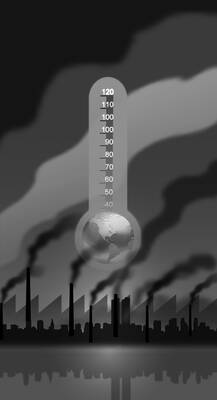
The closure of the Strait of Hormuz has sent the vast Asian chemicals industry into a tailspin. Deprived of the likes of Qatari natural gas and Saudi Arabian oil, the region’s fertilizer and plastics plants are slowing production or even shutting down. Everywhere except China, that is. In petrochemicals, China is unique. As well as a traditional industry that uses oil and gas as feedstock, it has parallel output that relies on its abundant domestic coal. Unsurprisingly, India and other regional powers want to copy and paste the Chinese method. This would not be easy — or climate friendly. The
Indonesian President Prabowo Subianto says he knows how to fix the problems facing Indonesia. Yet his economic mismanagement and authoritarian tendencies are steering the nation toward a familiar mix of currency instability and political chaos. The world’s fourth-most populous nation risks reversing the hard-won democratic and business reforms that came after the Asian Financial Crisis in 1997. At that time, the rupiah collapsed and the political upheaval that followed forced former president Haji Mohamed Suharto from power. Prabowo’s administration is ignoring similar warning signs. That disconnect was apparent in a national address on Wednesday, when Prabowo projected the swagger that has
“Of course you can choose not to be Taiwanese, just do not stay here,” chairwoman of Taipei 101 operator Taipei Financial Center Corp Janet Chia (賈永婕) said in an online interview with local entertainer Tai Chih-yuan (邰智源), triggering intense discussion on social media, with politicians across party lines weighing in. In the interview, which was aired on May 14, Chia and Tai’s discussion over a meal in Taipei 101 covered Chia’s career change from entertainer to chairwoman and US climber Alex Honnold’s free solo climb up the Taipei 101 building. During the interview, Chia said, “Being on this land, we


 RSS
RSS