


Following the US Supreme Court’s ruling that US President Donald Trump’s “reciprocal” tariffs are unlawful, and with the Taiwan-US Agreement on Reciprocal Trade (ART) soon to be submitted to the Legislative Yuan for deliberation, the question of whether the ruling would render ART void or require a restart of negotiations looms. Even if the original tariffs are struck down, they would be replaced by a 15 percent across-the-board global tariff levied under Section 122 of the Trade Act. Six months after the initial implementation of the US’ reciprocal tariff policy, uncertainty remains.
While the Section 122 measure would be unilateral and transitional, ART, by contrast, is a stable, institutional arrangement achieved through bilateral negotiations. Notably, the deal has secured tariff exemptions for 2,072 categories of products exported to the US, covering 76 percent of agricultural and industrial goods, which accounts for 42 percent of total agricultural export value and 36 percent of industrial product export value. This brings the average effective tariff on Taiwan’s exports to the US down to 12.33 percent. Being legally based on the provisions of Section 232 of the US Trade Expansion Act, it is therefore unaffected by the Supreme Court’s ruling.
Looking more closely, 72 agricultural product categories have been granted “safeguard exemptions,” shielding them from additional tariffs imposed under Section 122, while 27 agricultural categories enjoy “exclusive exemptions” of being uniquely exempt from tariff adjustments of any kind. Comparatively, the tariff provisions of ART are more favorable than the previous reciprocal tariff arrangement and the current 15 percent global tariff rate. It therefore serves to safeguard Taiwan, relative competitive advantage and most favorable treatment. The negotiating team’s achievement in successfully sidestepping the legal controversy surrounding the basis of reciprocal tariffs, and ensuring that ART was built on lasting foundations should not go unappreciated.
As for US agricultural imports, Taiwan has firmly held the line on maintaining the status quo for 27 important agricultural products, including rice, while selectively reducing tariffs or opening imports on certain products with low self-sufficiency rates or strong market demand. Taiwan has insisted on upholding international food safety standards and scientific evidence as the basis for regulation — and this represents the best possible negotiated outcome given the long-standing pressure the US has exerted on Taiwan. Without ART, Taiwan would likely continue facing persistent demands to open markets for rice, pork, beef and other products. At the very least, the 27 important agricultural categories would face no further pressure to liberalize in the near term.
These negotiated outcomes were hard-won. Had it not been for the window of opportunity created by Trump’s tariff storm, it is unlikely Taipei would have concluded a Taiwan-US trade agreement within 10 months. The mutual commitment of each side to honor the negotiated results is now a vital foundation for consolidating the bilateral relationship and advancing future cooperation. Moreover, ART can serve as a model for expanding trade agreement negotiations with other countries.
For these reasons, Taiwan should seize this rare and opportune moment, and the Legislative Yuan should pass the bill as swiftly as possible. Thereafter, the legislature must enhance its oversight of the agreement’s implementation and downstream effects, to preserve Taiwan’s competitive edge and its most favorable treatment.
Yang Ming-hsien is a professor in the Department of International Business at Feng Chia University.
Translated by Gilda Knox Streader
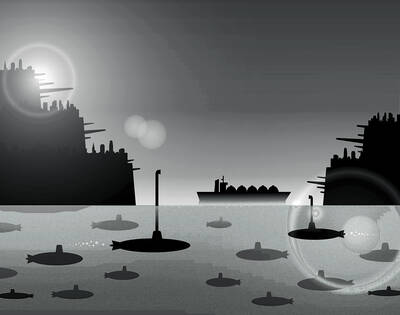
In the event of a war with China, Taiwan has some surprisingly tough defenses that could make it as difficult to tackle as a porcupine: A shoreline dotted with swamps, rocks and concrete barriers; conscription for all adult men; highways and airports that are built to double as hardened combat facilities. This porcupine has a soft underbelly, though, and the war in Iran is exposing it: energy. About 39,000 ships dock at Taiwan’s ports each year, more than the 30,000 that transit the Strait of Hormuz. About one-fifth of their inbound tonnage is coal, oil, refined fuels and liquefied natural gas (LNG),
On Monday, the day before Chinese Nationalist Party (KMT) Chairwoman Cheng Li-wun (鄭麗文) departed on her visit to China, the party released a promotional video titled “Only with peace can we ‘lie flat’” to highlight its desire to have peace across the Taiwan Strait. However, its use of the expression “lie flat” (tang ping, 躺平) drew sarcastic comments, with critics saying it sounded as if the party was “bowing down” to the Chinese Communist Party (CCP). Amid the controversy over the opposition parties blocking proposed defense budgets, Cheng departed for China after receiving an invitation from the CCP, with a meeting with
To counter the CCP’s escalating threats, Taiwan must build a national consensus and demonstrate the capability and the will to fight. The Chinese Communist Party (CCP) often leans on a seductive mantra to soften its threats, such as “Chinese do not kill Chinese.” The slogan is designed to frame territorial conquest (annexation) as a domestic family matter. A look at the historical ledger reveals a different truth. For the CCP, being labeled “family” has never been a guarantee of safety; it has been the primary prerequisite for state-sanctioned slaughter. From the forced starvation of 150,000 civilians at the Siege of Changchun
The two major opposition parties, the Chinese Nationalist Party (KMT) and the Taiwan People’s Party (TPP), jointly announced on Tuesday last week that former TPP lawmaker Chang Chi-kai (張啟楷) would be their joint candidate for Chiayi mayor, following polling conducted earlier this month. It is the first case of blue-white (KMT-TPP) cooperation in selecting a joint candidate under an agreement signed by their chairpersons last month. KMT and TPP supporters have blamed their 2024 presidential election loss on failing to decide on a joint candidate, which ended in a dramatic breakdown with participants pointing fingers, calling polls unfair, sobbing and walking


 RSS
RSS