


Transparency International on Tuesday released its Corruption Perceptions Index (CPI) scores and rankings for last year. Taiwan’s score increased from 2024 by one point, earning a score of 68 on a scale of zero (highly corrupt) to 100 (very clean). Its rank also jumped by one spot to 24th globally. This latest score marks a historical high for Taiwan — the nation’s best since CPI evaluations began in 1995. The ruling party is justified in feeling gratified: It can use this professional and objective international assessment to silence the opposition’s criticisms.
However, from a broader international perspective, whether Taiwan could improve on this ranking would depend on a structural breakthrough. Taiwan has long remained outside of the top 20 countries globally, with its score remaining in the 60s for more than a decade. By contrast, Japan ranked 18th with a score of 71, representing fundamental differences in the hierarchy of integrity structures between the two nations. South Korea ranked 30th in 2024 and dropped to 31st last year, its score decreasing from 64 to 63. Although a one-tier gap remains between it and Taiwan, South Korea’s score has been steadily catching up and the country is making rapid progress in improving its integrity.
For Taiwan to undergo a fundamental transformation into a higher level of integrity, the Agency Against Corruption should examine in-depth the constituent sub-indicators of the index so as to identify and address entrenched issues. However, reforms involving social structures and cultural inertia are by no means reversible in the short-term. In recent years, prosecutors, investigators and anti-corruption bodies have worked hard to prosecute allegations of corruption. As such, elected representatives across political parties have been detained and indicted. This phenomenon has given the public the impression that scandals are continuing to surface. Yet it is this enforcement that has won international recognition, demonstrating that legal accountability is being upheld in Taiwan.
I have repeatedly reminded leadership that communication between local leaders, elected representatives and public works bidding must improve to strengthen Taiwan’s integrity, as it is the greatest obstacle preventing Taiwan from surpassing the 70-point mark and advancing into the CPI’s top 20 rankings.
Taiwan’s steadily rising rank in the CPI can be a source of pride for the public. However, if the goal is to make substantial, qualitative advances in its perceived integrity, Taiwan need not initially aspire to the top-tier standards of Nordic countries. Instead, a long-term strategy should begin by drawing on two defining features from Japan — social and cultural pressure and bureaucratic self-discipline. These are precisely the areas in which the government and the public must work together to improve.
Tsao Yao-chun is a researcher with Transparency International Taiwan and an external expert with the Ministry of National Defense on corruption index evaluations of governments.
Translated by Kyra Gustavsen
KMT Chairwoman Cheng Li-wun’s (鄭麗文) recent visit to Beijing and her upcoming visit to Washington will serve as a high-level test of her diplomatic mettle. In Beijing, Cheng was received with symbolic gestures, a warm reception, and high-level access. In Washington, she will receive far less pomp and far sharper questions about the KMT’s vision for the future of Taiwan. Her challenge will be to persuade Washington that the KMT’s engagement with China can coexist with strong deterrence. Cheng’s April 7-12 visit to mainland China coincided with an intense period of conflict in Iran. Despite the strategic significance of Cheng’s trip,
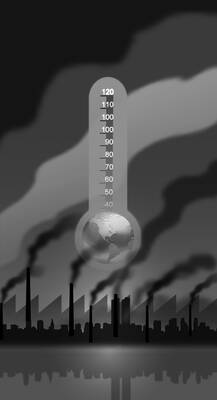
The closure of the Strait of Hormuz has sent the vast Asian chemicals industry into a tailspin. Deprived of the likes of Qatari natural gas and Saudi Arabian oil, the region’s fertilizer and plastics plants are slowing production or even shutting down. Everywhere except China, that is. In petrochemicals, China is unique. As well as a traditional industry that uses oil and gas as feedstock, it has parallel output that relies on its abundant domestic coal. Unsurprisingly, India and other regional powers want to copy and paste the Chinese method. This would not be easy — or climate friendly. The
Indonesian President Prabowo Subianto says he knows how to fix the problems facing Indonesia. Yet his economic mismanagement and authoritarian tendencies are steering the nation toward a familiar mix of currency instability and political chaos. The world’s fourth-most populous nation risks reversing the hard-won democratic and business reforms that came after the Asian Financial Crisis in 1997. At that time, the rupiah collapsed and the political upheaval that followed forced former president Haji Mohamed Suharto from power. Prabowo’s administration is ignoring similar warning signs. That disconnect was apparent in a national address on Wednesday, when Prabowo projected the swagger that has
“Of course you can choose not to be Taiwanese, just do not stay here,” chairwoman of Taipei 101 operator Taipei Financial Center Corp Janet Chia (賈永婕) said in an online interview with local entertainer Tai Chih-yuan (邰智源), triggering intense discussion on social media, with politicians across party lines weighing in. In the interview, which was aired on May 14, Chia and Tai’s discussion over a meal in Taipei 101 covered Chia’s career change from entertainer to chairwoman and US climber Alex Honnold’s free solo climb up the Taipei 101 building. During the interview, Chia said, “Being on this land, we


 RSS
RSS